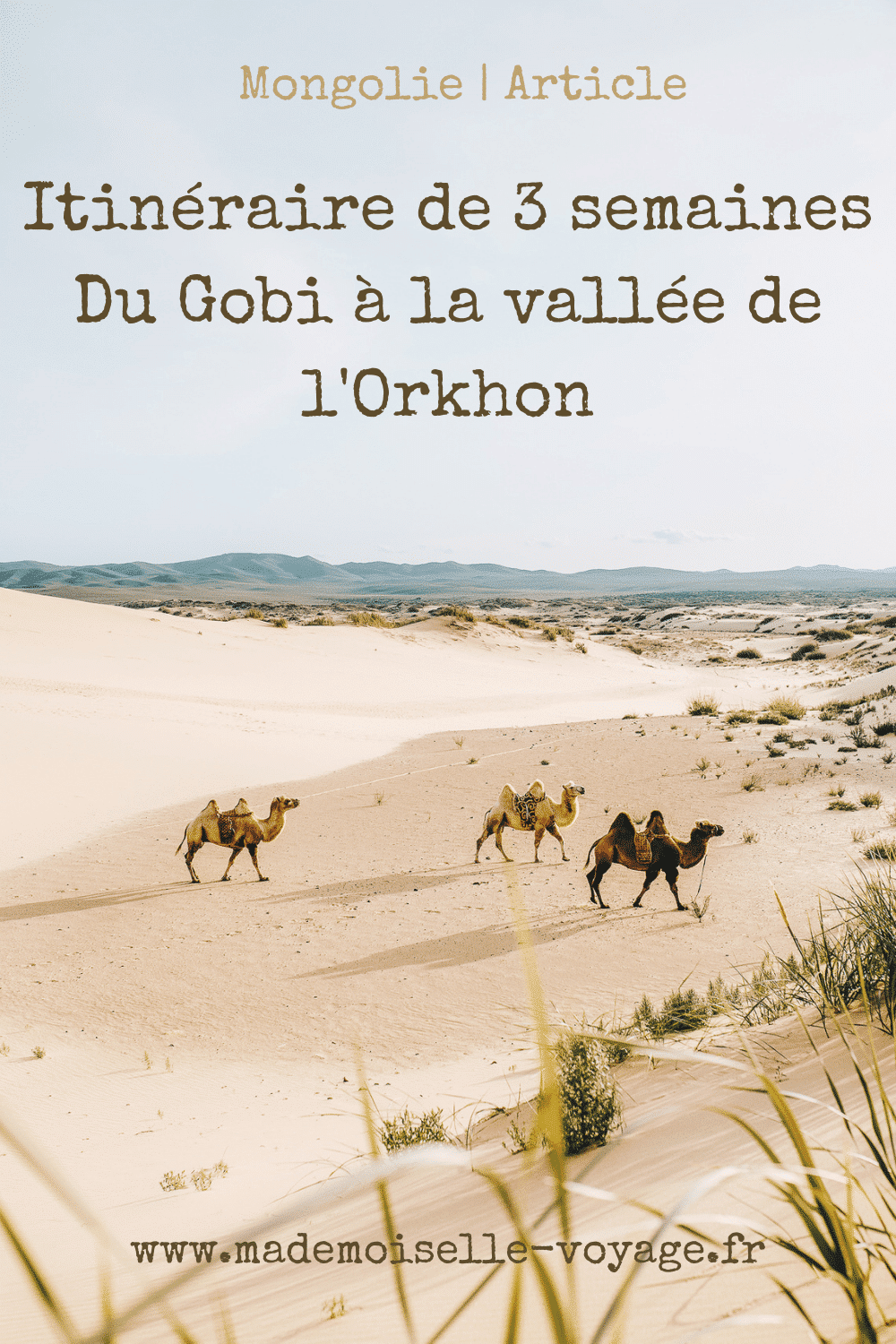
Welcome to Mongolie, a wild destination of vast steppes, deserts and canyons, still home to nomadic peoples with ancestral traditions. Discover our itinerary and stages.
We explored Mongolia over 17 days, a journey between the Gobi Desert and the Orkhon Valley, with a break in Ulan Bator.
Discovering Mongolia also means discovering Mongolian hospitality, which will not leave you indifferent. It’s so good to be in a country where the locals aren’t afraid to open their doors to foreigners, or should I say their yurts! Tasting a traditional dish based on mutton meat and organs, or drinking fermented mare’s milk (airag), is a unique experience that can only be had in Central Asia, and is one of my many memories.
I also invite you to read all our other articles on Mongolia to help you prepare for your trip:
Please note that as an accredited creator of tailor-made trips, I can help you create your own personalized itinerary for your stay in Mongolia. Please send me an email at : contact@mademoiselle-voyage.fr
TABLE OF CONTENTS :
| OUR ARRIVAL IN ULAN BATOR
We arrived in Ulaanbaatar in the early hours of the morning after travelling by train from Beijing. We headed for the Oasis Guesthouse. This place was very charming thanks to its large garden and we met a lot of bikers and travellers in lorries because of its huge, practical car park. Although it’s not in the centre of town, the advantage of this guesthouse is that it’s a stone’s throw from the East bus station, which serves the south of the country and therefore Dalandzadgad in the Gobi desert, where we were leaving the next morning.
We hadn’t booked anything before arriving in Mongolia and it wasn’t very easy to find something available from one day to the next as the jeeps were often full of people and ready to go. We had forgotten that we were in high season. The real guides and independent drivers had been booked for a very long time by agencies, so it wasn’t easy to organise our trip quickly and well! I have to admit, we thought we’d never be able to leave! It was only after hours on the phone and in the evening that we found out we could go to the Gobi desert. To avoid making the same mistakes as we did, and to avoid any surprises, I invite you to read the article on our tips for organising your trip to Mongolia.
| THE GOBI DESERT
After a day on the local bus, and the first encounters that go with it, we had an appointment with our driver in Dalandzadgad. We were off for a few days to tackle one of the most mythical deserts in the world: the Gobi Desert!
Our route took us first to Yolin Am, for a touch of greenery and an exceptional place of contrast. People often associate deserts with heat and aridity, so you wouldn’t expect to find a frozen gorge. Well, here it is. You can get there on horseback or on foot. The short, bucolic walk will allow you to see little marmots, field mice and various birds around the streams. A good introduction to Mongolian nature.
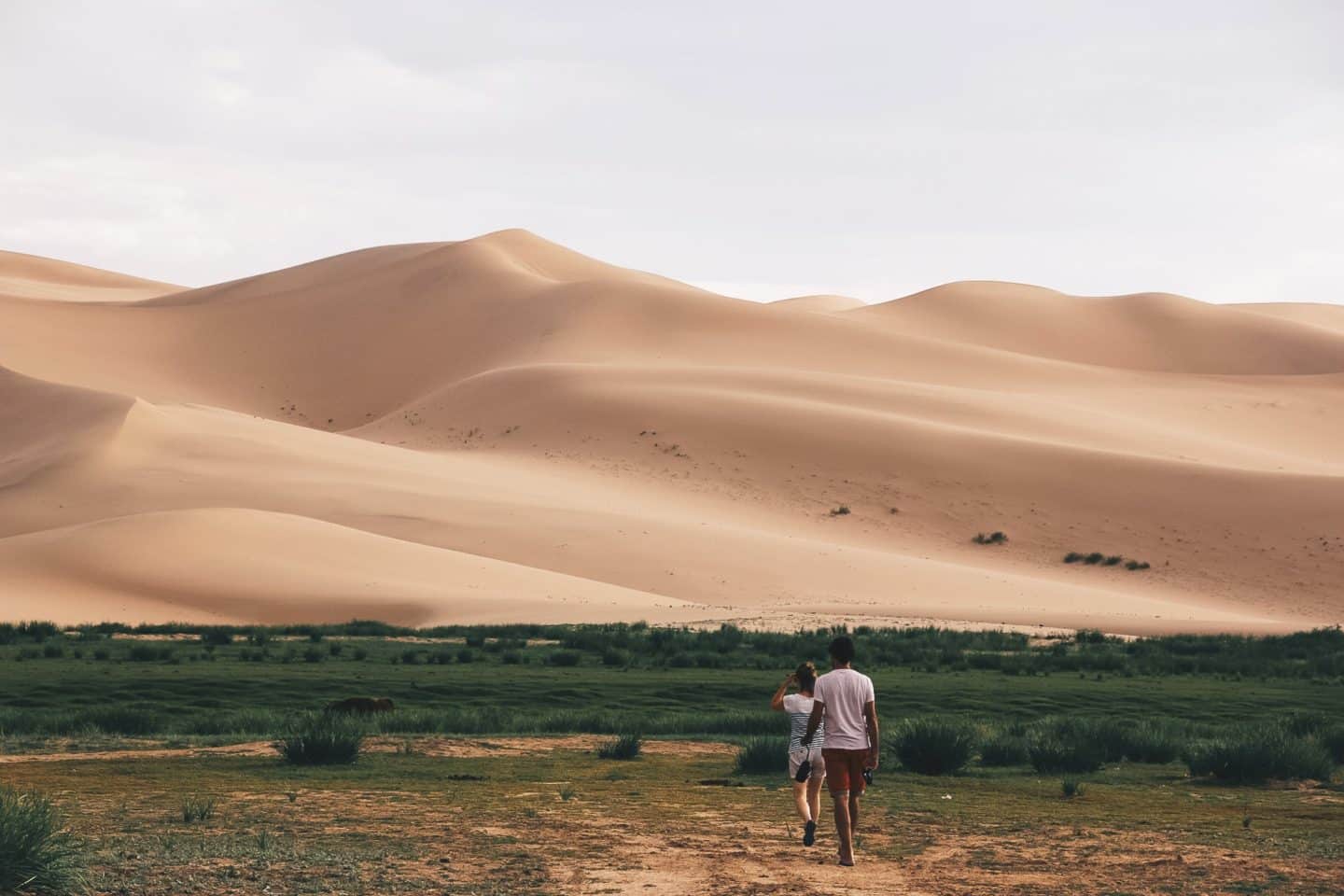
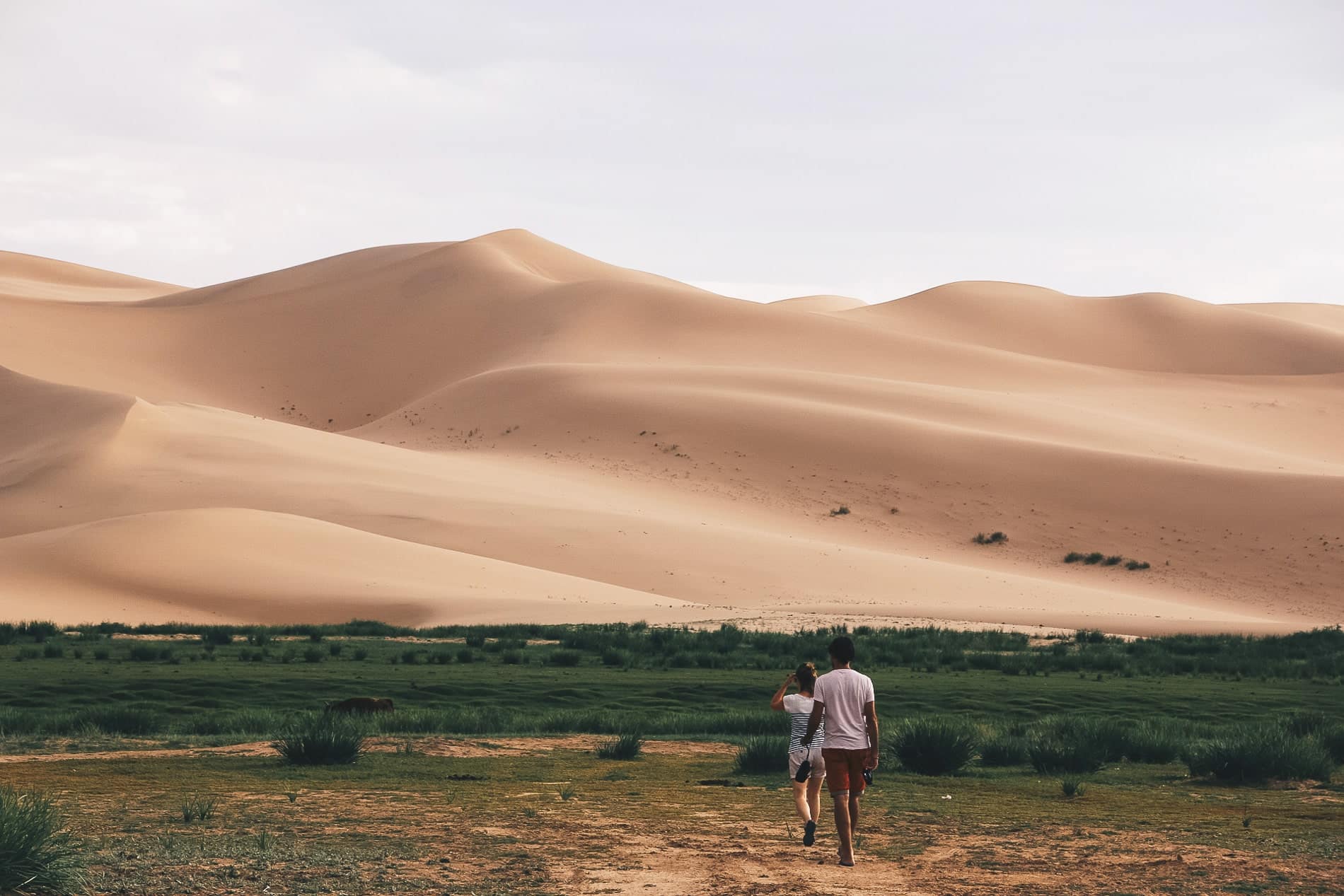
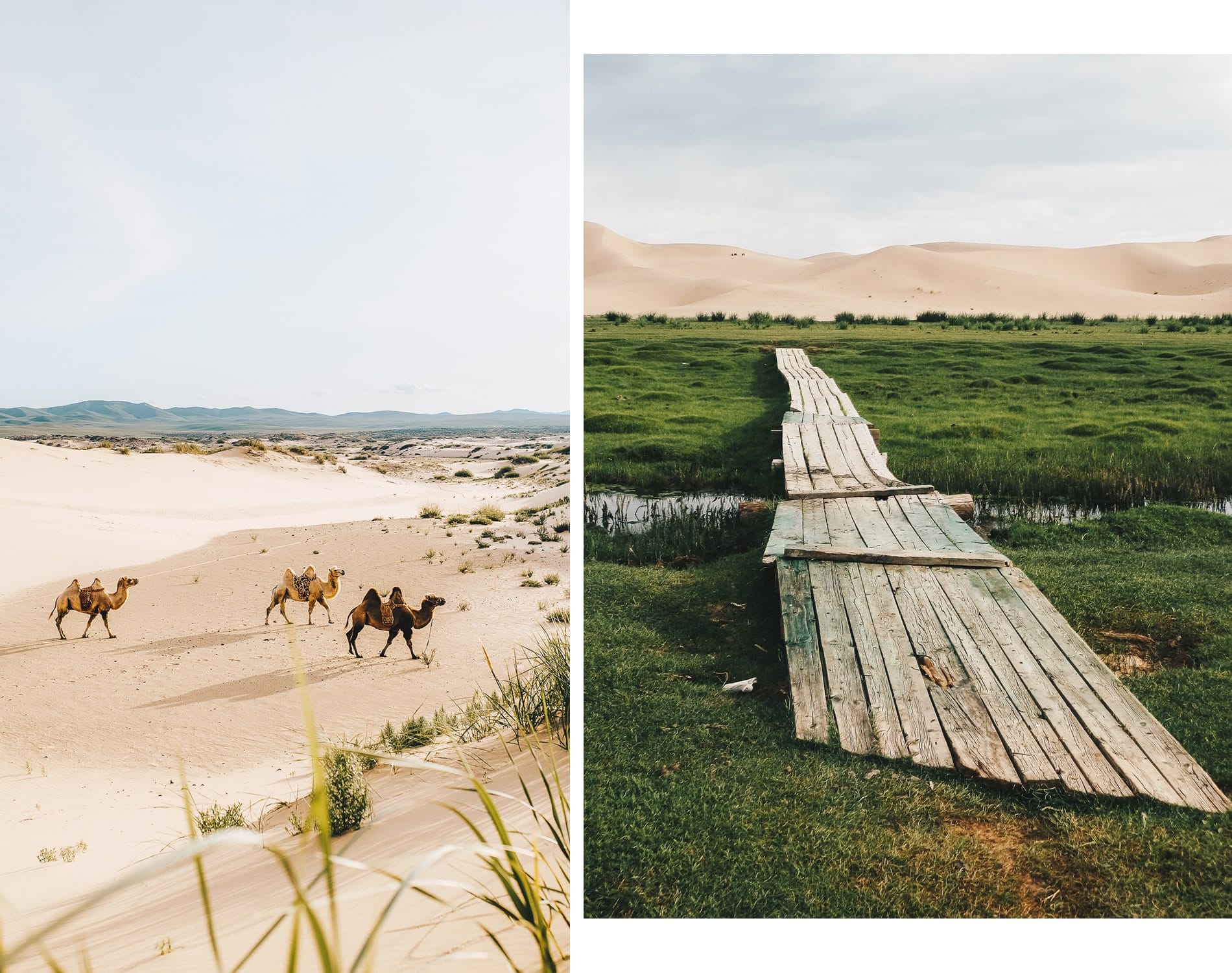
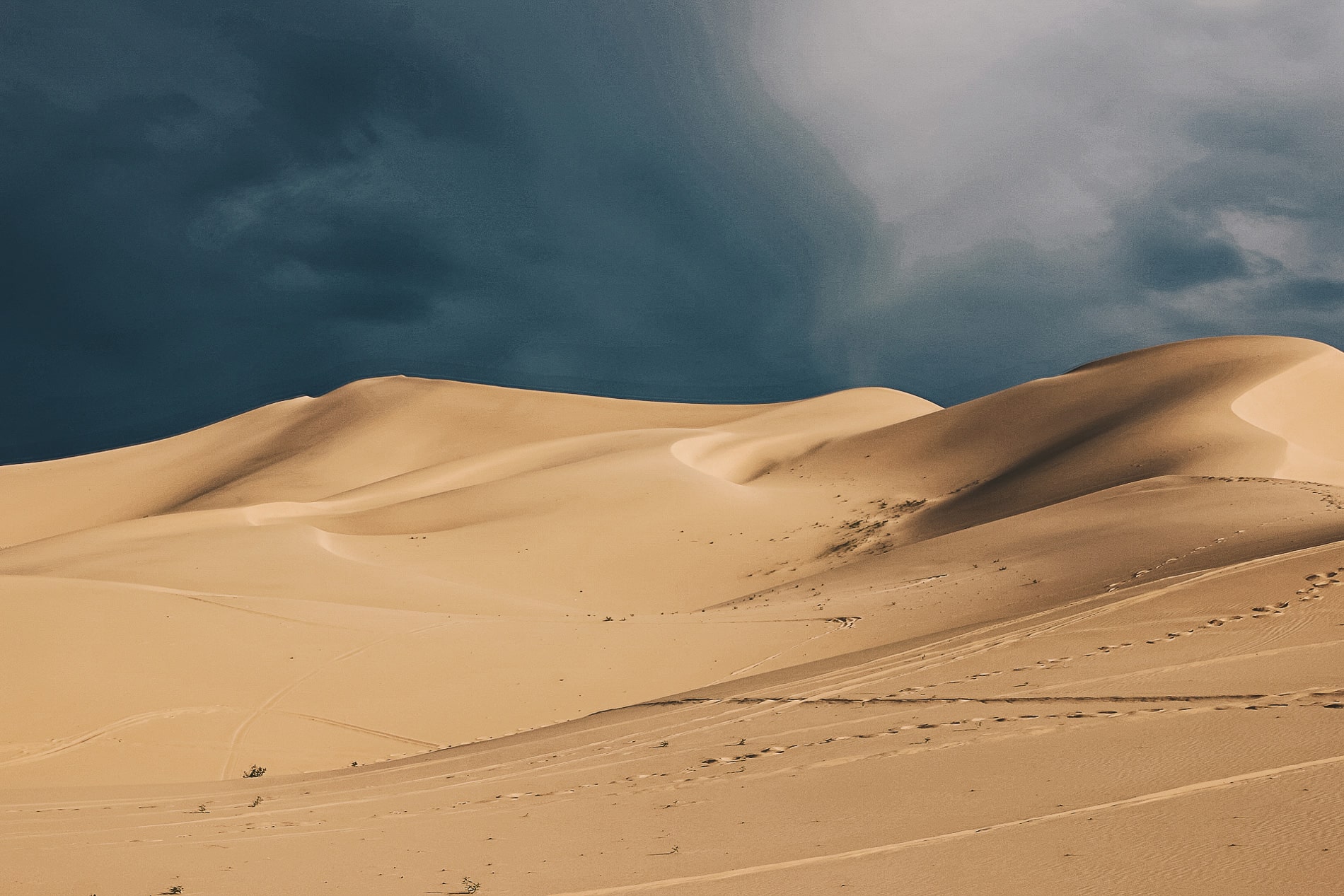
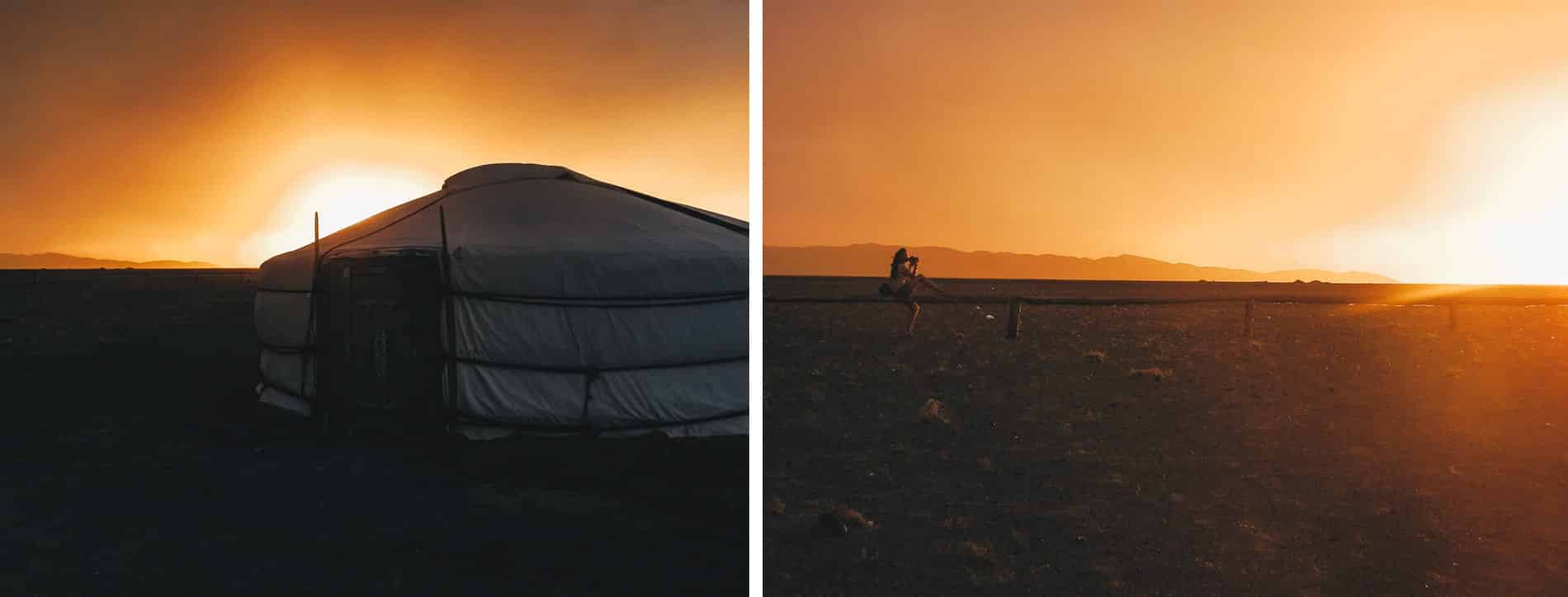
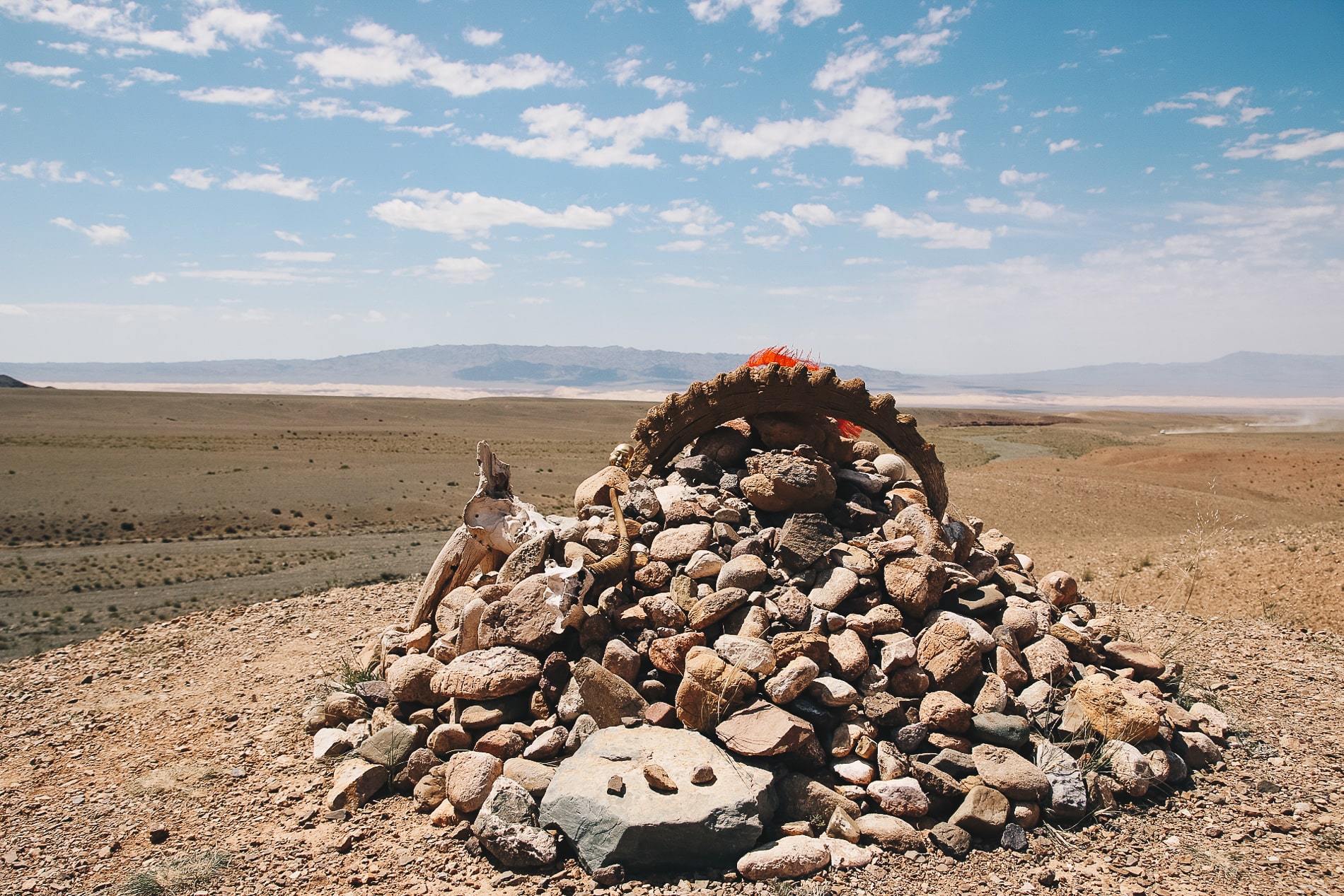
We then set off for the Khongor dunes. Here, the road is not a constraint, but rather a discovery, where the different colours of the Gobi follow one another – a pure delight! At Khongor, we settled into our yurt camp before simply enjoying the charm of a sunset over the sand dunes. The Khongor sand dunes, known as the “Singing Dunes“, measure 185 km long and up to 3 km wide, and are the largest dune in the Gobi.
Set in the middle of the desert with a magnificent view of the sand dunes, the yurt camp where we stayed was equipped with a small, tastefully decorated restaurant and a toilet block where we could take a shower. In the evening, we made the most of the weather to take a walk around the dunes and admire the flamboyant colours before us.
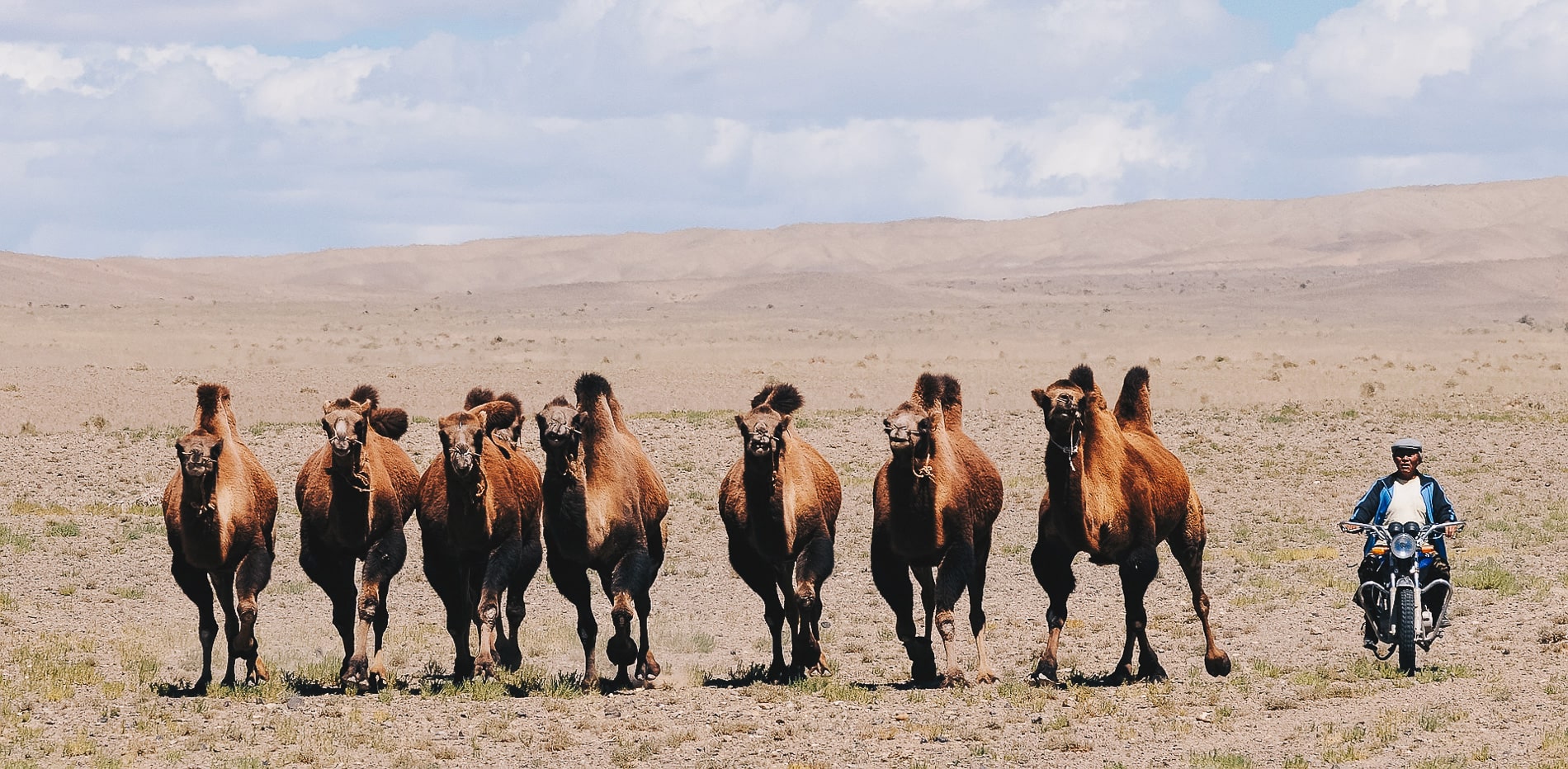
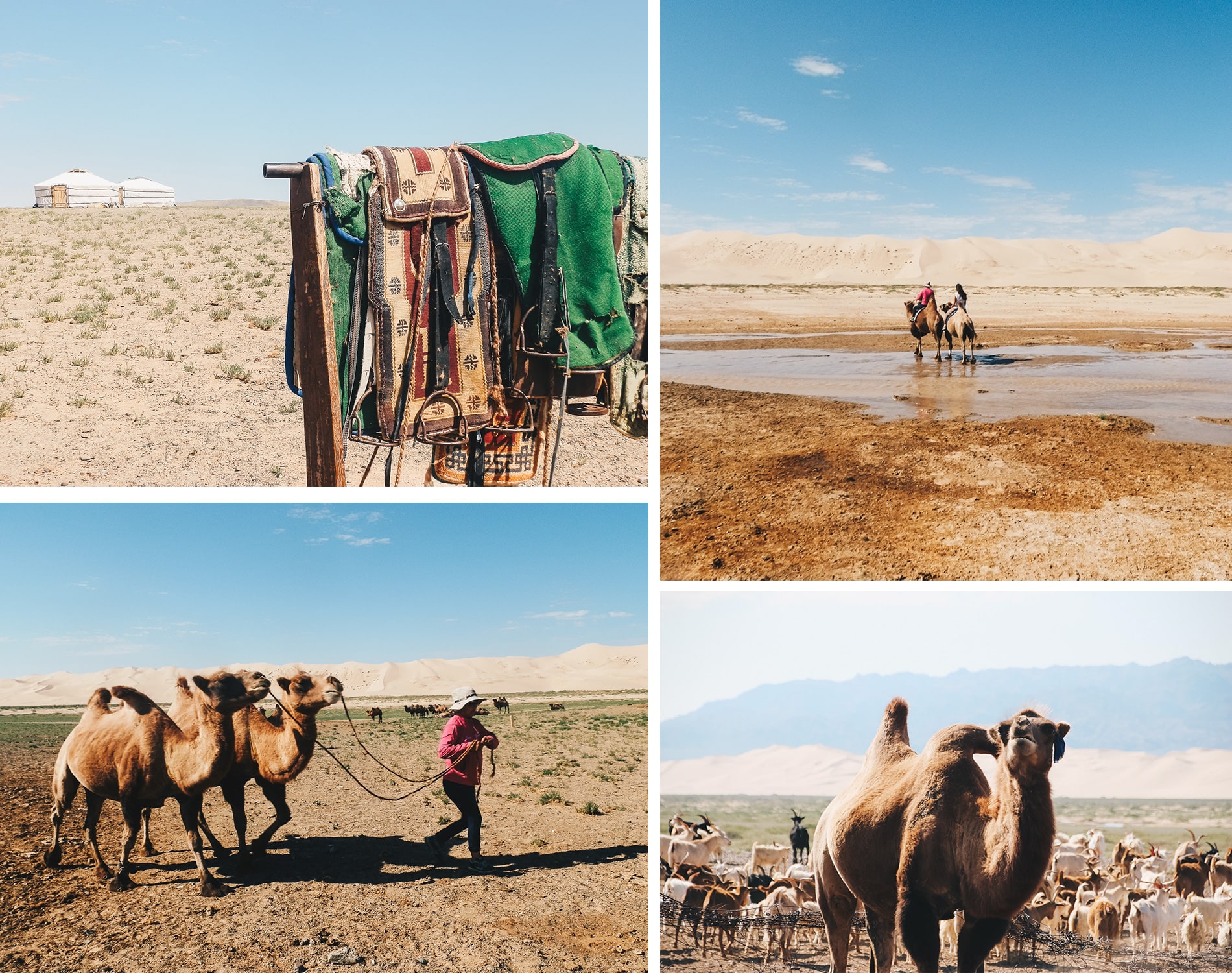
After a comfortable night’s sleep, the next day we headed to a small farm nearby for a 1-hour camel ride near the dunes. In keeping with Mongolian hospitality and tradition, we tasted our first glass of fermented mare’s milk and our first (and last) local cheeses! You have to have a strong stomach to tolerate them, as they really sting under the tongue.
THE BAYANZAG CLIFFS
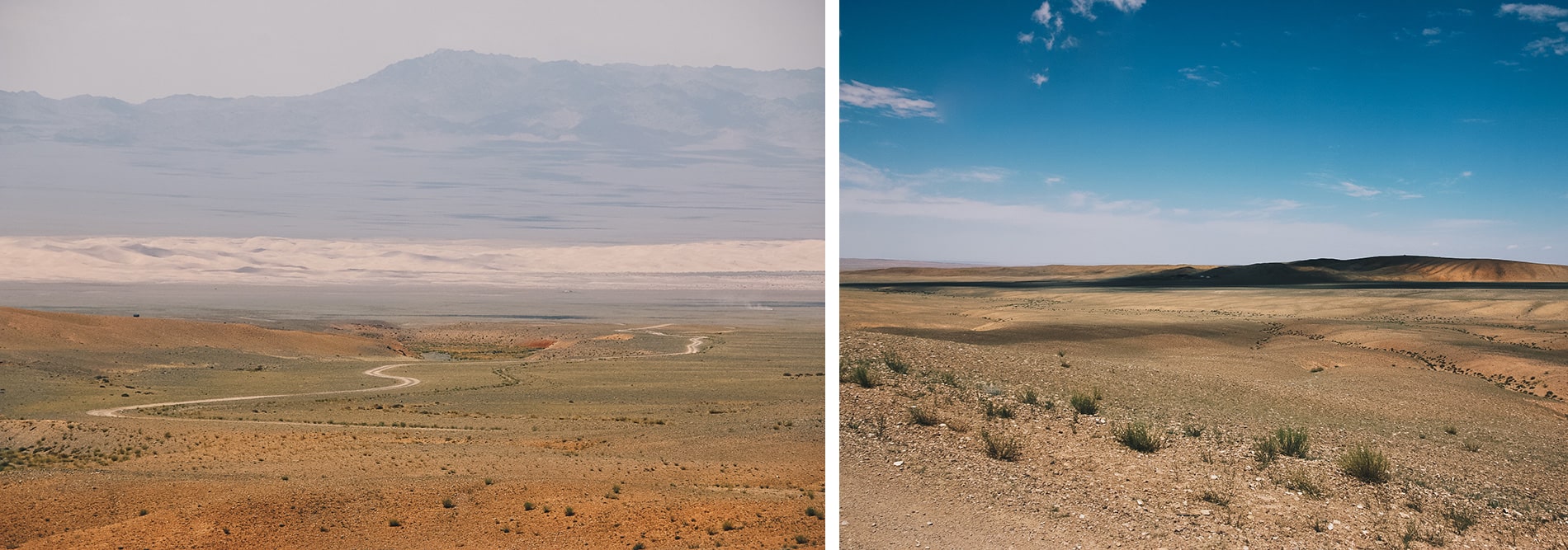
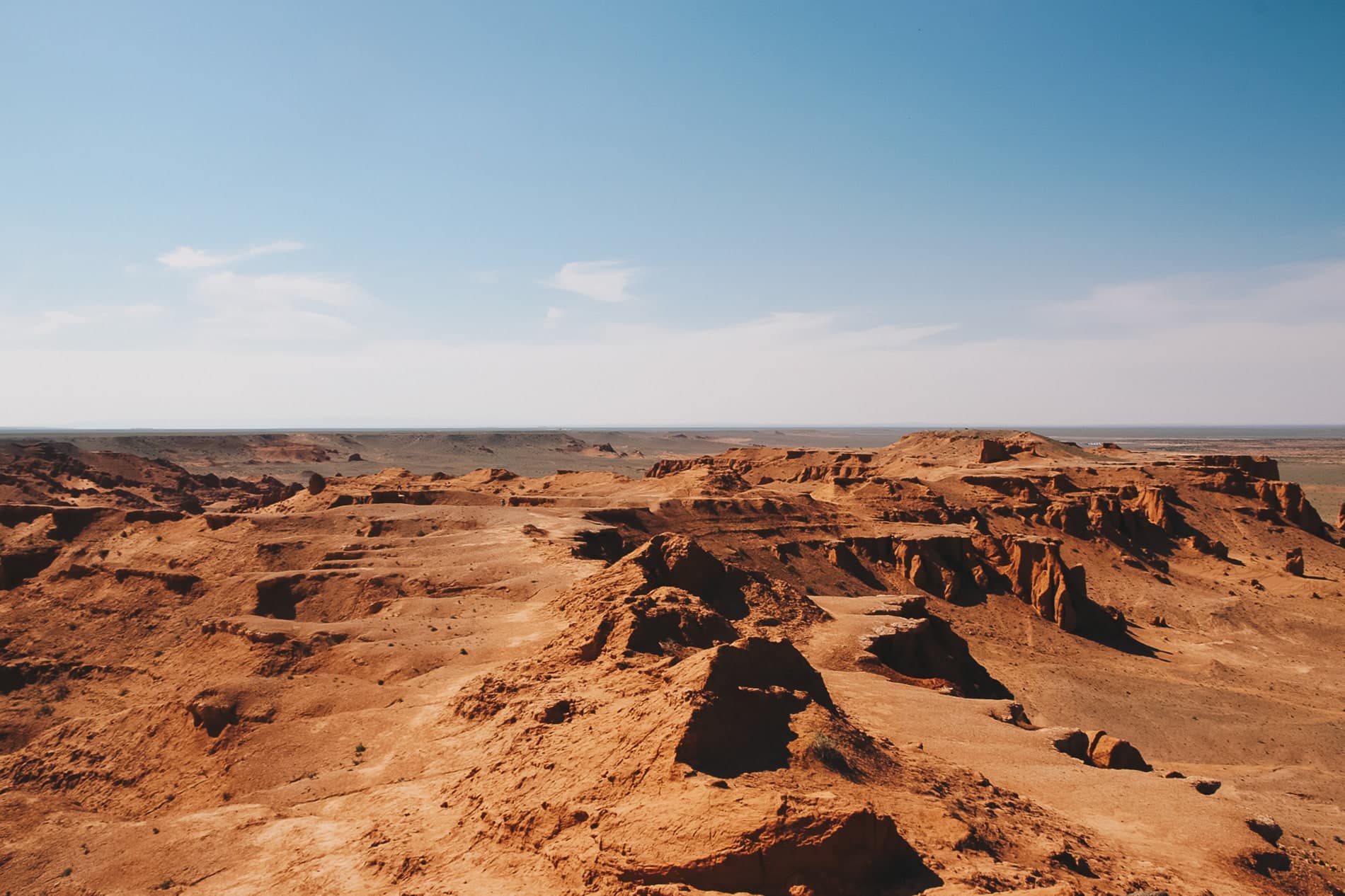
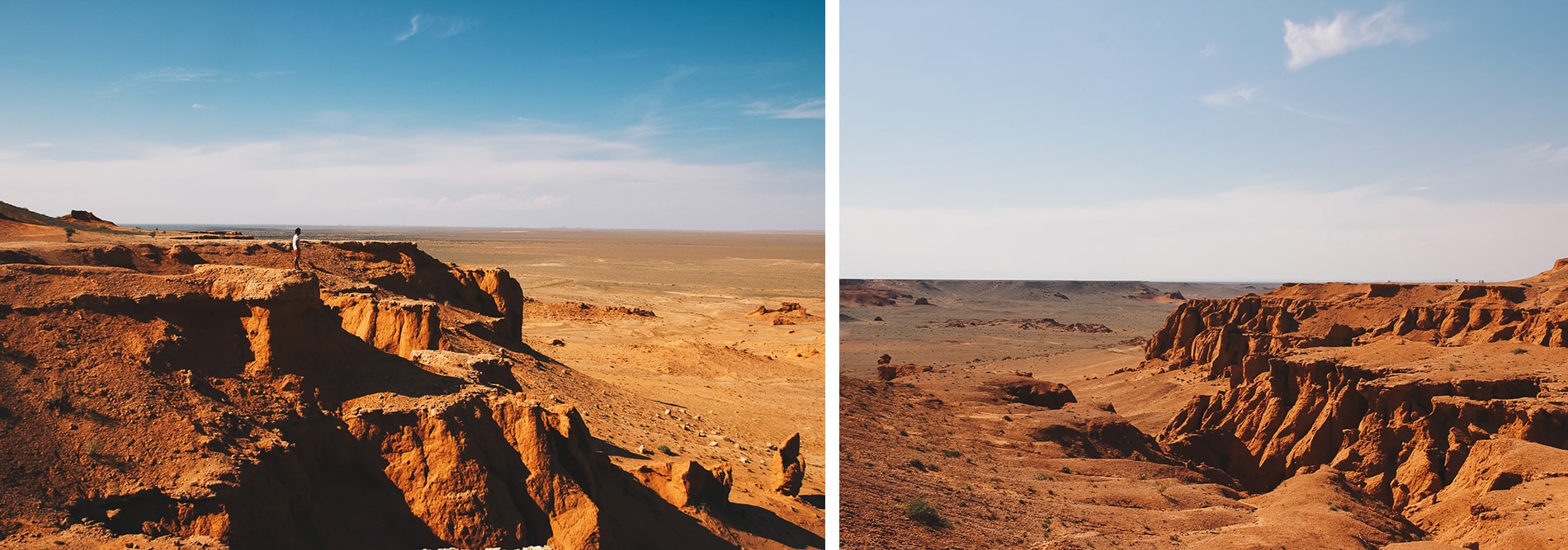
It’s a 4-hour drive from the Khongor dunes to the Bayanzag site. The road is sublime, desert-like, arid and winding, with mountain passes to cross. The views are truly incredible and the landscape breathtaking. Made up of red sand, rocks and canyons, it’s well worth the diversions. The scenery resembles that of Monument Valley in the USA, and the thought that you are on prehistoric land where these gigantic vertebrates once lived gives you a wonderful sensation.
The Bayanzag Cliffs are an important palaeontological site in the world: it was here in 1922 that Roy Chapman, an American palaeontologist, found several fossilised dinosaur bones and Velociraptor eggs. A characteristic desert flora also grows in this environment, the saxaouls. These are trees with long roots that draw water from deep below the surface and also fight against shifting sand.
Close to the Bayanzag site, we tried out a luxurious yurt camp. Planted right in the middle of the desert, you’ll find yurts with private bathrooms surrounding a central restaurant. The cuisine on offer is Western and very good, and breakfast is well stocked. It’s an ideal place to spend a day strolling around, taking the time to feel like you’re in the middle of the desert while reading a book, or an ideal starting point for visiting the Bayanzag cliffs.
THE NAADAM
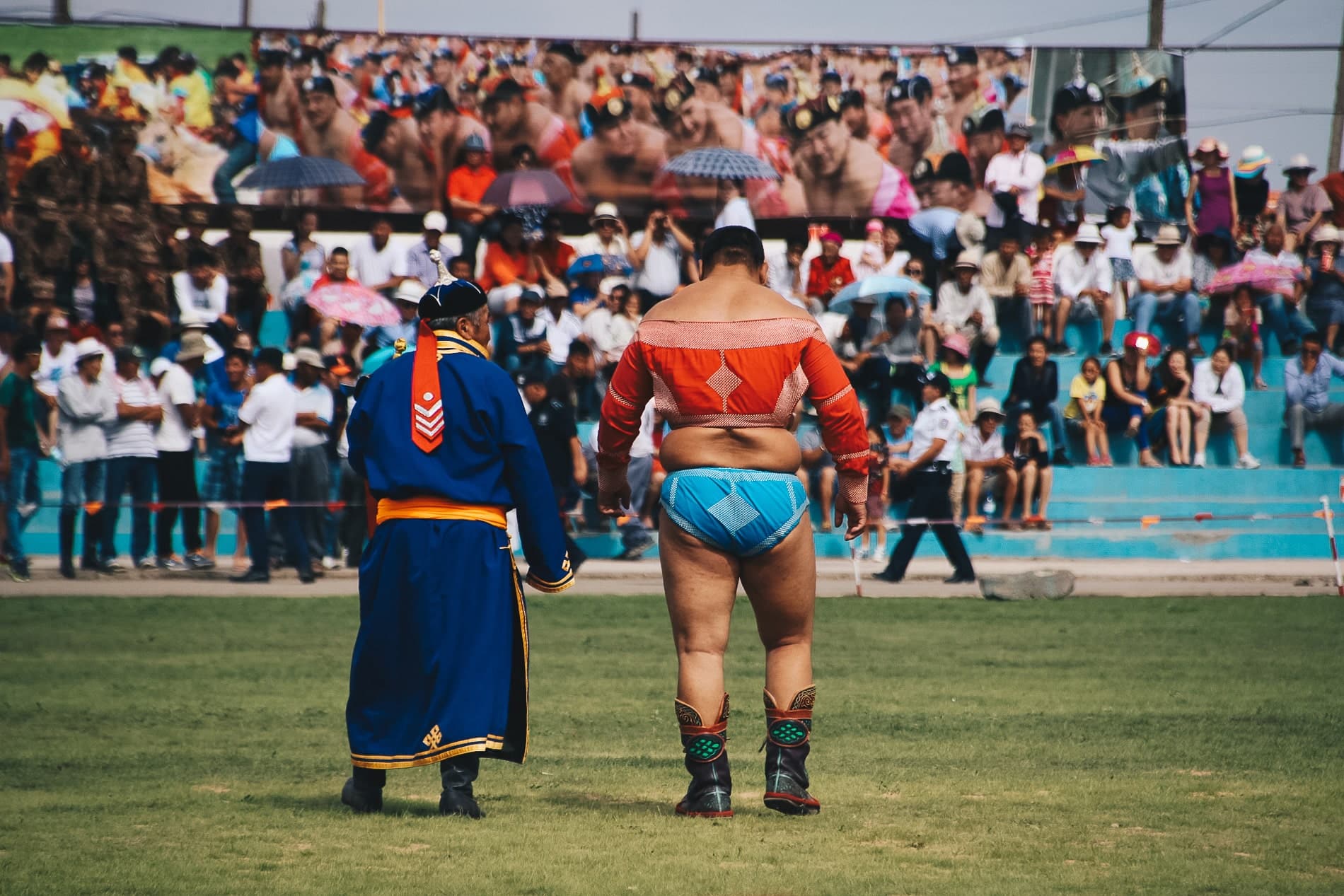
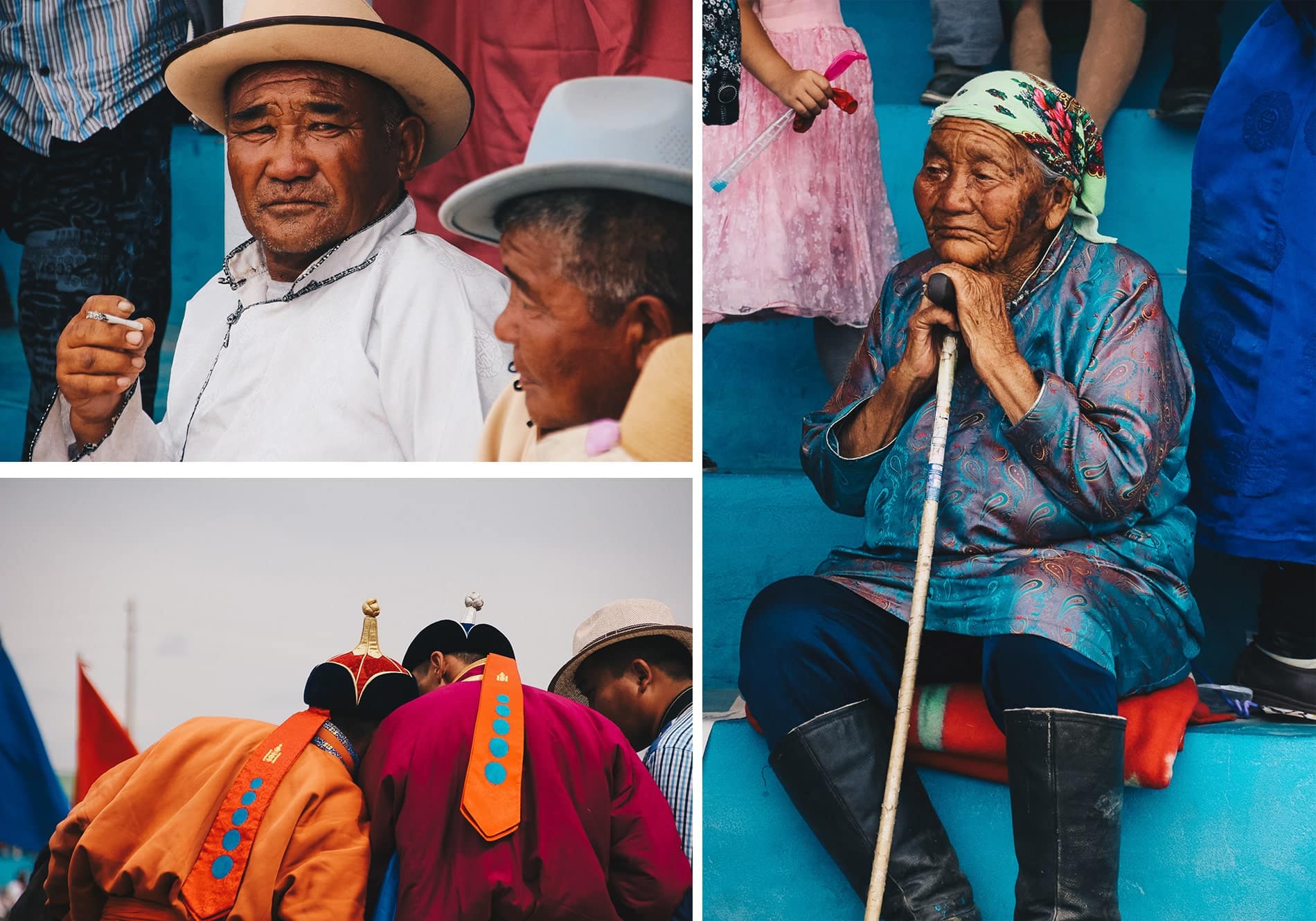
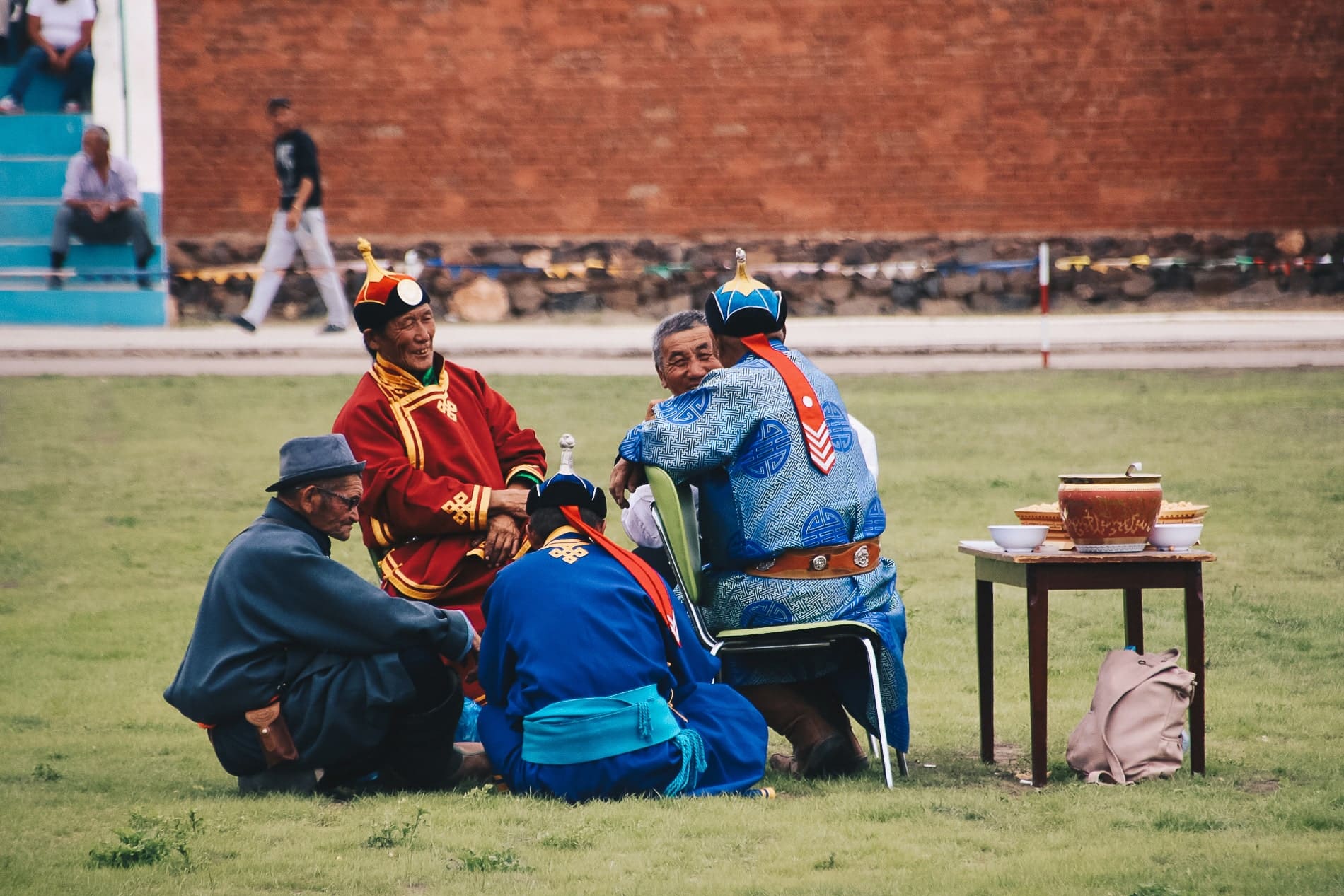
We spent a whole day at the Dalandzadgad Naadam, which takes place every year at the end of July. If you are not there at that time, you can go and see the Khavtsgait rock paintings instead.
Naadam, which means “games” in Mongolian, is the main traditional Mongolian festival in July, and is very popular with the locals. Over the course of a few days, fierce horse races, archery competitions and wrestling matches are organised. It’s a chance to have fun, get together with family and friends, drink Airag (fermented mare’s milk) and taste khuushuur (sheep’s slippers), and put on your best traditional costume. It’s an event that’s celebrated around the big cities and not to be missed if you’re in the country. We even got a photo with the winner of the wrestling competition!
| THE ORKHON VALLEY
After a night in our HQ in Ulan Bator, we set off for the second part of the journey, heading for Kharkhorin, a 6-hour bus ride from the capital! Welcome to the Mongolian steppe, home to just two people per km2.
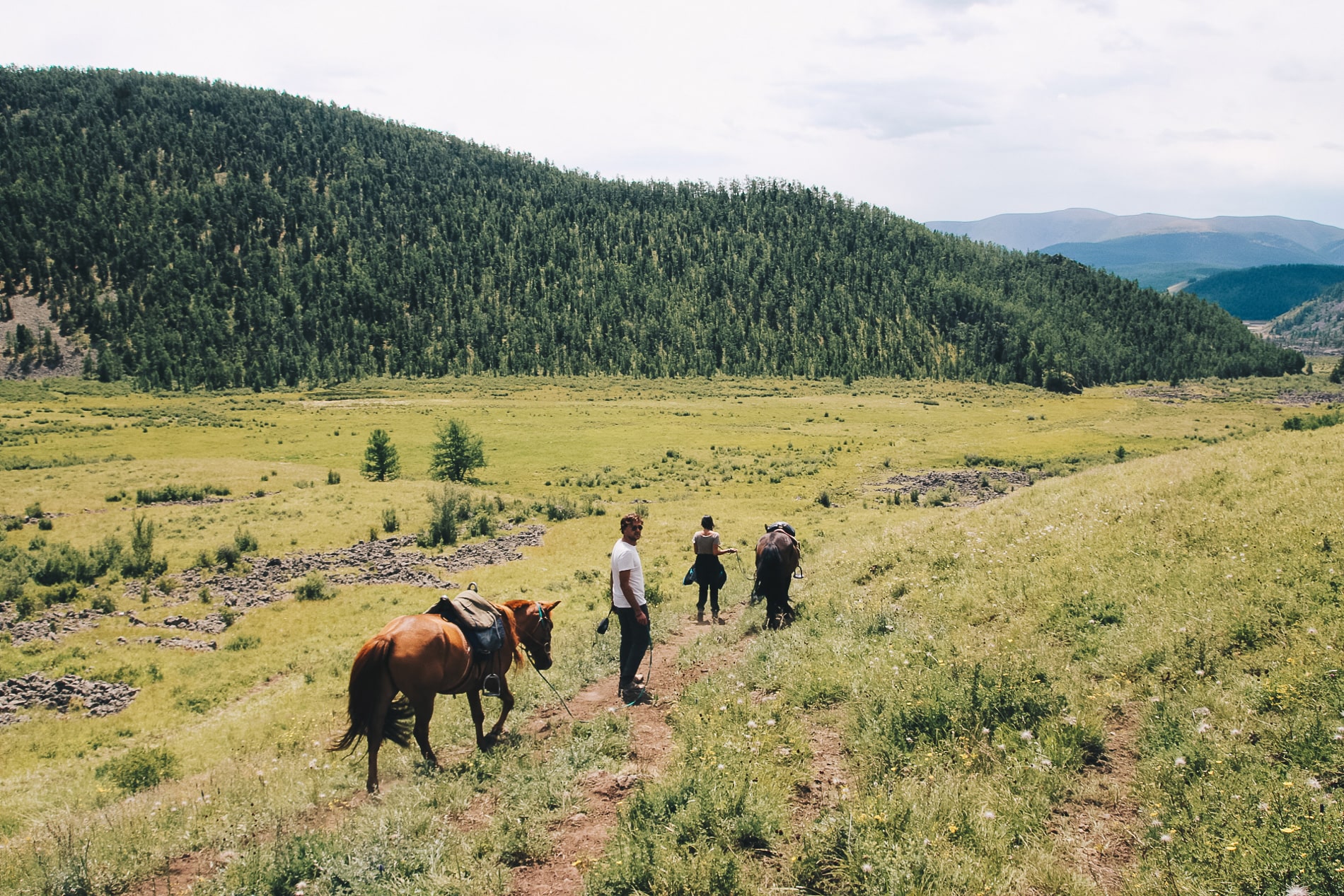
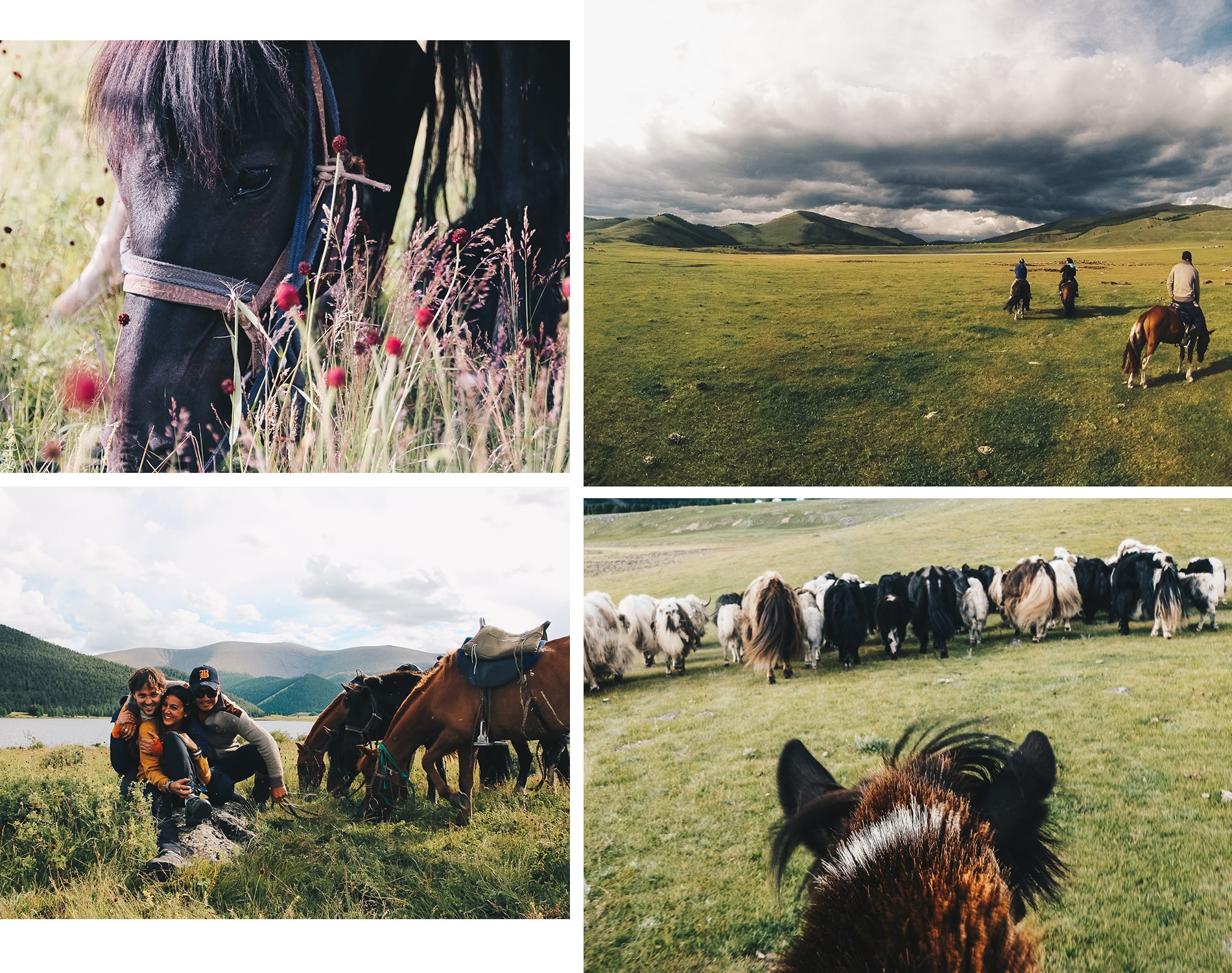
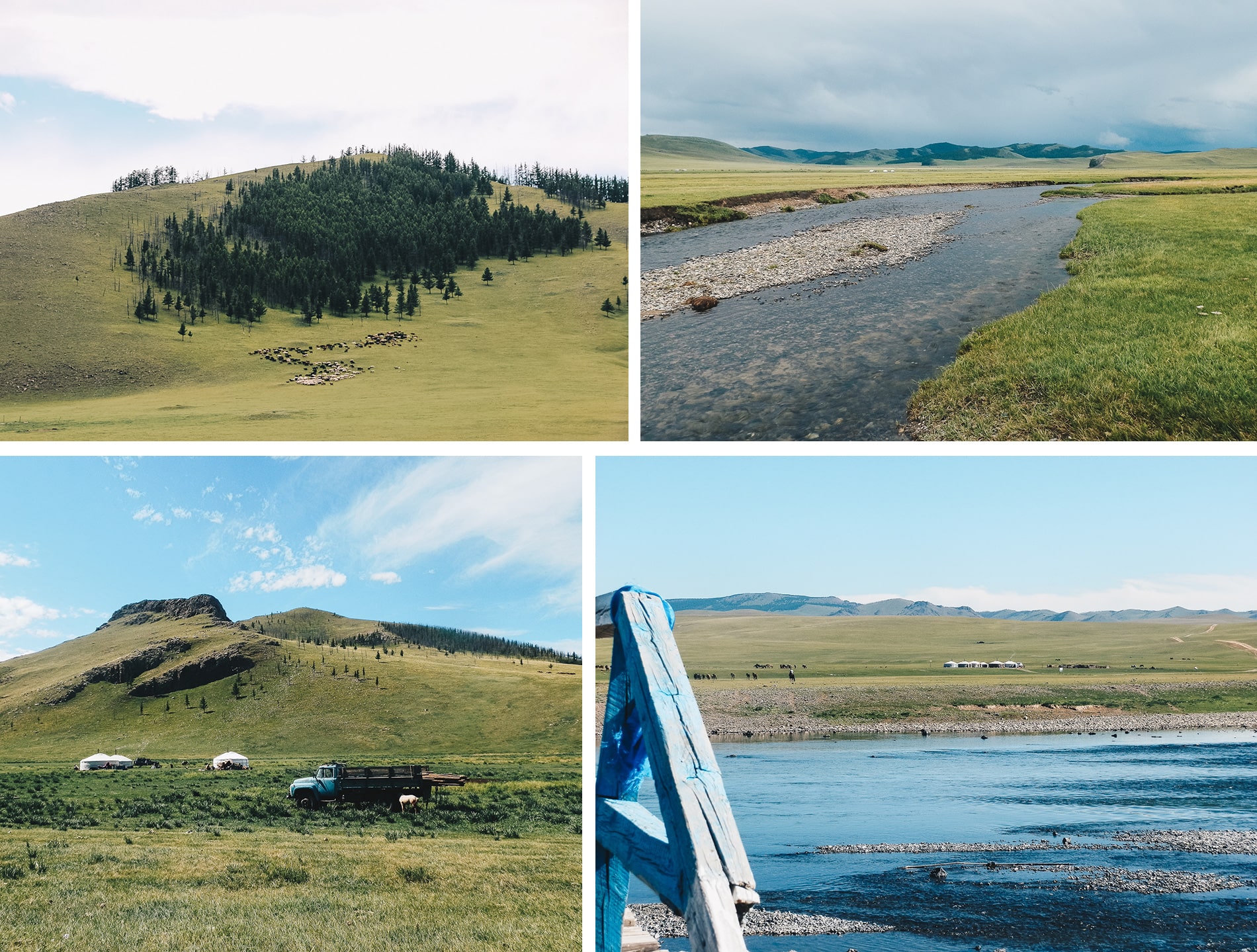
The Orkhon valley, in the central part of Mongolia, is now a nomadic area where many herding families live and set up camp. This valley is renowned for its immense steppes of the Khangai massif, its large lakes and its flora and fauna. It is a great area for horse riding and the valley is the starting point for many walks in the surrounding mountains.
This valley is full of different landscapes and monasteries such as the majestic Kharkhorin and its gigantic monastery called “Erdenet Zuu”, one of the oldest Mongolian Buddhist monasteries, or the Tuvkhum hermitage built in 1653, set in a magnificent site close to a mountain whose peak is forbidden to women.
Admission to Kharkhorin is free. There is only a charge to visit the monastery’s three temples, dedicated to the 3 stages of Buddha’s life: childhood, adolescence and adulthood. The monastery is surrounded by a magnificent, immense white fortified enclosure with a stupa at regular intervals: 108 to be exact, a number apparently sacred to Buddhists.
We chose to explore the Orkhon valley on horseback and by jeep. After some hesitation, as we are not experienced riders, we decided to do just 4 days of trekking on horseback, 1 day at Tsenkher for its hot springs, a day devoted to visiting the Kharkorin monastery for its architecture and the Khurkhree waterfalls, the starting point of our trek.
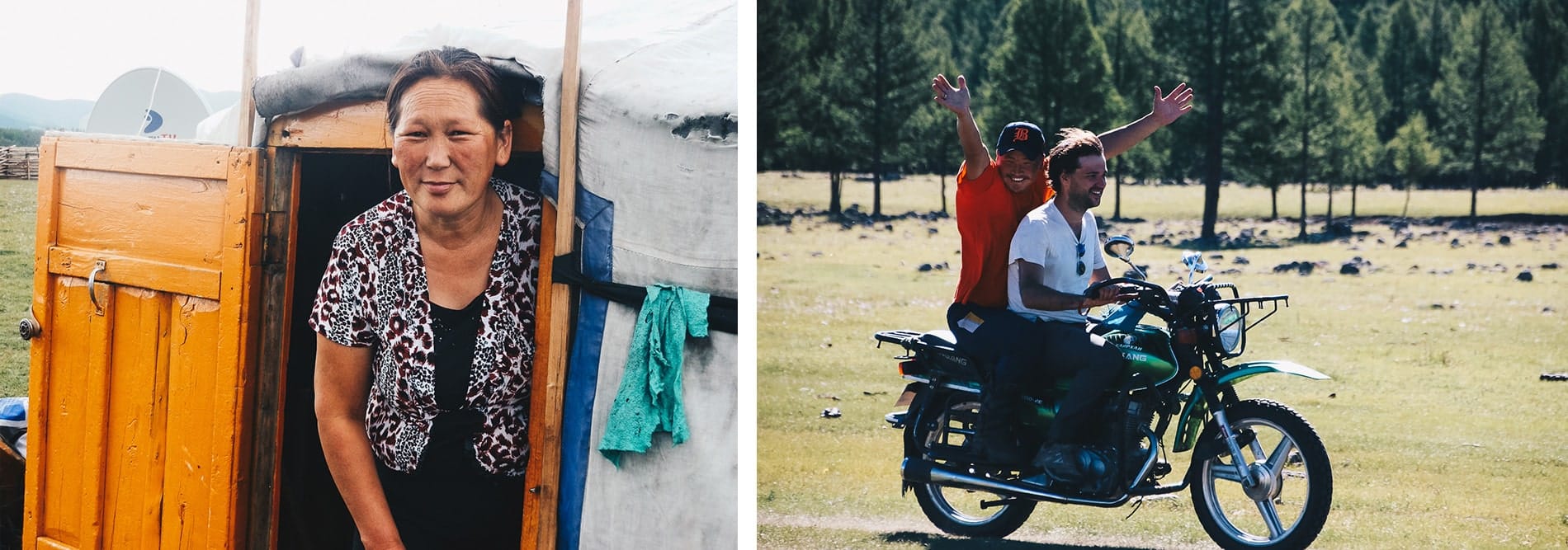
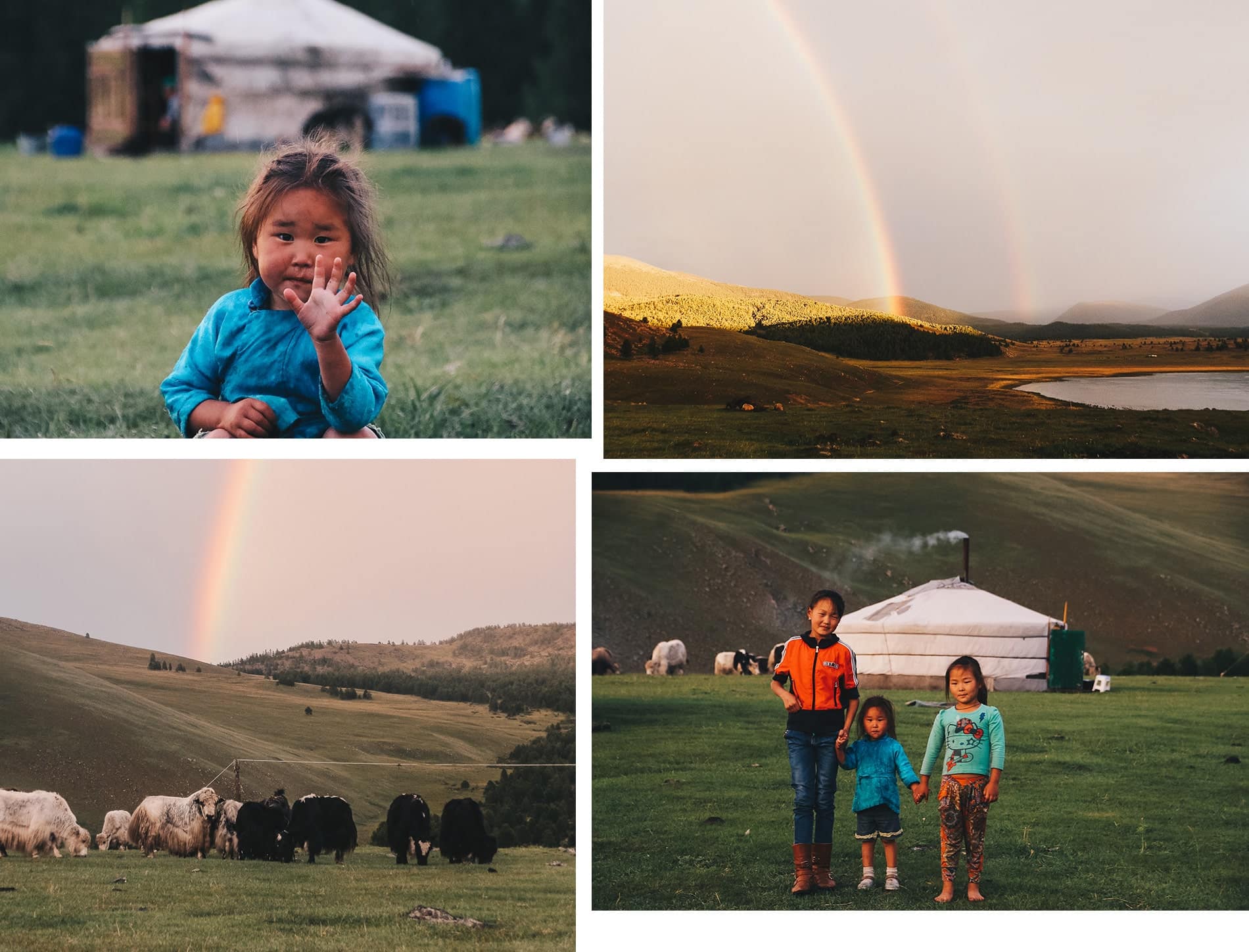
We have some very fond memories of the nomads we met, particularly Chouka, who was one of our highlights. Although she didn’t speak any English, she managed to give us some magical moments, from trying on Mongolian costumes to cooking lessons and milking goats and yaks in the early hours of the morning. It was then that our stay took on a whole new dimension.


THE 8 LAKES REGION
Our trek on horseback extended to the region of the 8 lakes, finally 9, in the Naiman Nuur national park in the province of Övörkhangai, 35 km south-west of the Orkhon Falls. The result of several volcanic eruptions, this site covers 11500 ha and is made up of forests, marshes and rocky outcrops. It can only be seen on horseback or on foot, as the track is impassable. The view at the finish line is very beautiful, especially in the light of sunset.
THE TSENKHER HOT SPRINGS FOR A RELAXING BREAK
After the first 5 days of galloping in all directions, struggling in the swamps with our horses and feeling the Mongolian saddle on our backsides, the Tsenkher hot springs were eagerly awaited! On the way, we were supposed to stop at the monastery in the Tovkhon forest in the Khangai Nuruu national park, perched on the mountain. Unfortunately, a thunderstorm interrupted our climb and we had to turn back in the hail! Allow 2 hours for the climb.
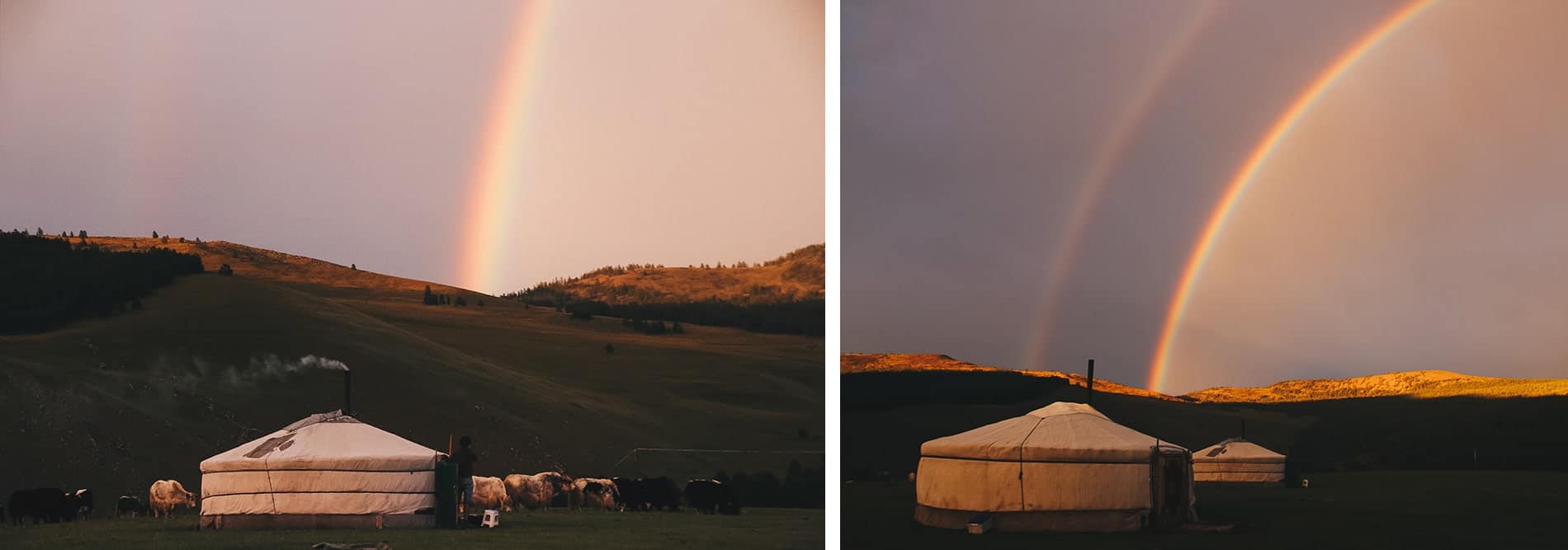
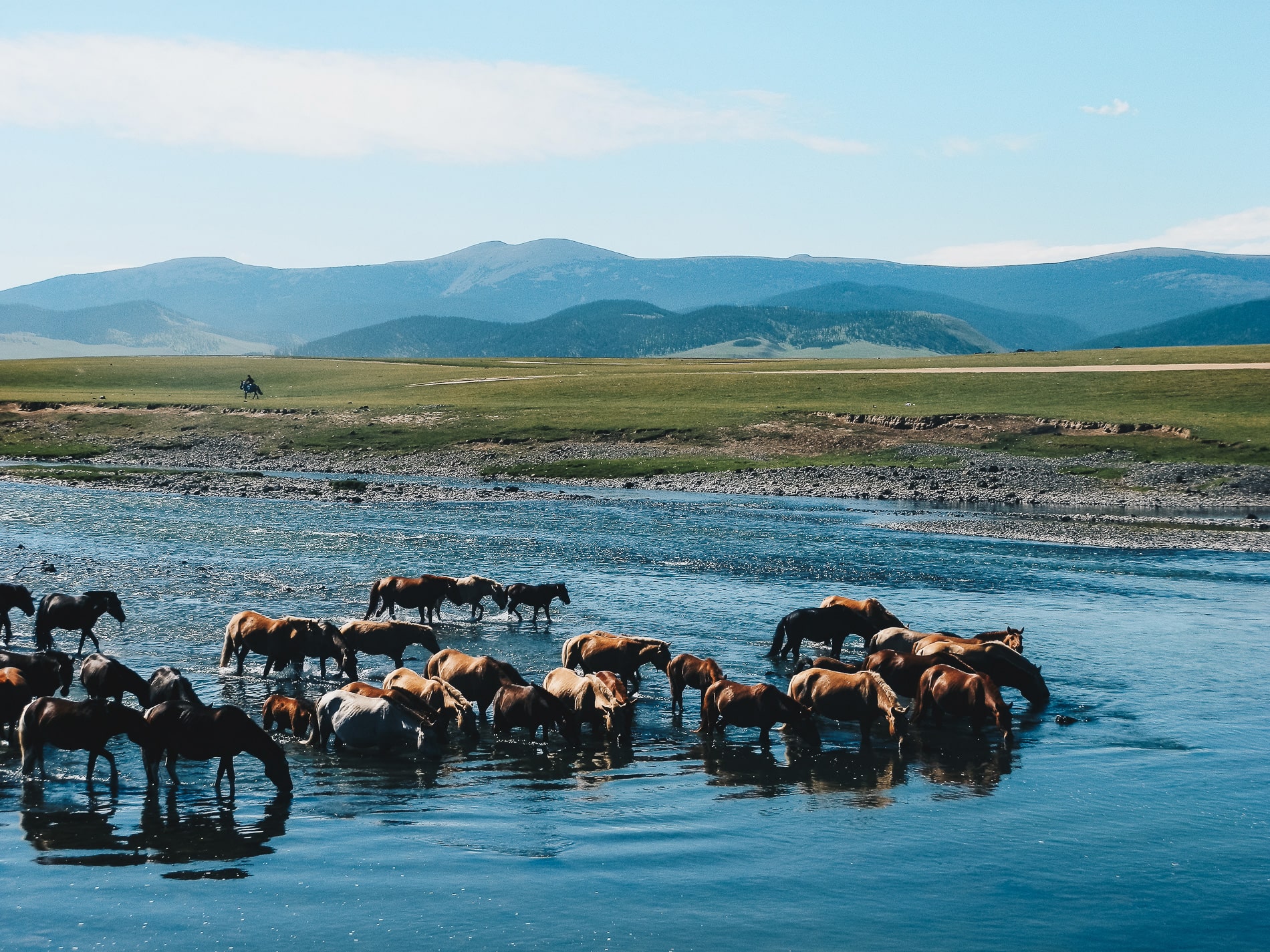
The road leading to the Tsenkher springs is really beautiful, with lakes where the horses drink, large green steppes, valleys and a few yurts.
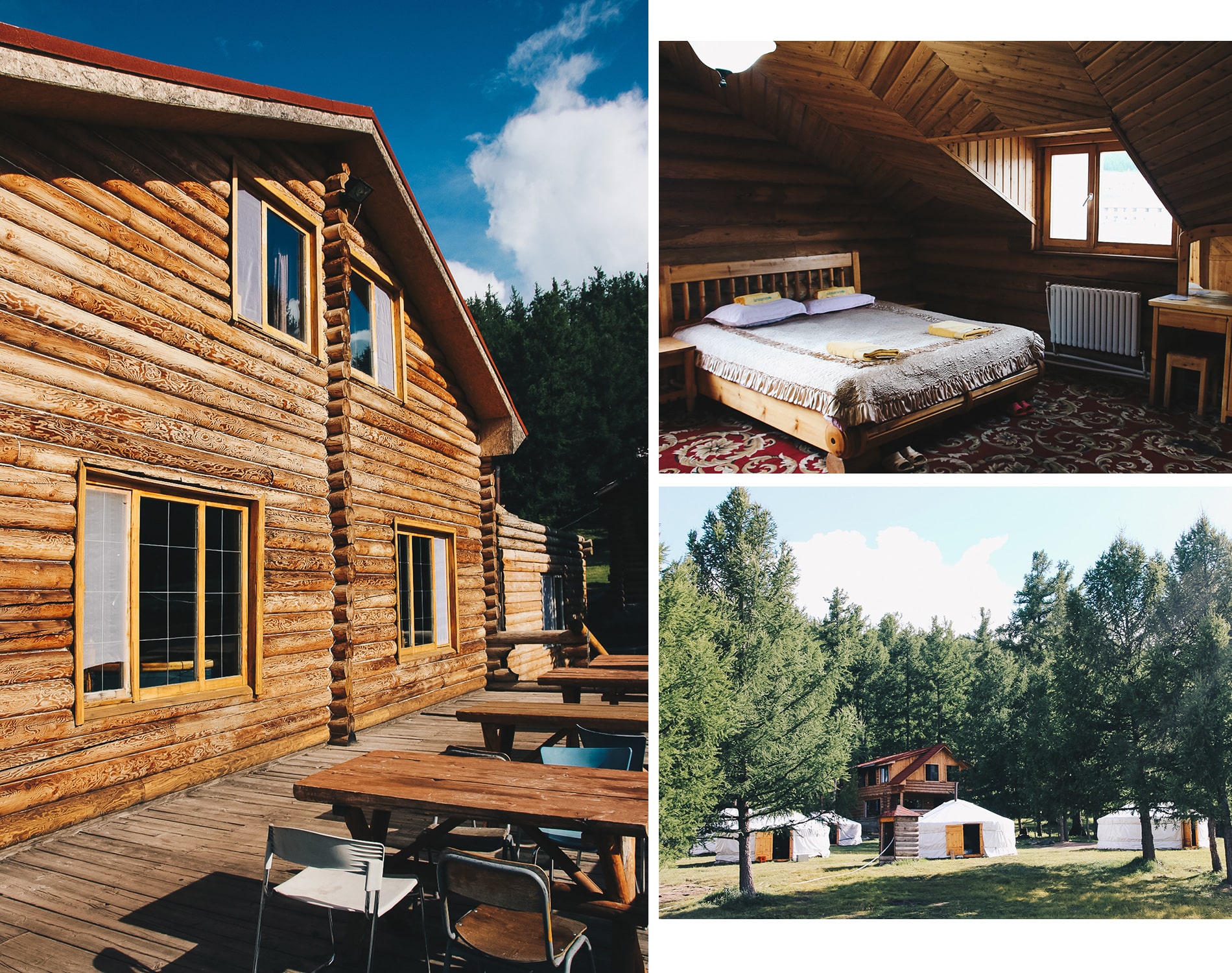
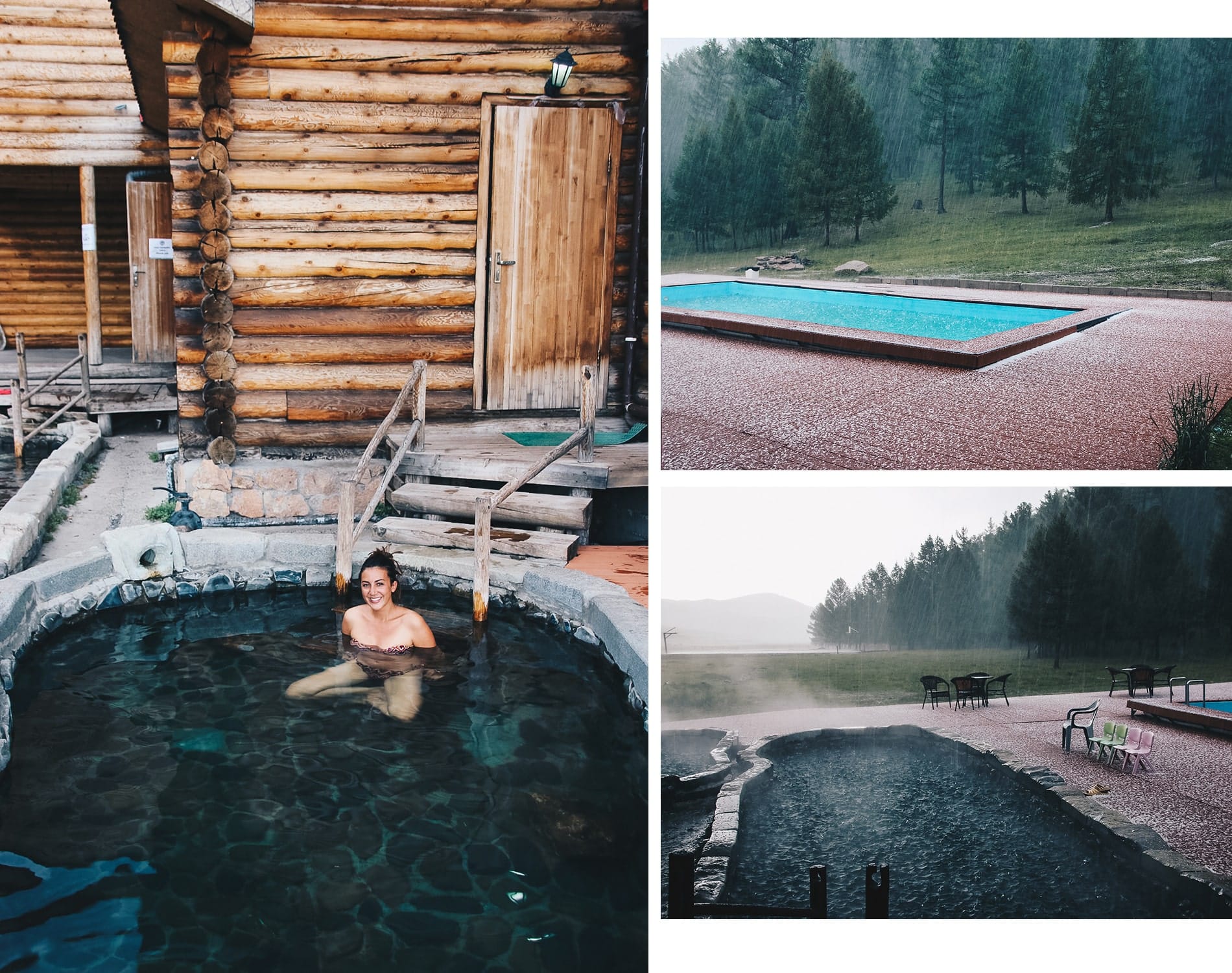
The hotel complex where we stayed is open from May to mid-October and comprises 25 yurts sleeping 4 and 5 in the main wooden chalet. Every year, many visitors come here to relax at the end of their journey and enjoy this ideal setting. There’s also a stone swimming pool with water at 80 degrees and another with ice-cold water. The spring delivers water at around 90 degrees, which is of course cooled before bathing. This water is said to have skin-rejuvenating properties, and many Mongolians from Ulan Bator come here for a weekend. Here you can relax in front of the forest and enjoy a massage in the centre of the complex. The setting is pleasant and relaxing, and if you’re lucky like us, you’ll be able to bathe in the springs in the middle of a hailstorm in August!
| ULAN BATOR
You won’t need more than 2 days to get a taste of the capital. We did, however, enjoy the more western-style restaurants and the visit to the dinosaur museum 300m behind the department store. This very small museum is a great complement to the visit to Bayanzag in the Gobi desert. Here you can see, among other things, the bones of a Velociraptor and fossilised eggs. It’s fascinating to imagine what Mongolia must have been like in their time. It’s a ton of marshland where life was rich, in contrast to the more hostile country it has become. A more complete museum is under construction and I think it will be very interesting.
We also took a tour of the Black Market, which wasn’t particularly interesting, and opted instead for a rest as the city didn’t invite us to explore any further.
To get around, don’t hesitate to use the inexpensive bus with the help of an application such as“maps.me“, or opt for a taxi, which involves raising your hand and waiting for someone to stop and take you away. It works like that here, and the fare is around 800T/km.
This 17-day itinerary was a good combo for an authentic discovery of Mongolia. Bear in mind that this country is very, very big and that you’ll be covering a lot of ground. So you won’t be able to see everything in 17 days, and I wouldn’t advise you to visit several places at once. Instead, focus on two areas over two weeks.
Please note that as an accredited creator of tailor-made trips, I offer to help you create your tailor-made trip to Mongolia and to draw up a personalised itinerary tailored to your wishes. To do this, please send me an email at: contact@mademoiselle-voyage.fr
Before you leave, don’t forget to read all our other articles on Mongolia to help you prepare for your trip:
Don’t forget to pin the article on Pinterest to find it more easily