Imagine a night illuminated by thousands of candles, paths strewn with orange petals, families gathered around graves adorned with flowers, music, and laughter. Welcome to Día de los Muertos, the Day of the Dead in Mexico, an event both heartrending and fascinating, where death is not synonymous with sadness, but with celebration.
Inscribed on the Intangible Cultural Heritage of Humanity by UNESCO, this festival is a vibrant tribute to those who have left us. For two days, the boundaries between the living and the dead disappear: people come together, they speak, they share a meal. Here, death is seen as a continuation of life, an opportunity to celebrate memory with tenderness and color.
But how did this tradition originate? And why does Mexico accord it such a central place in its culture?
TABLE OF CONTENTS :
| What is the origin of the Day of the Dead in Mexico?
Before becoming the colorful festival we know today, Día de los Muertos has traversed centuries and civilizations. This celebration of the bond between the living and the dead is far more than a custom: it is a genuine philosophy of life, rooted in the history and spirituality of the Mexican people. Behind the golden petals, the candles, and the smiles lies a fascinating story, shaped by cultural fusions and ancient beliefs.
-
Pre-Hispanic roots
Long before the arrival of the Spanish, pre-Columbian civilizations such as the Aztecs, the Mayas, and the Purépechas were already honoring their deceased. Death was not seen as an end, but as a stage in the natural cycle. Souls continued their journey in another world and could return, once a year, to visit the living. The ceremonies of that time, often linked to the maize cycle, symbolized rebirth and the continuity of life.
-
Spanish and Catholic influence
In the 16th century, with colonization, these ancestral rites merged with the Catholic celebrations of All Saints’ Day and All Souls’ Day. Spanish missionaries attempted to impose their traditions, but indigenous communities preserved their essence. From this encounter arose a unique fusion: a festival where prayer blends with music, where sorrow meets color, and where the dead are honored in joy.
-
A festival turned world heritage
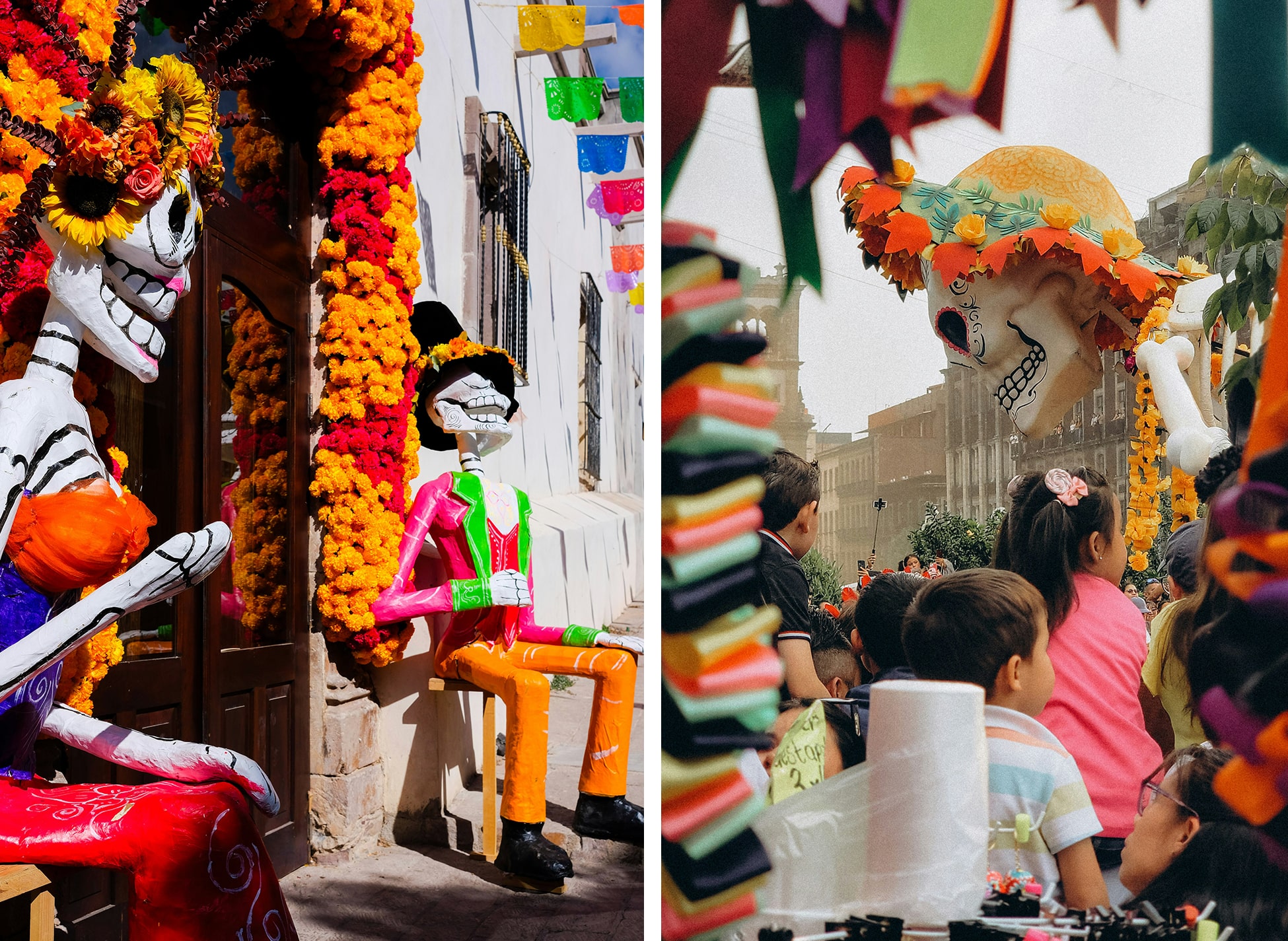
Today, Día de los Muertos is recognized by UNESCO as Intangible Cultural Heritage of Humanity. This celebration, both spiritual and joyful, unites families around remembrance and gratitude. It is not a festival of death, but a festival of life, of memory and love that transcends time.
| What are the symbols and rituals of Día de los Muertos?
What makes the Day of the Dead in Mexico so unique is its ability to blend emotion, color, and poetry. Every detail has meaning. Nothing is left to chance: the flowers, the candles, the dishes, the painted faces… each tells a story. And it is precisely these small symbols that give this celebration all its significance and beauty.
-
The altars (ofrendas)
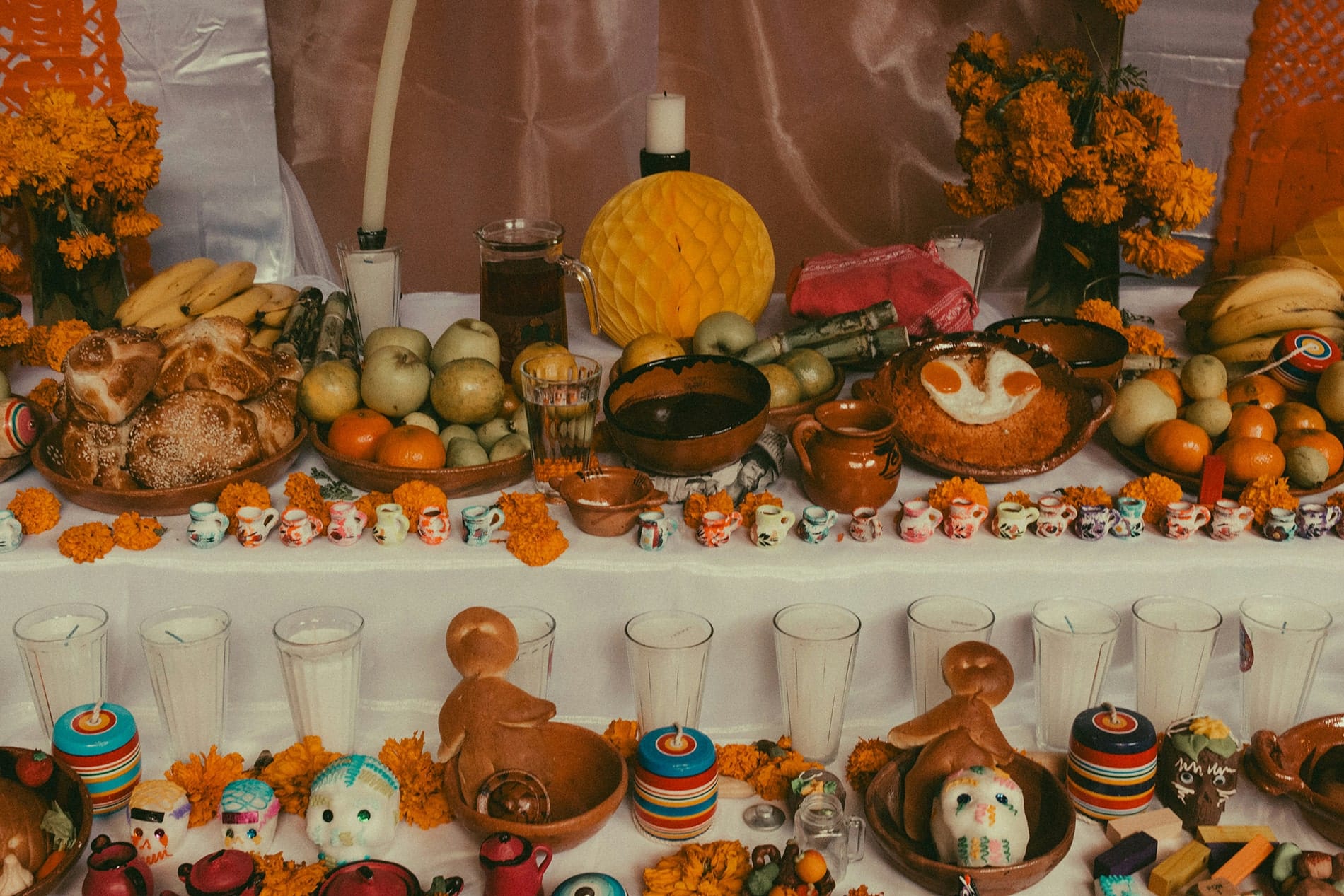
The altars, or ofrendas, are the heart of Día de los Muertos. In every home, families set up a space dedicated to their departed loved ones, decorated with photos, candles, incense, and the dishes they enjoyed. On several levels, they place food, flowers, water, bread, and even personal objects. The idea is to welcome the returning souls among the living, offering them a moment of warmth and sharing.
If you are lucky enough to be in Mexico at this time, take the time to visit these altars, whether in homes, schools, or public squares. Each one is different, each tells a story.
-
Marigold flowers (cempasúchil)
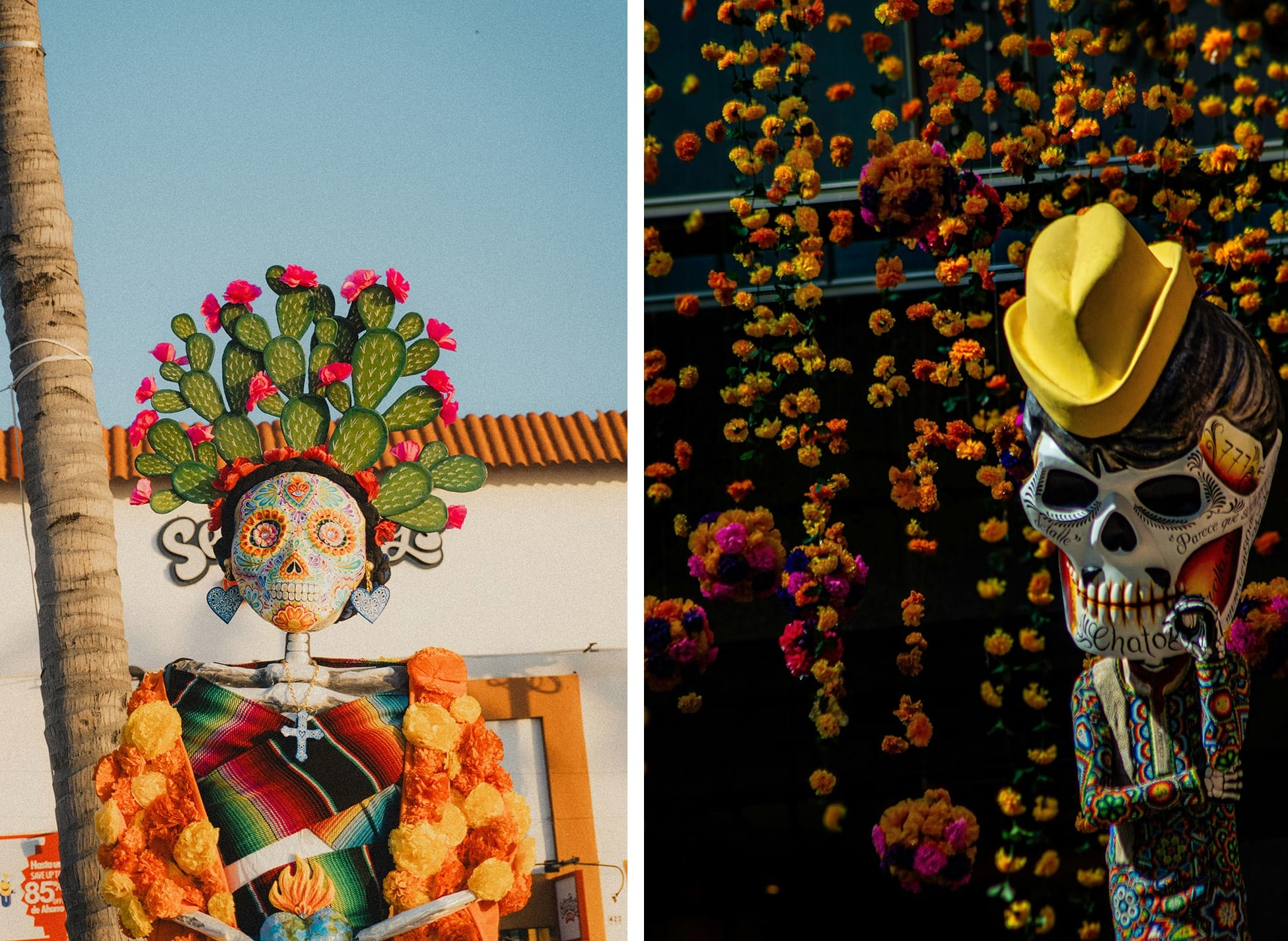
It is impossible to miss these bright orange flowers, called cempasúchil or “flowers of the dead.” They are found everywhere: on tombs, around altars, in garlands hanging in the streets… According to belief, their scent and golden color guide souls to the world of the living. Paths carpeted with petals serve as trails of light that bring spirits home.
-
Pan de Muerto and culinary offerings
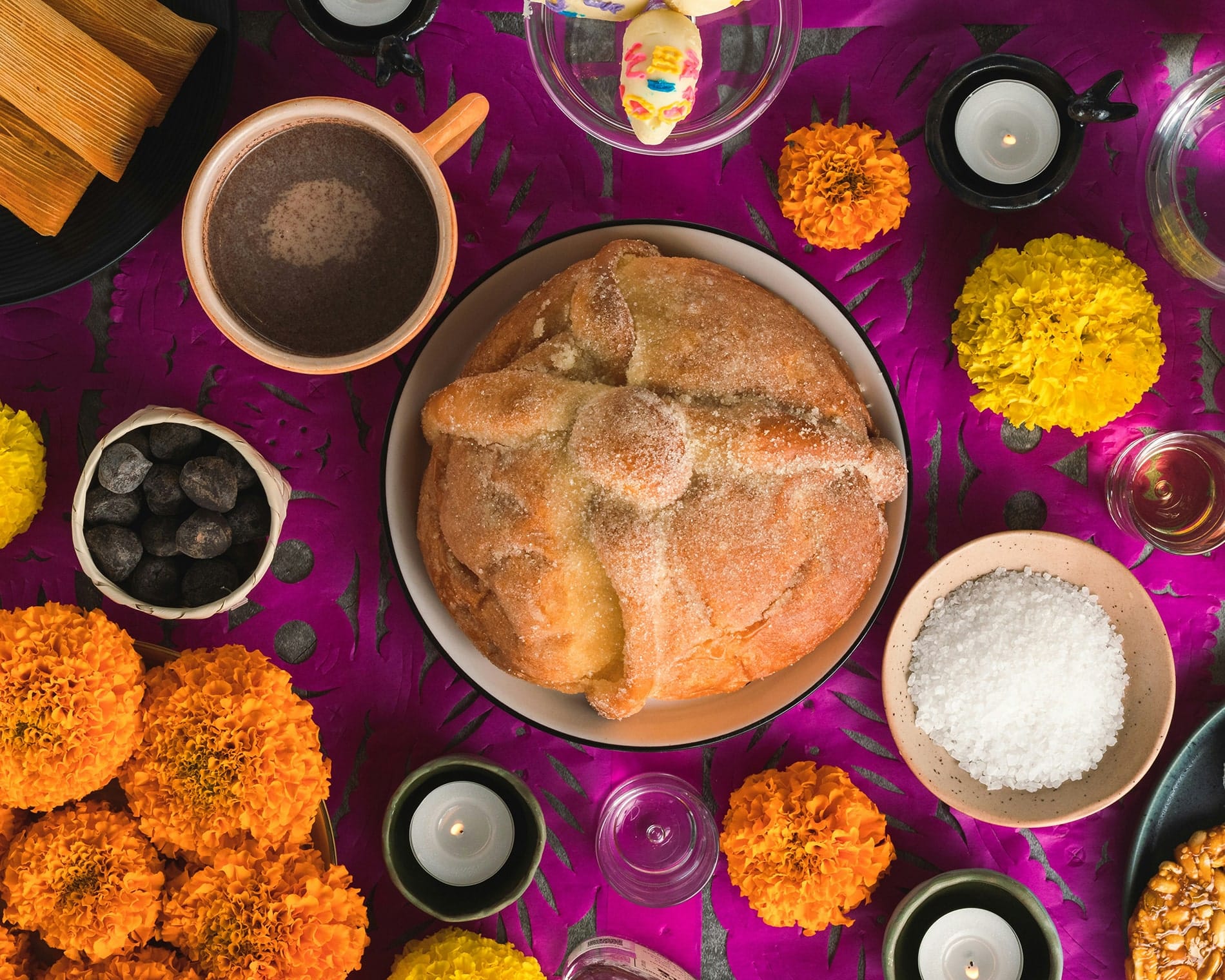
During Día de los Muertos, simple pleasures of life are also celebrated: eating, sharing, laughing together. On the altars, the famous Pan de Muerto is often placed, a sweet bread decorated with stylized bones, symbolizing the circle of life and death. It is often accompanied by atole, a warm corn-based drink, and other dishes loved by the deceased.
These offerings are not just for decoration: they embody the loving bond between the living and the dead. We prepare what the departed enjoyed, as if we were genuinely expecting them at the table.
-
Calaveras and La Catrina
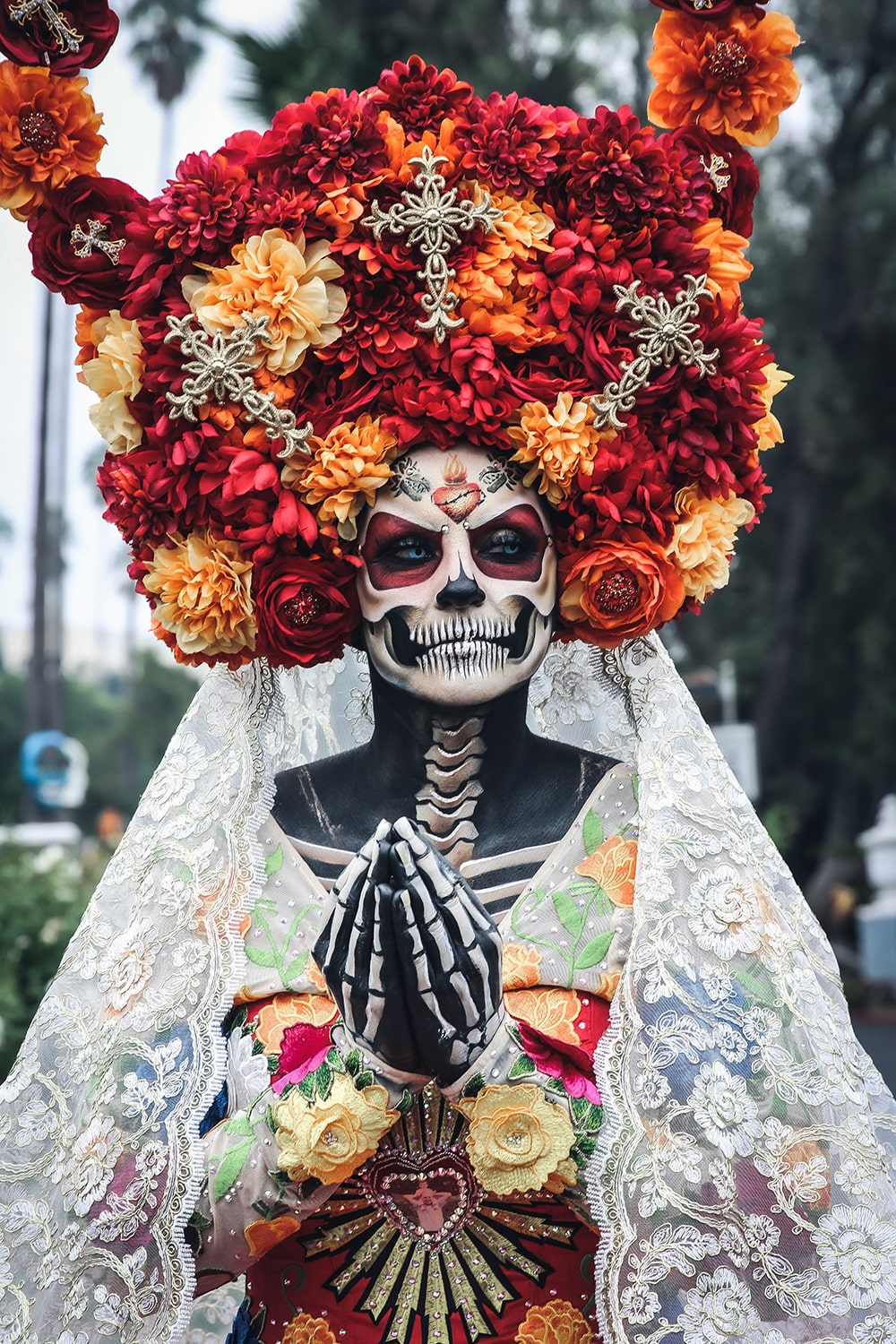
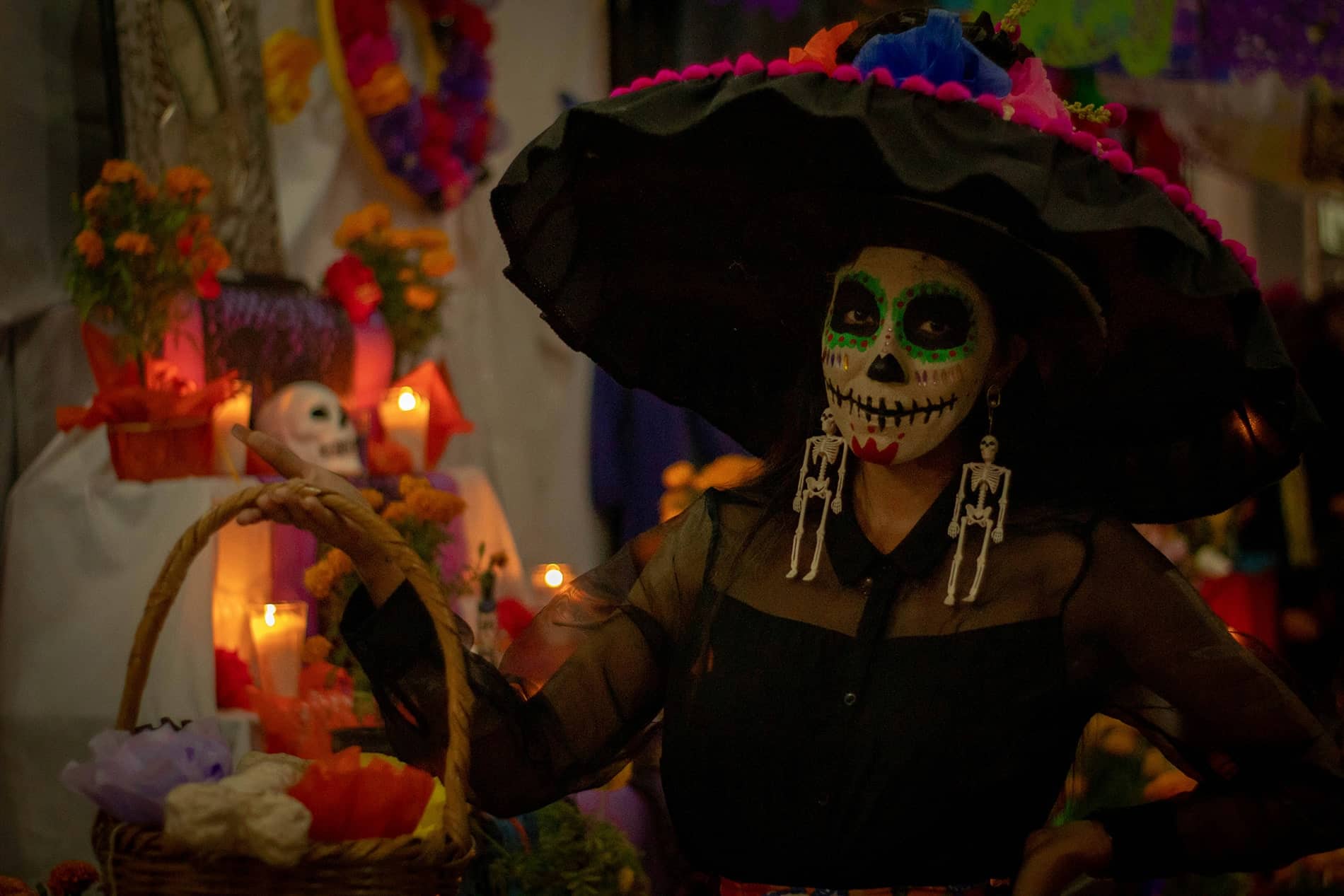
Finally, it is impossible to talk about this festival without mentioning the calaveras, those colorful skulls made of sugar or ceramic, and the famous Catrina. Created by artist José Guadalupe Posada and later popularized by Diego Rivera, this elegant lady with a hat has become the icon of Día de los Muertos. She embodies a very Mexican idea: death is part of life, so you might as well face it with a smile.
During the festival, the streets fill with living Catrinas, faces painted white and black, dressed in floral dresses with flower crowns. The atmosphere is joyful, vibrant, full of respect and beauty.
| Where to experience the Day of the Dead in Mexico?
The Day of the Dead in Mexico is not celebrated the same way everywhere in Mexico. Depending on the region, the atmosphere changes: sometimes spectacular, sometimes intimate, but always imbued with sincerity and beauty. Here are some places where the festival takes on a special dimension, places where you can truly feel the strong bond between life and death.
-
Mexico City and the Catrina parade
In Mexico City, Halloween and Día de los Muertos blend to create a festival that is both urban and poetic. In recent years, the capital has organized a grand Catrina parade: thousands of people in makeup march down Avenida Reforma to the rhythm of drums and brass bands.
The streets of the historic center are lined with colorful altars, museums and galleries exhibit death-inspired artworks, and even the Zócalo, the main square, transforms into a vast collective tribute. It is both impressive and deeply moving.
-
Janitzio Island and Lake Pátzcuaro (Michoacán)
In the state of Michoacán, the celebration takes on a completely different character: more spiritual, more traditional. On Lake Pátzcuaro, locals travel to Janitzio Island in boats illuminated by candles to keep vigil at the panteón, the village cemetery.
At nightfall, hundreds of flames reflect on the water, creating a breathtaking spectacle. Songs, prayers, and offerings merge in an atmosphere both peaceful and mystical. It is undoubtedly one of the most poignant places to experience the festival.
-
Oaxaca and its colorful markets
Heading south to the Oaxaca region, where the Day of the Dead is celebrated with incredible intensity. Markets overflow with cempasúchil flowers, Pan de Muerto, papel picado (those cut-paper banners), and sugar skulls. Locals set up altars in homes, schools, and streets, often accompanied by concerts and traditional dances.
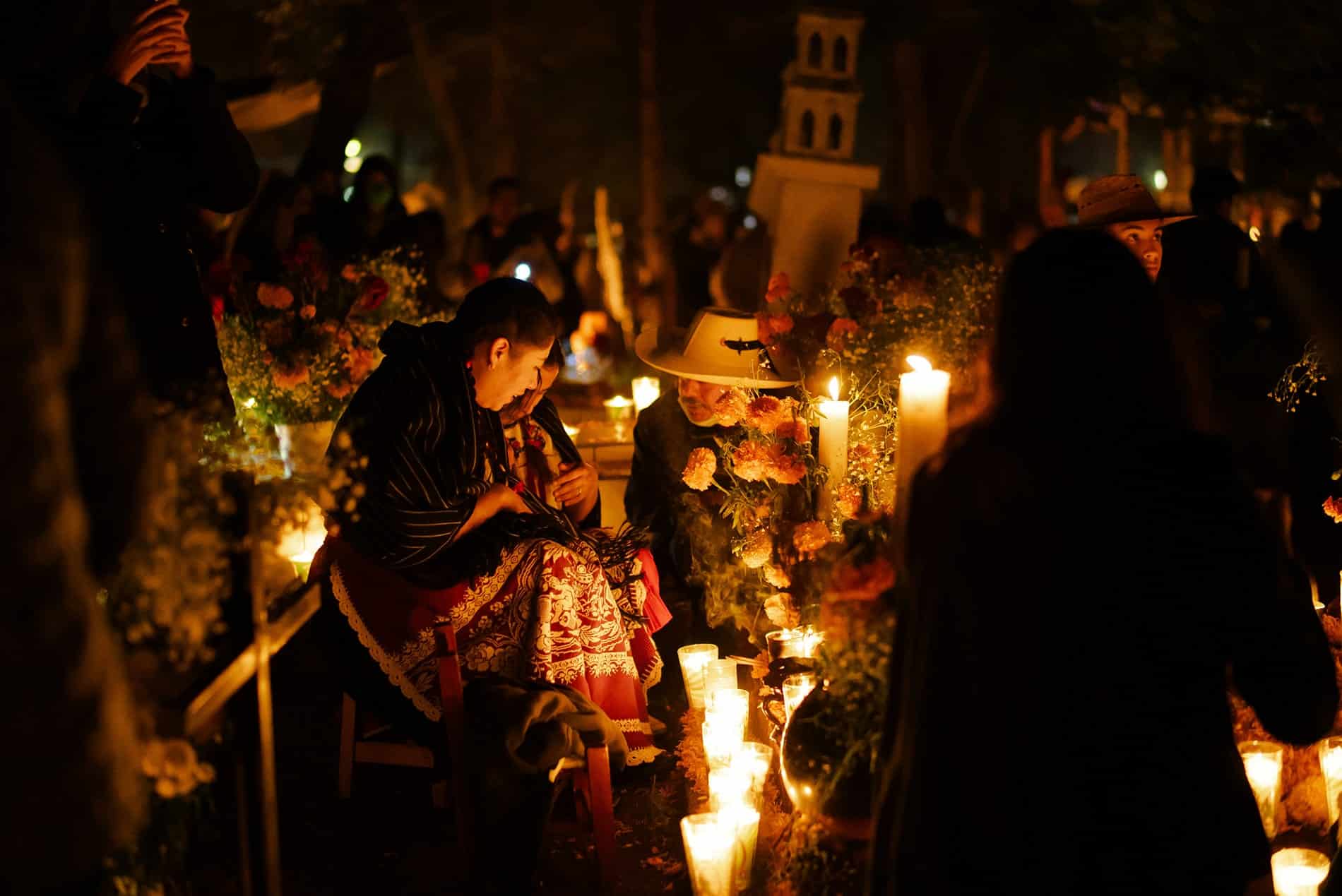
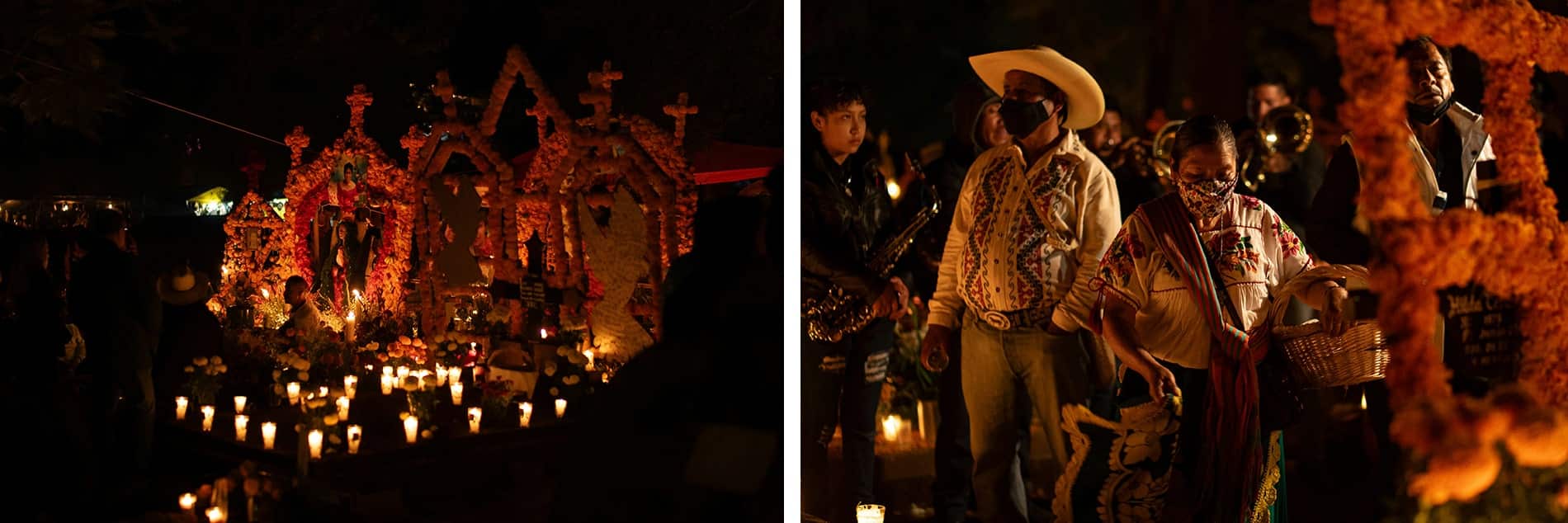
When evening comes, cemeteries light up with candles, and families gather to share a meal among the tombs. This mix of spirituality and conviviality, of reflection and festivity, perfectly represents the soul of Día de los Muertos.`
-
San Andrés Mixquic
A few kilometers from Mexico City, the village of San Andrés Mixquic is an emblematic place to experience the festival in its most authentic form. Here, traditions have been passed down for generations. On November 2nd, locals open their doors to visitors to show them family altars and share a moment of reflection.
The cemetery is lit by thousands of candles, bells chime, and the streets fill with a golden glow that seems to suspend time. The atmosphere is more intimate, but just as intense: it is the heart of deep Mexico, where living traditions meet heartfelt emotion.
| How to celebrate the Day of the Dead in Mexico as a traveler?
Attending the Day of the Dead in Mexico is a powerful, deeply human experience. But to fully appreciate it, you must live it with curiosity, respect, and sensitivity. It is not a show, but a living tradition, a celebration of remembrance and shared joy. Here are some tips to enjoy it while honoring its authentic spirit.
-
Respect local traditions
First and foremost, keep in mind that the Day of the Dead is not a carnival or a tourist festivity. It is a sacred moment for Mexican families. If you visit a cemetery or an altar, do so with discretion and kindness. Observe, listen, and always ask before taking a photo. Most locals are happy to share their customs, but they appreciate being approached with respect.
-
Join a local workshop
Many villages and towns offer paper picado workshops (those beautiful hand-cut paper banners) or Catrina makeup workshops. It is a great way to immerse yourself in the culture, to learn from artisans, and to understand the symbolism behind each creation. A simple experience, but full of meaning.
-
Learn about altar preparation
If you have the chance to be invited by a family or stay in a guesthouse, take the time to observe the creation of altars (ofrendas). It is a moment of emotion and sharing: choosing the flowers, preparing the departed’s favorite dishes, lighting the candles, and recalling fond memories.
-
Taste local specialties
Each region of Mexico has its own way of celebrating and its own Day of the Dead cuisine. Try the Pan de Muerto, that iconic sweet bread, accompanied by a hot atole. Some villages also prepare tamales or traditional dishes dedicated to the deceased. These foods tell a story: that of the bond between life, death, and memory.
-
Choose the right accommodation
To fully live the experience, favor small local establishments or casas de huéspedes. In Oaxaca or Pátzcuaro, for example, some homes decorate their courtyards with altars and invite travelers to join the celebration. It is a wonderful way to meet locals, exchange, and live the festival from the inside.
| Practical tips for attending the Day of the Dead
If you plan to experience Día de los Muertos in Mexico, a few details can really make a difference. It is a festival that is both popular, symbolic, and very busy, so a bit of planning will allow you to enjoy it to the fullest without stress.
-
When to go?
The main celebrations take place from October 31st to November 2nd, but preparations begin well in advance. In regions like Oaxaca or Mexico City, markets and decorations go up as early as mid-October. If you want to experience everything—parades, altars, processions—it’s best to arrive a few days before and stay until the day after November 2nd.
-
Book in advance
This is perhaps the best advice to remember. Accommodations fill up quickly in the most famous cities, especially in Pátzcuaro, Oaxaca, and Mexico City. Book at least a month in advance, and check the events scheduled in each city. Some hotels even organize their own altars and vigils, making the experience even more immersive.
-
What to pack
Bring light clothing for the daytime (it can be warm) and a sweater or jacket for the often cool evenings. A flashlight, a water bottle, and good shoes will be useful if you attend nighttime vigils in cemeteries. And of course… your camera! But use it discreetly; some moments deserve to be simply experienced.
-
Learn a few Spanish words
Even though many Mexicans speak English in tourist areas, learning a few words can make all the difference. A simple “Gracias”, “Feliz Día de los Muertos”, or “Su altar es muy bonito” (your altar is very beautiful) always brings a smile and creates a genuine connection.
-
Live in the moment
Finally, let yourself be carried away. Día de los Muertos is not a festival you “visit,” it’s a festival you feel. Forget the itinerary for a moment, walk the streets, listen to the music, follow the scents of flowers and candles… Often it’s in these simple moments that the magic happens.
In conclusion, the Day of the Dead in Mexico is not a morbid celebration, but an ode to life. Between candles, flowers, and smiles, it reminds us that remembrance is a way to keep our loved ones close. It is a festival where sadness gives way to tenderness, where death becomes light, color, and music.
Attending this event is to understand another way of seeing the world: filled with respect, joy, and love. And when you leave, you take with you a bit of this philosophy, this idea that life is more beautiful when celebrated, even beyond time.
Note that as a certified tailor-made travel agency, I offer to assist you in crafting your tailor-made trip to Mexico and to create a personalized itinerary tailored to your desires. To do this, please send me an email at: contact@mademoiselle-voyage.fr