
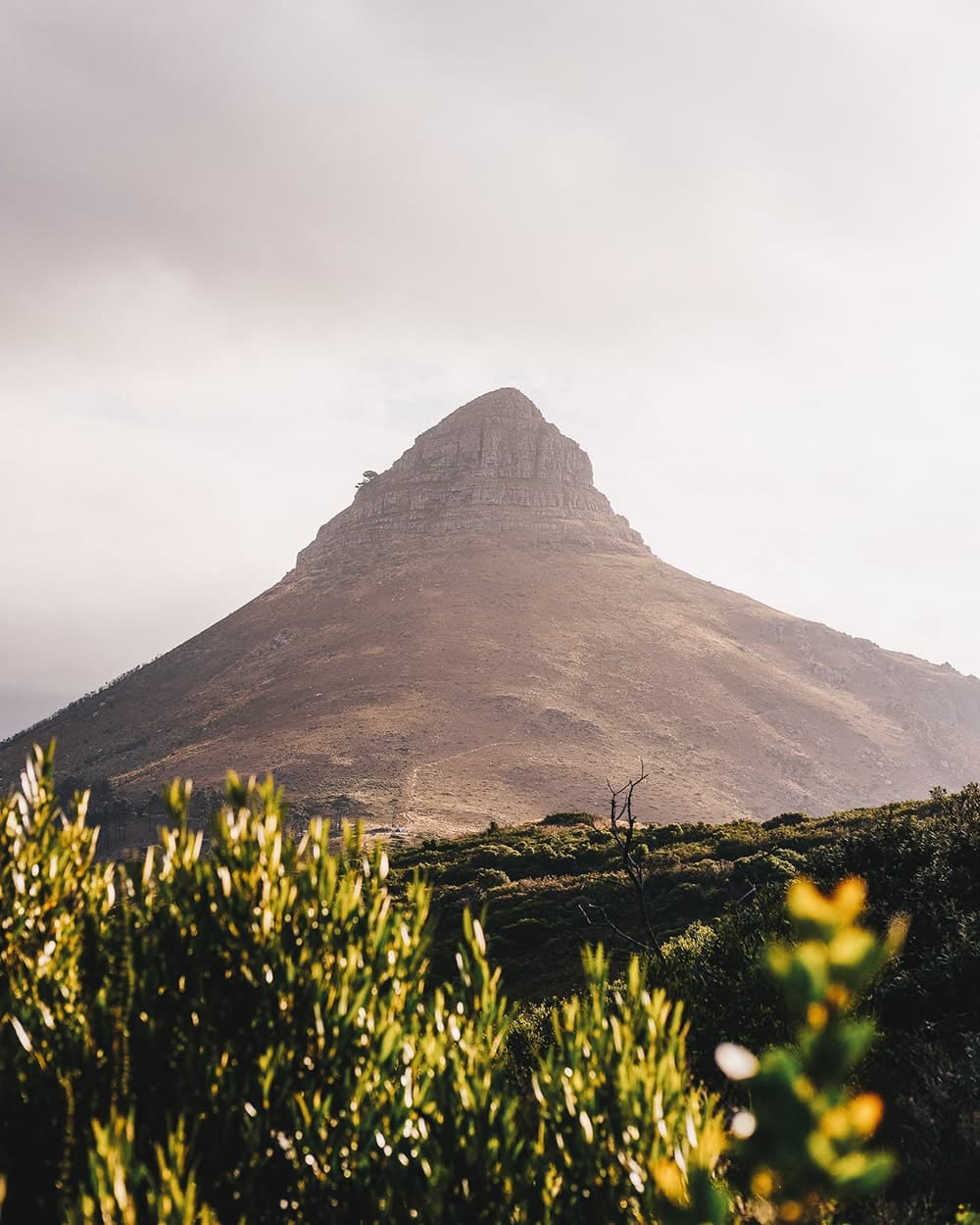
Find out why South Africa’s Cape Town is such a popular destination for travelers! Between sea and mountains, Cape Town has a lot to offer.
Cape Town is a port city on the southwest coast of South Africa, on a peninsula dominated by the imposing Table Mountain (Table Mountain) but also the Signal Hill and Lion’s Head hills. The city also owes its fame to Robben Island, the famous prison, where Nelson Mandela was detained, now a living museum, but also the beautiful Cape of Good Hope, a little further south.
If you’ve ever been to Australia, Cape Town will remind you of the charming and pleasant city of Melbourne. Indeed, many French people have settled here because they appreciate the Mediterranean weather, with mild, wet winters and hot, dry summers, the proximity to wildlife and national parks, the huge beaches, the waves for surfing, the friendly people and the quality of life.
This urban city is home to cultural and artistic activities all year round, and we spent 5 days criss-crossing it to soak up the special atmosphere. That’s the minimum you’ll need to enjoy the city and visit all the neighborhoods at your leisure. In every corner of the city, you’ll feel the ever-present soul of Nelson Mandela through street art and other urban works.
I invite you to consult all our other articles on South Africa to help you prepare for your trip:- What to see on the Cape Peninsula
- What to see in Knysna
- Diving with the great white shark in Gansbaai
- Cooking classes and recipes in Bo Kaap
- The wine route from Franschhoek to Stellenbosch
- What to do in Oudtshoorn
- The practical guide to organising your trip
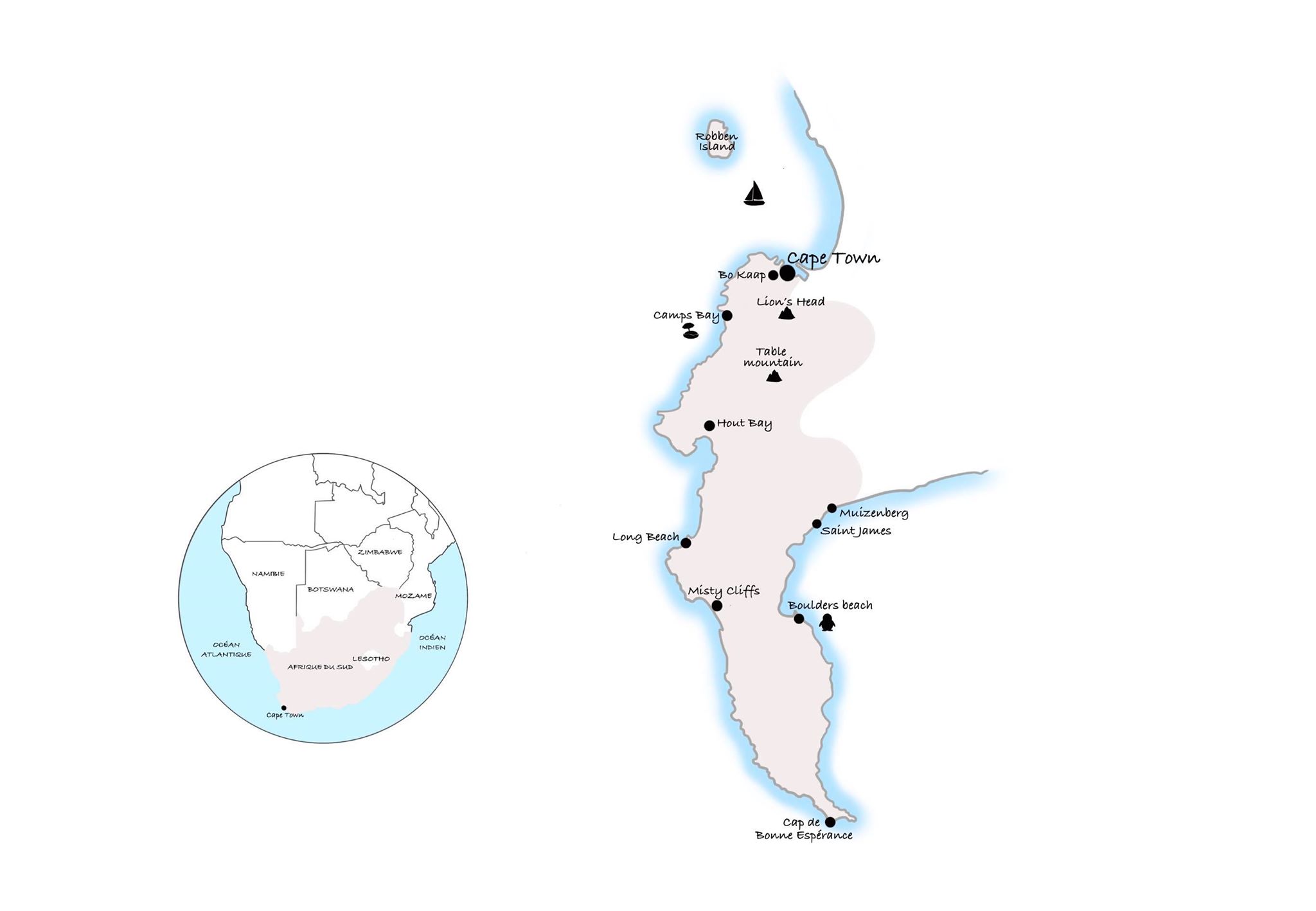
TABLE OF CONTENTS :
| HOW TO VISIT CAPE TOWN
- To visit the city of Cape Town itself, and for the first time in our lives, we took the famous red Hop on Hop off bus, you know the one many Chinese take on their first visit to Paris! I strongly advise you to try it! It really came in handy. For a day, we forgot about prejudices and tourists and tried the tour recommended by many locals and French people living in the area. The whole trip, without stopping, lasts 1h30 and gives you a great overview of the city. The bus stops in front of the most popular tourist attractions. With your ticket, you can get on and off the bus as many times as you like! There are 2 tickets available: if you choose a ticket valid for one day, you can discover the 4 circuits (red, yellow, blue and purple). The 2-day ticket allows you to discover all the red, yellow, blue and purple routes over 2 consecutive days. It also includes two walks, a harbour cruise and a sunset bus tour in summer.
➡️ Check bus availability and book
- For those who wish, you can opt for a guided tour of Cape Town in the company of your guide. In an air-conditioned vehicle, you can explore the city’s districts and ask all your questions.
- For street art lovers, don’t miss this guided tour of Salt River, an industrial suburb of Cape Town.
| CAMPS BAY
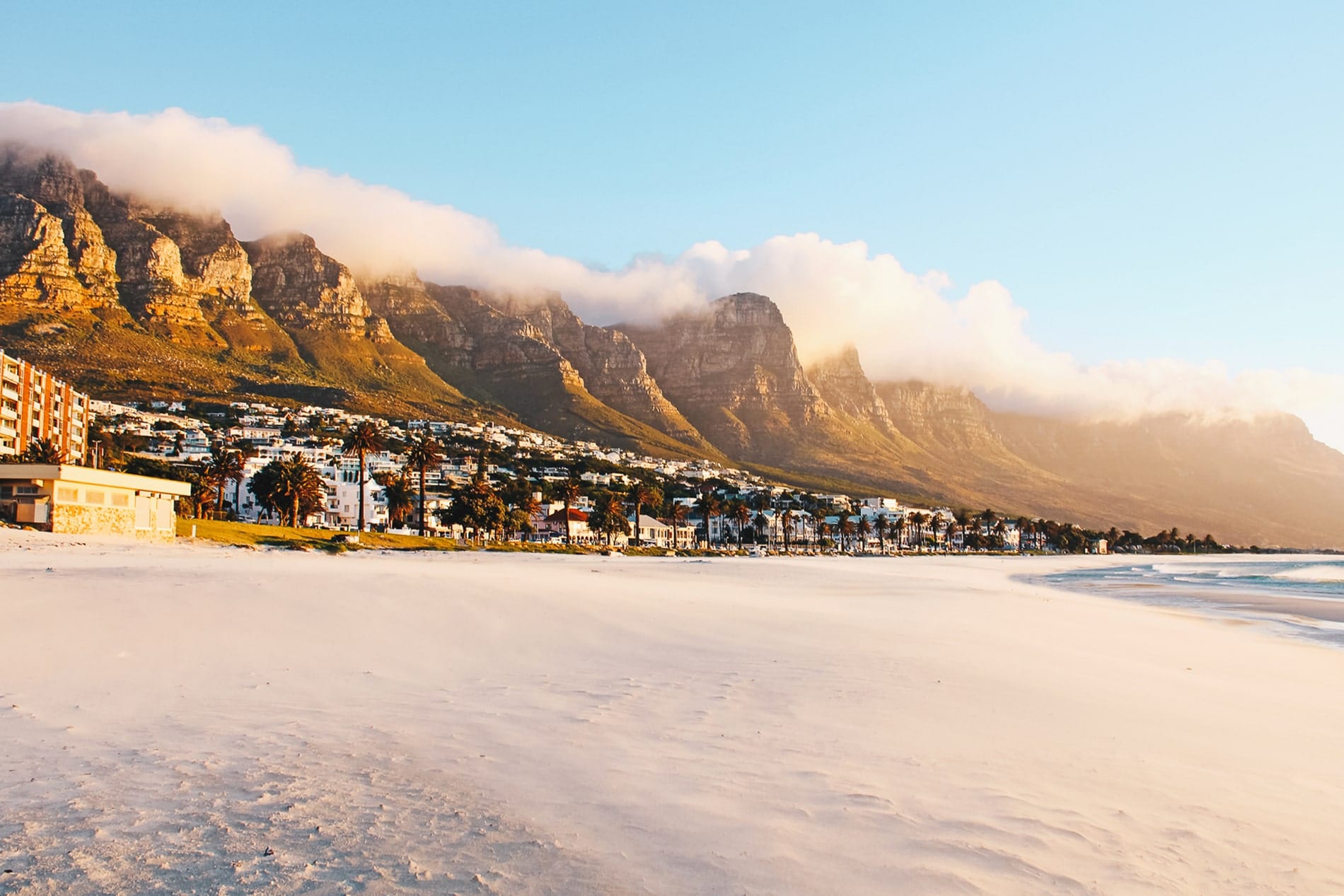
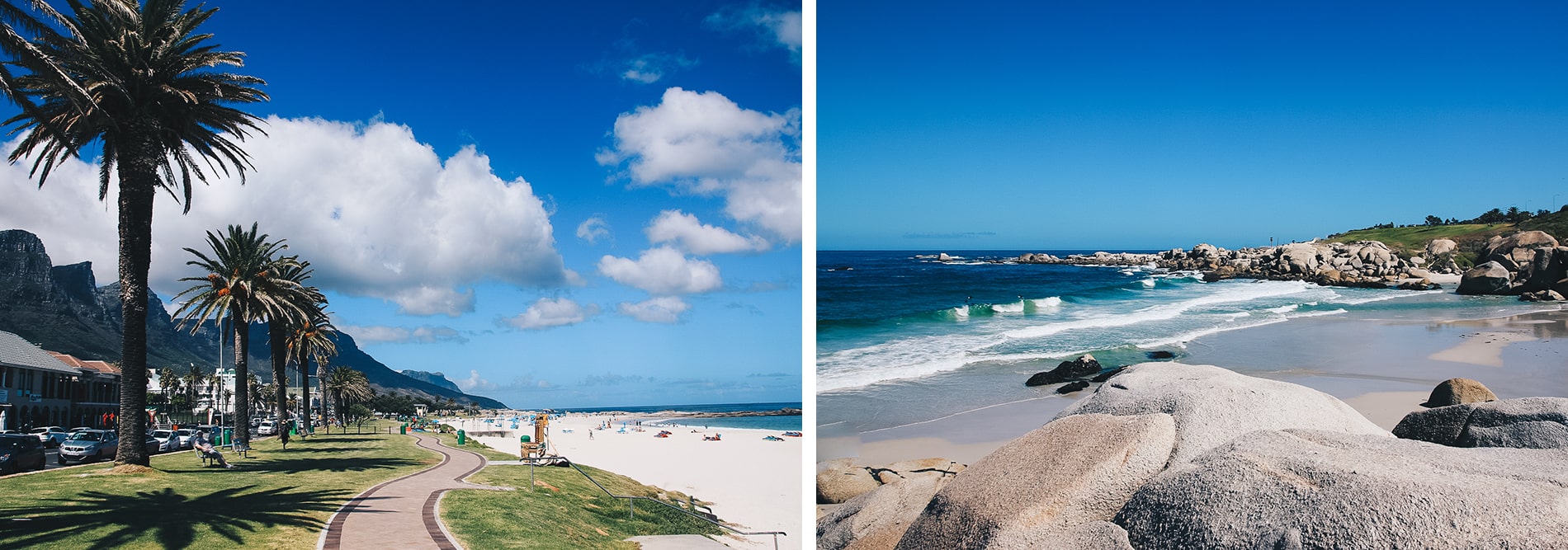
Dominated by the “12 Apostles” mountain range, Camps Bay is an affluent suburb with palm-fringed white sand beaches. Its nightlife attracts a large number of South African and foreign tourists. The red bus makes a stop here, and it’s well worth taking a seat on one of the many seafront terraces to contemplate one of the Cape’s most popular white sand beaches. It’s always windy and ideal for surfing with its intense waves. Not far away is the the long, unspoilt beach of Bloubergstrand, with breathtaking views of Table Mountain and Cape Town.
If you like to laze for hours in the sun, head for the beaches of Clifton which are apparently worth a visit as they are the sunniest and most sheltered on the cape!
For hiking enthusiasts, it’s possible to follow the Kasteelspoort trail from Camps Bay to the summit via a winding path. You can take this walk accompanied by an experienced guide.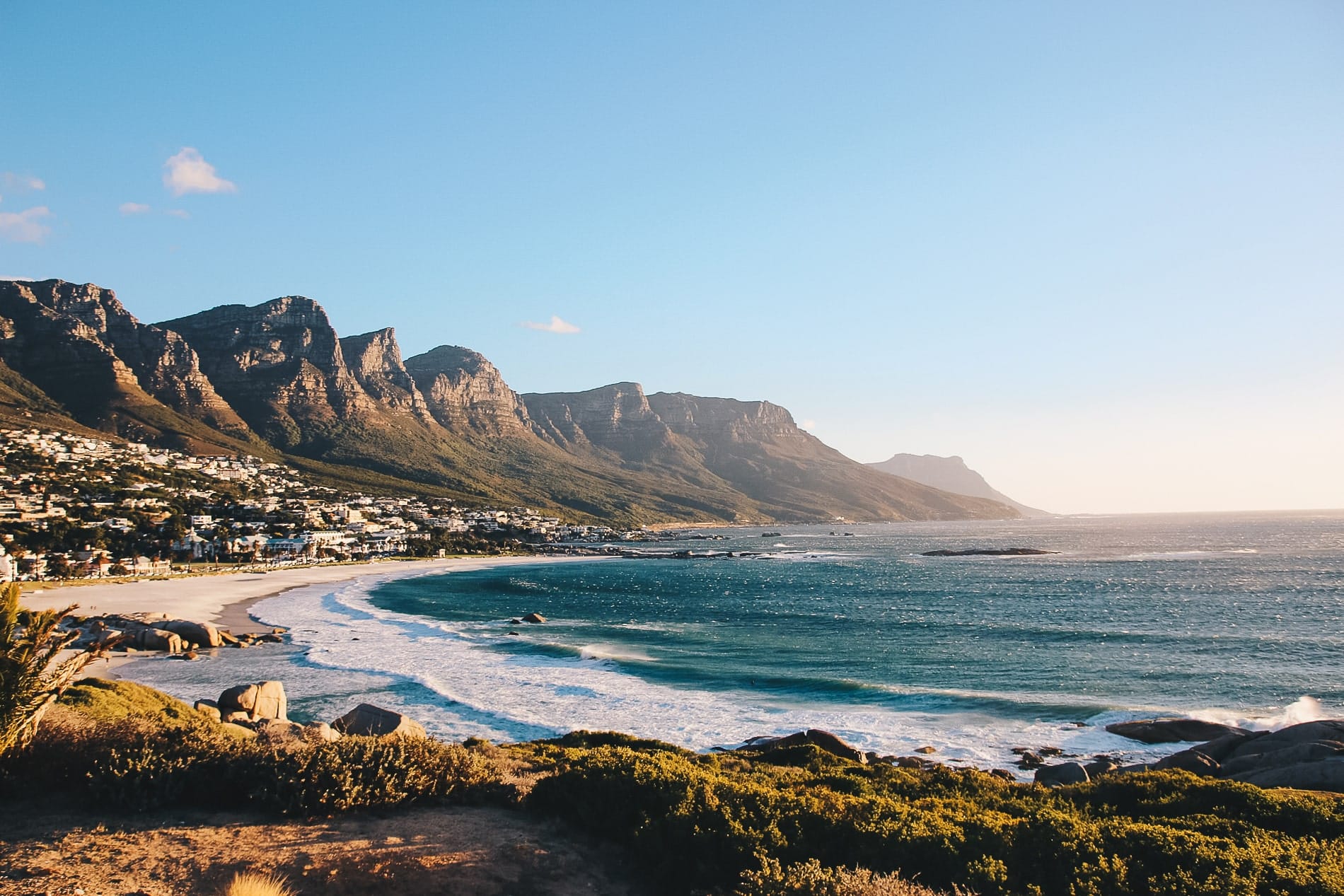
| TABLE MOUNTAIN
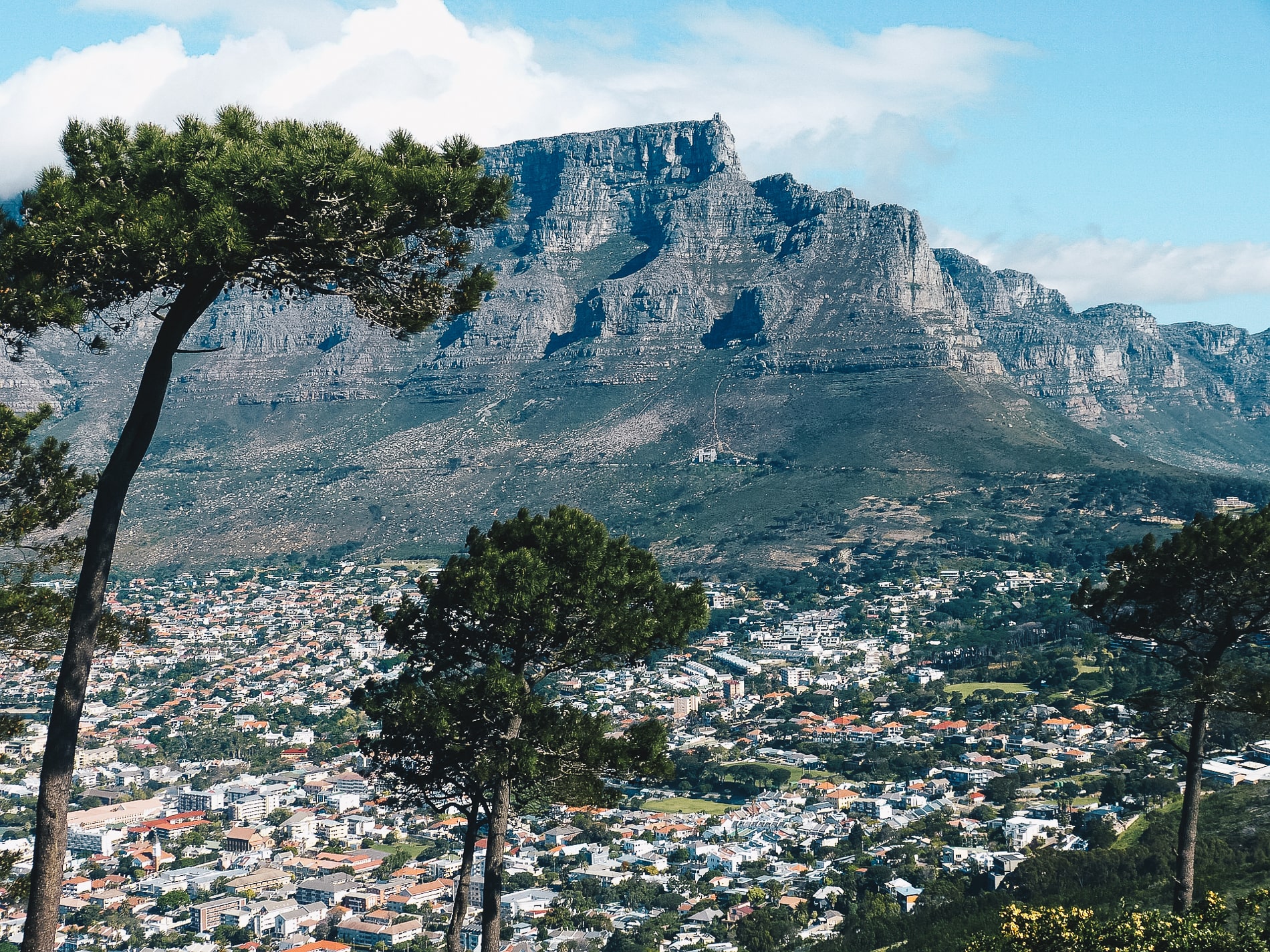
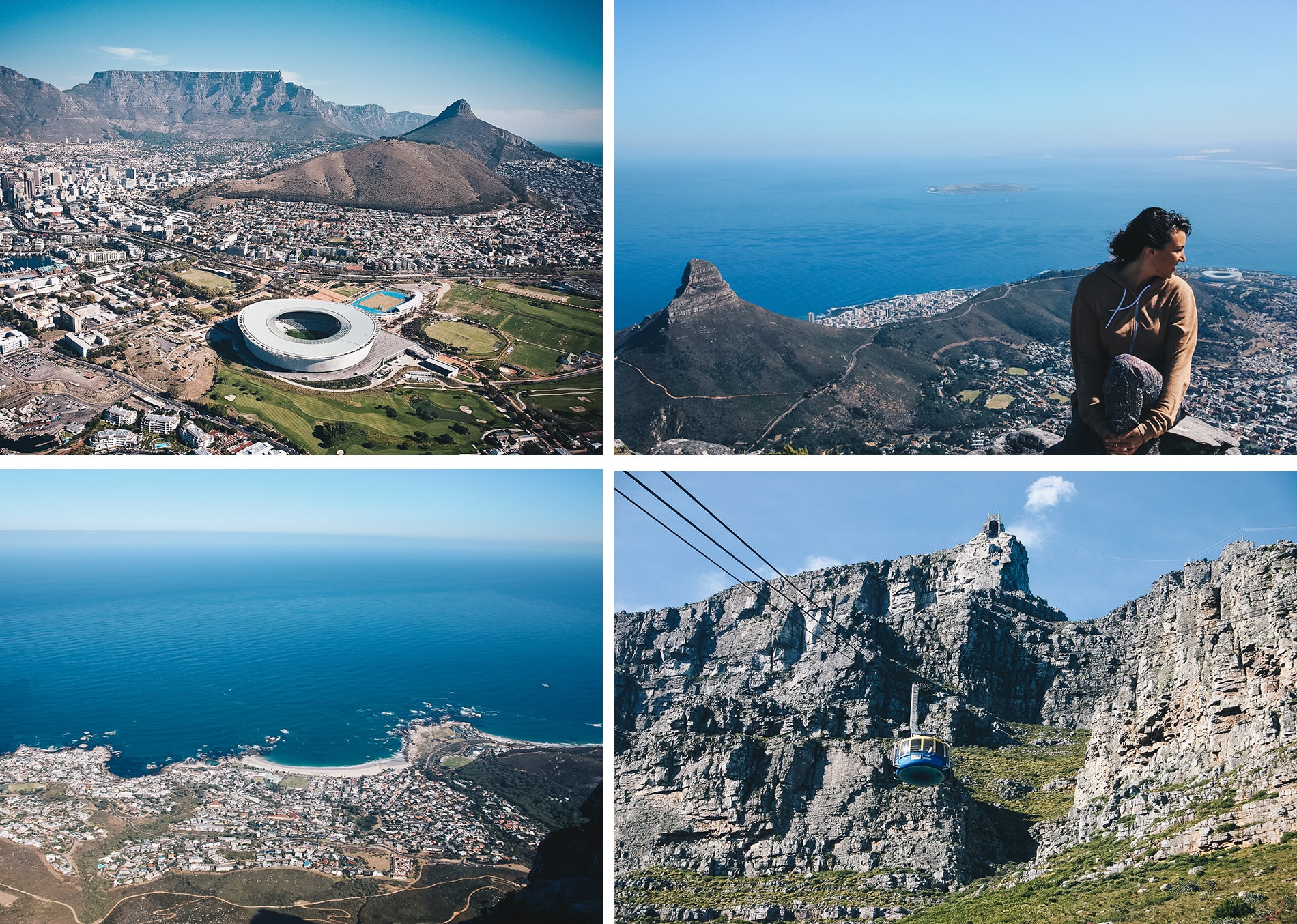
The Table Mountain, Cape Town’s best-known vantage point offers an exceptional panorama! It’s Cape Town’s landmark, the world-famous symbol of the peninsula, and one of the New Seven Wonders of Nature. Its name comes from its shape, which from a distance resembles the top of a table. When the clouds cover the table, we say the tablecloth is laid.
You have several options for visiting it:
- The easiest way is to take the return cable car up to 1086 metres in just a few minutes.
- When the wind is too strong, the cable car stops working, so you can opt for the second option: walking! Allow around 2 hours for a steep, difficult ascent in full sunshine, and 3 to 4 hours for a more normal climb. The descent takes 2 to 3 hours, depending on your level.
Prefer the Table Mountain early morning or late afternoon as travellers disembark in droves and weather conditions are often better.. If you see that the weather is clear, go for it!
Be aware that you can also climb Table Mountain if you’re not afraid of heights, because once you’re up there, you won’t feel too reassured! The 112-metre descent will give you an adrenalin rush. Several companies, such as Abseil Africa offer this activity. You’ll find more information at the city’s youth hostels and tourist offices.

| KIRSTENBOSCH NATIONAL BOTANIC GARDEN
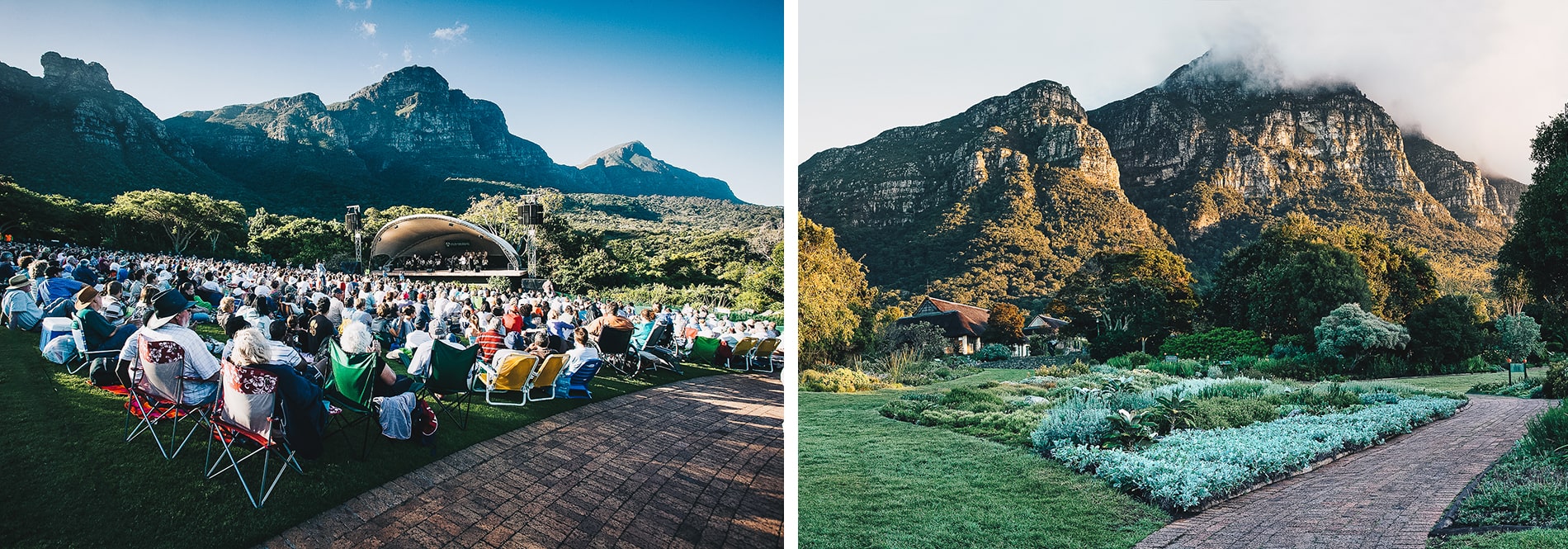
The Kirstenbosch Botanic Garden enjoys an exceptional location. Located in the Newlands, in the most affluent part of the suburbs of Cape Town, this immense 528-hectare park is covered by forest, natural vegetation and a 36-hectare garden to be discovered mainly in spring when the plants are in flower. (or our autumn in France)
From November to March, open-air concerts of classical, folk and jazz music are held every Sunday. There’s a picnic atmosphere on the lawns, an idyllic setting and lots of people at the weekends.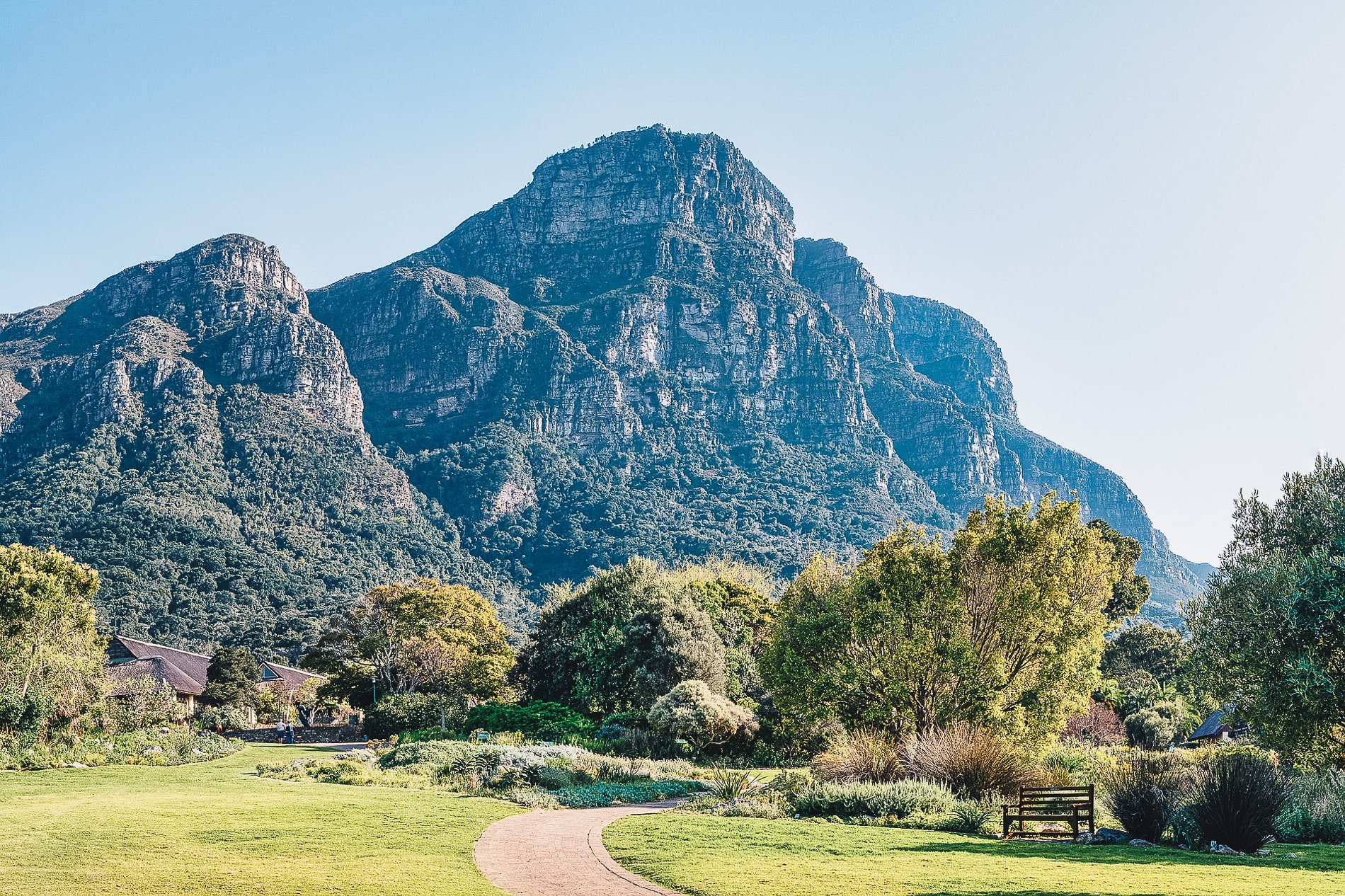

| SIGNAL HILL ET LION’S HEAD
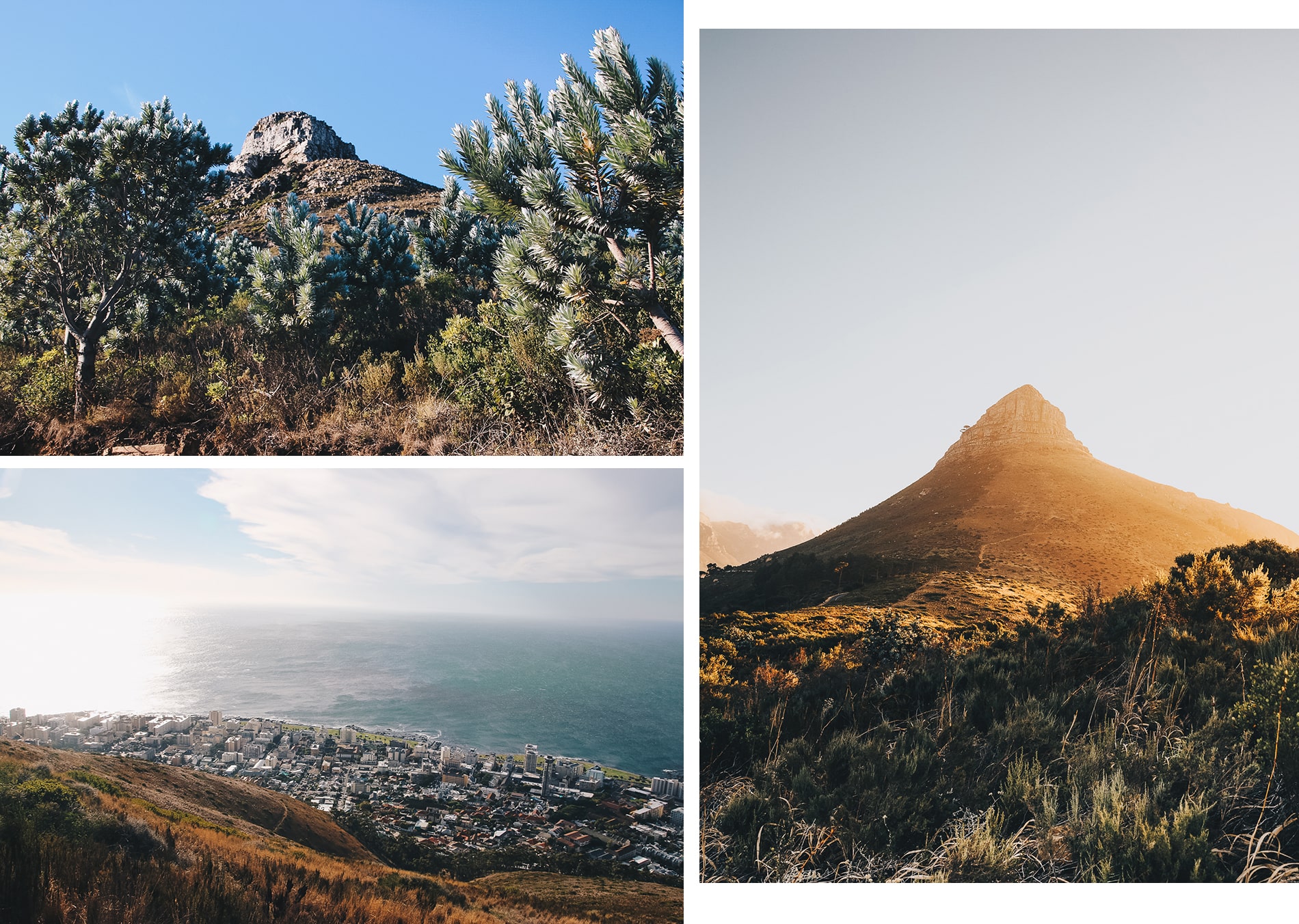
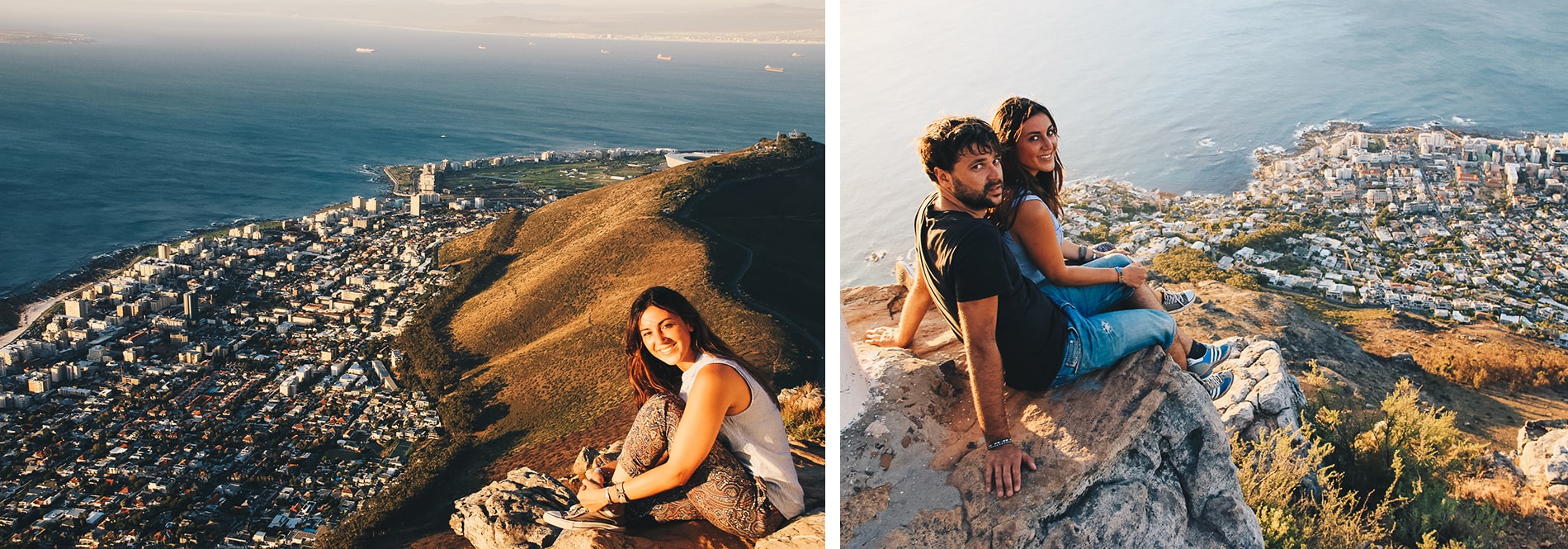
It’s possible in the same day to visit Signal Hill and Lion’s Head, two magnificent viewpoints, but we preferred Lion’s head at sunset. Take La route de Kloof road then at the top turn into the first street on the right, keep going straight ahead and Signal Hill is at the very end. What’s really worth it is to be there at 12 noon to see the Noon Gun, a cannon installed at the bottom of Signal Hill.
Once you’re on the road to Signal Hill, a footpath on your left takes you up to Lion’s Head. You won’t want to miss the parking spaces on the side of the road. The climb takes a total of 1 hour to reach the top of the rock, but before that you’ll have to walk and then climb, and climb a little, so if you’re a bit afraid of heights, think carefully before committing yourself! Some places are quite steep!
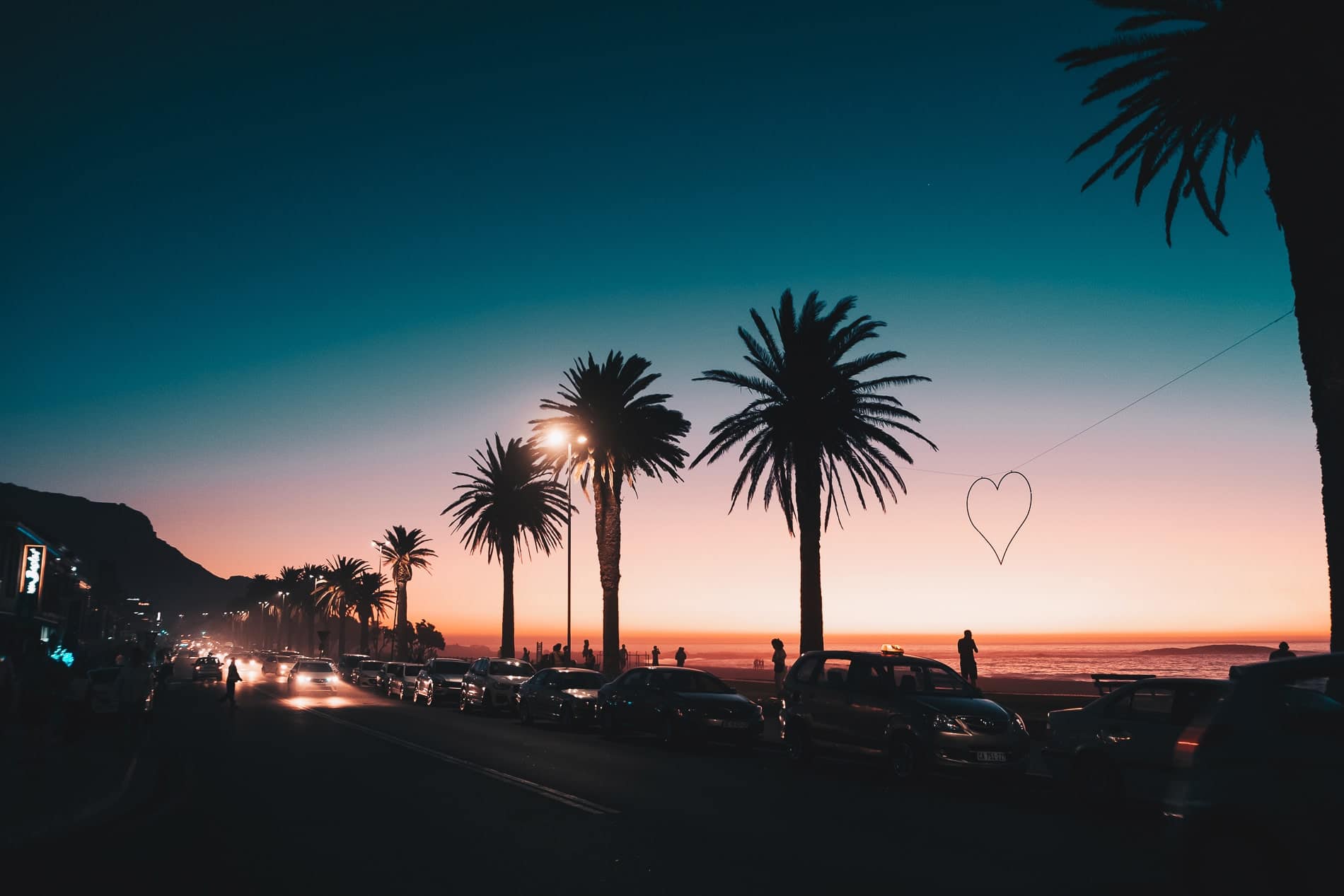
At a height of 669 metres, the view is breathtaking and sublime, as you can see Camps Bay, Table Mountain and the city of Cape Town. Try to be at the top by 7pm, as you’ll have plenty of time to watch the sunset. The descent takes about 30 minutes, so make sure you don’t end up in the dark with your flashlight! Even if you’re moonlit, it’s doable but more dangerous, believe me. (all we had was the light from our phone! )
We were too close to the mark when we left the summit at around 7.40pm! As far as walking shoes are concerned, we did it with converses, and from time to time we slipped on the rocks while climbing! So take less slippery shoes, a bottle of water and your camera to capture the moment.
For those who prefer to be accompanied, remember to book a guide and enjoy exceptional views of Cape Town at every turn of the path you climb. ➡️ Book a Lion’s Head guide and check availability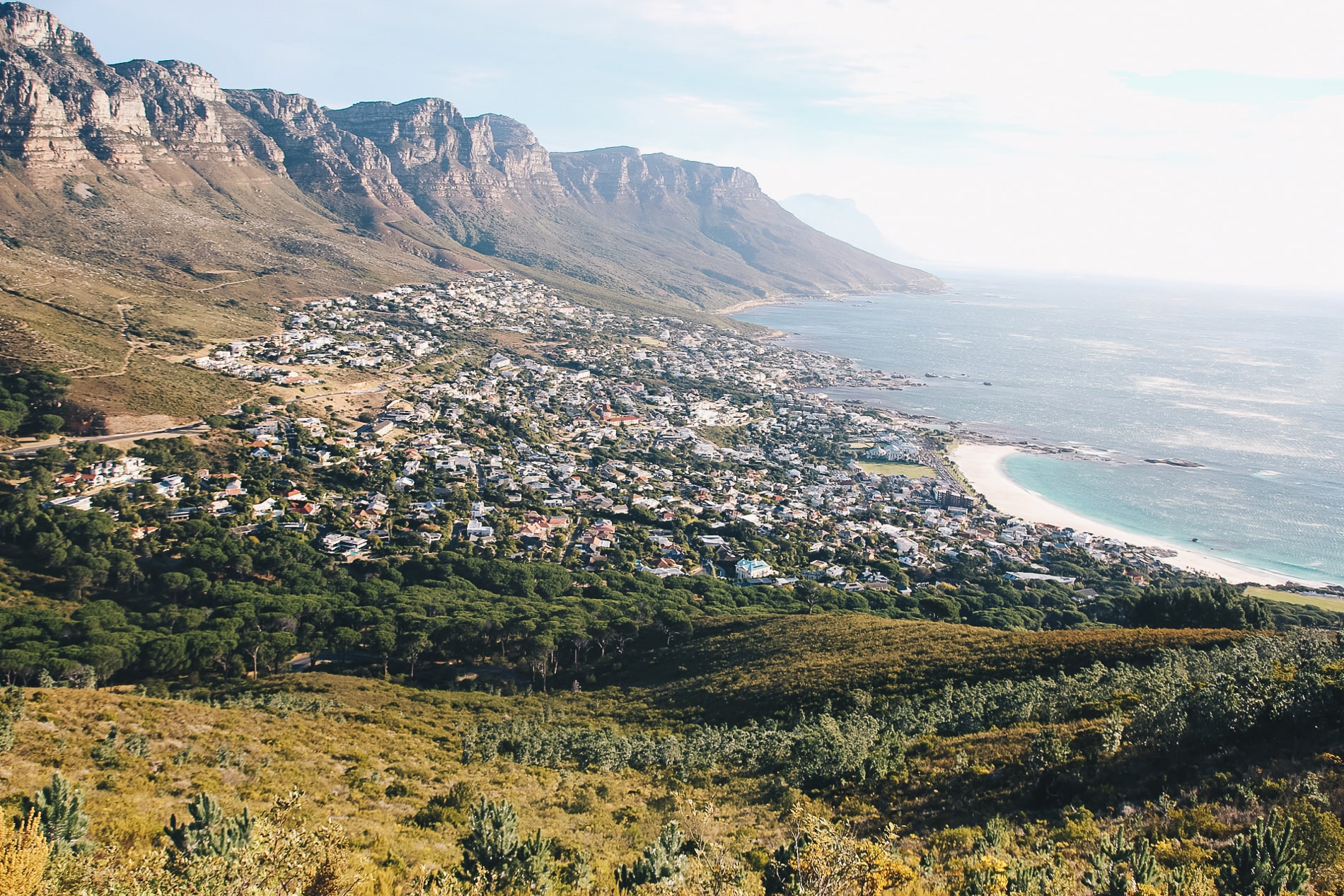


| WATERFRONT AND ROBBEN ISLAND
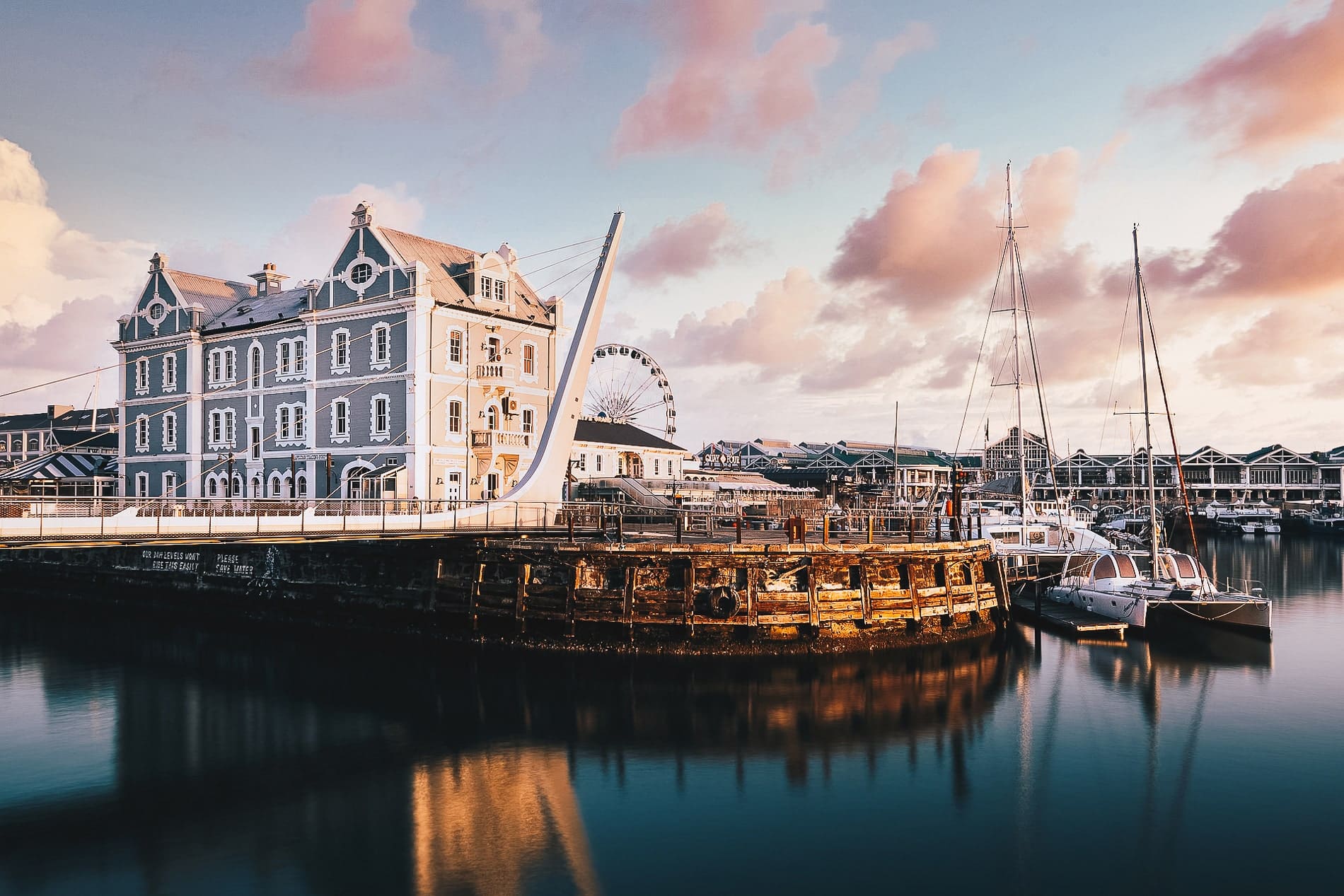
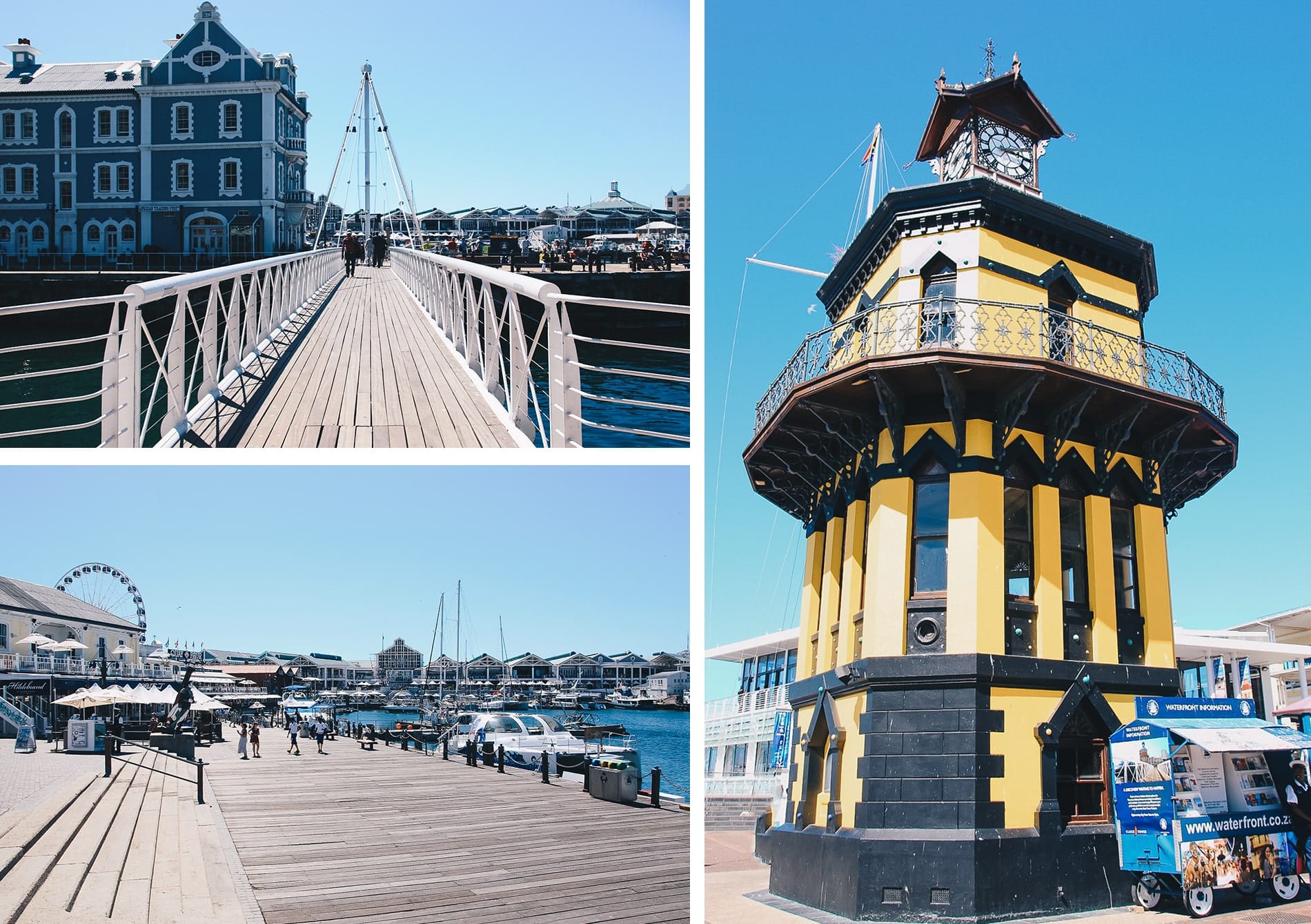
The full name of this district is the Victoria & Alfred Waterfront. The Waterfront is Cape Town’s most touristy district, home to the city’s marina with colorful little stalls, a Ferris wheel and a huge shopping mall. It enjoys an exceptional setting and offers a wide range of services including bars, restaurants and harbor cruises.
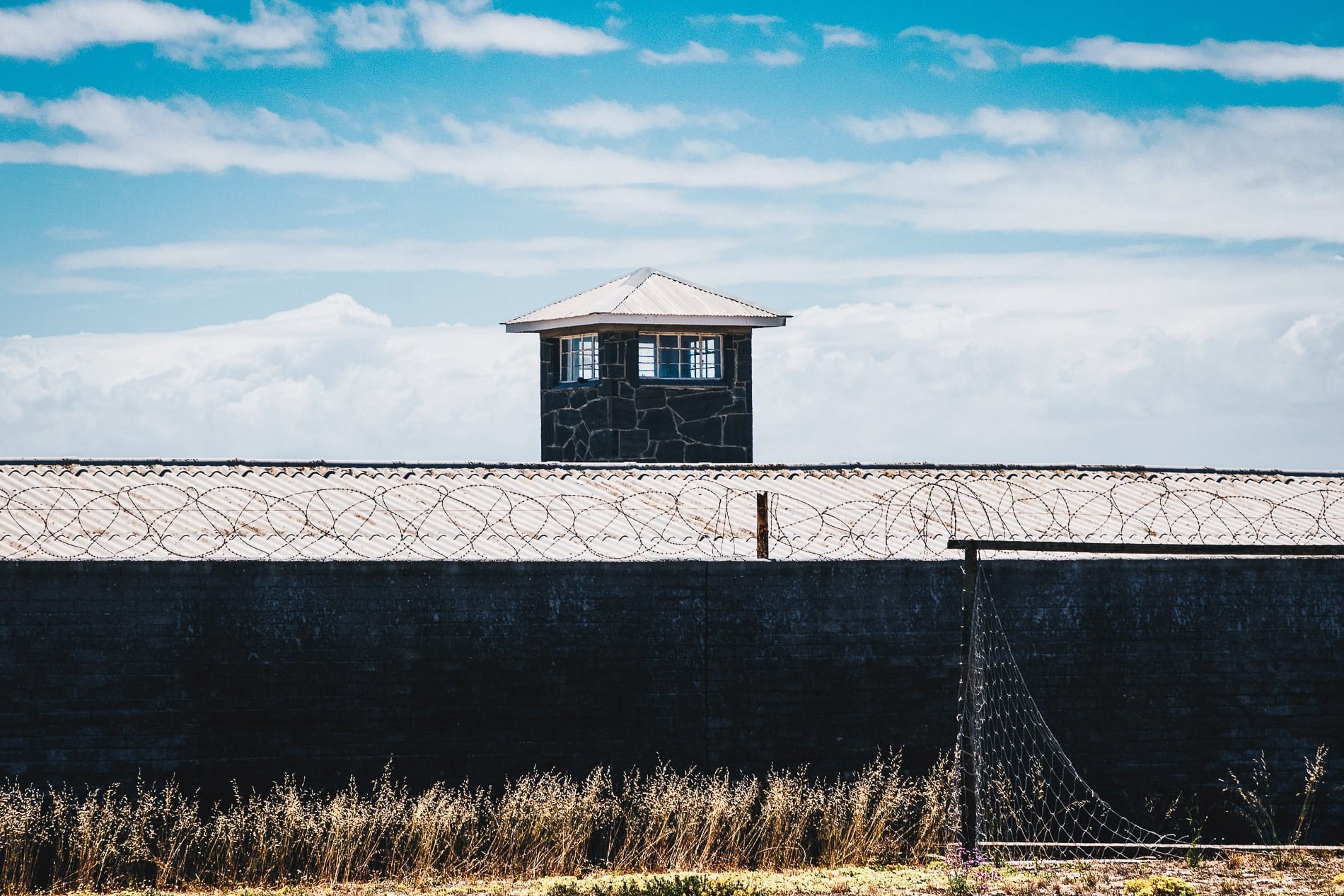
It’s a must-see in Cape Town, a sort of mini-city that looks a little like Disney in terms of architecture. This is also the departure point for visits to Robben Island, where Nelson Mandela was imprisoned for more than 20 years, and where political prisoners were held during the apartheid era.
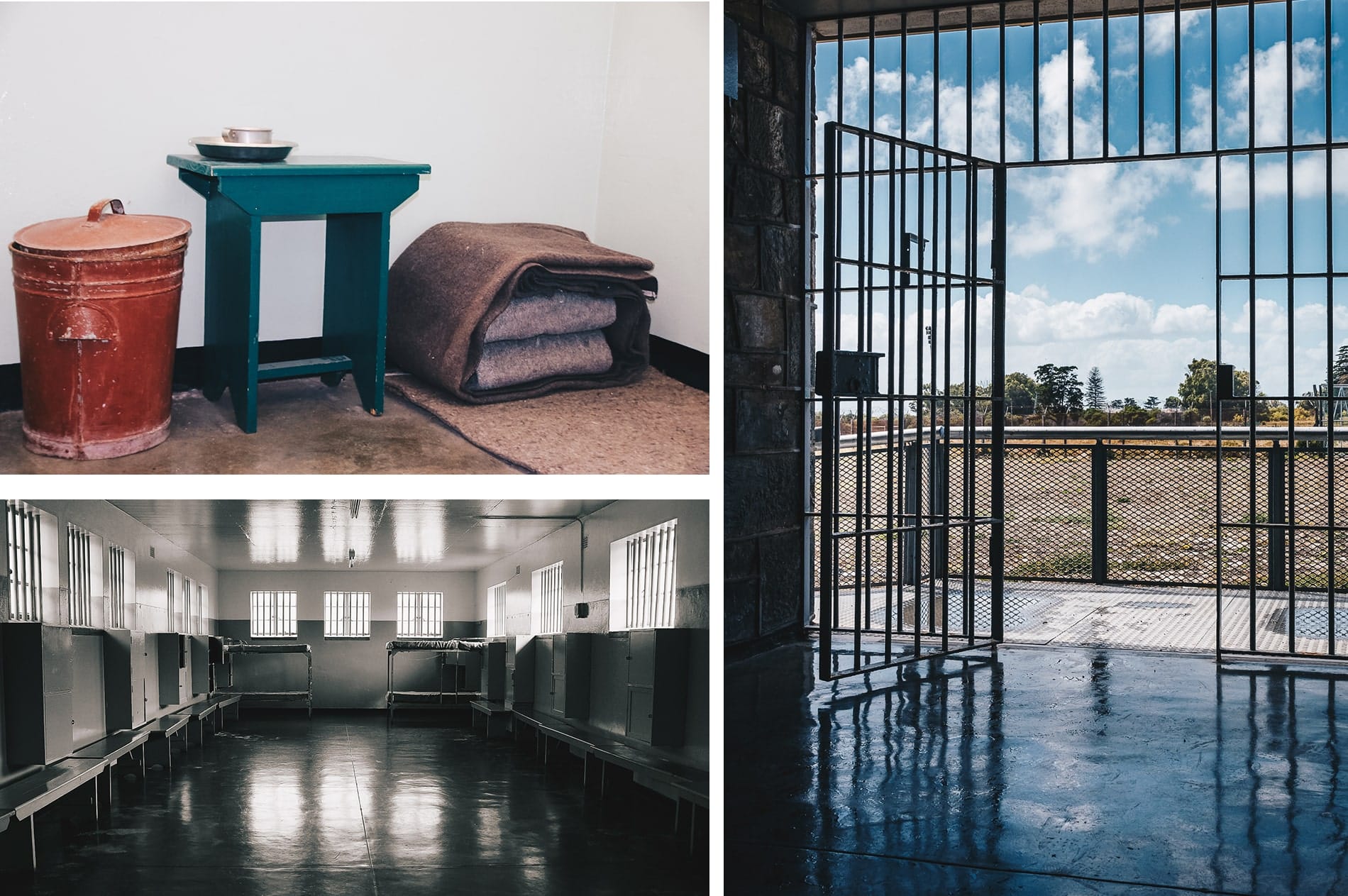
We highly recommend this outing, as you’ll understand South Africa’s tragic history thanks to this guided tour by a former prisoner of the island who thus rubbed shoulders with Nelson Mandela and other political opponents. During the tour, you can see Nelson Mandela’s prison and the lime quarry where he worked all his years. It’s really moving! There are many starting points, but if you’re on the Waterfront, it’s next to the Clock Tower or Nelson Mandela Gateway, a must-see because of its yellow color!
Allow around 3 hours for the visit (30-minute ferry ride one way if the sea is not rough, otherwise a good hour + 2 hours to visit the prison). Departures are from 9am to 5pm. On your return, you’ll have the chance to see a few sea lions lounging in the sun on the docks!
⚠️ Beware, tickets are selling like hotcakes. In busy periods the site is often quickly sold out so think about getting there in advance!
➡️ Book the boat to Robben Island and check availability From the Waterfront, you can also discover Cape Town from another angle, by exploring it on and stand-up paddle. ➡️ Book a paddle and check availabilityIf, like us, you love covered and open markets, I look forward to seeing you at these two addresses:
- The V&A Waterfront Market: 17 Dock Road, next to the Watershed, open daily between 10am and 7pm in summer and until 6pm in winter. This covered market is reminiscent of the London markets in the Hipster Quarter, with its pretty brick facade. It is less busy than The Neighbourgood Market in Woodstock, but the concept is more or less the same. You can sample dishes from all over the world. Not far away is the V&A Food Market at The Old Power Station Building Pier Head, 19 Dock Rd, Victoria & Alfred Waterfront.
- Orange View city farm market: Haul Road, Granger Bay Blvd, Victoria & Alfred. Open every Saturday between 9 a.m. and 2 p.m., this market, located near the Waterfront, is housed in a series of country-style tents. We love the traditional farm atmosphere, with hay on the floor and fruit and vegetable displays in attractive wooden crates. Producers come to sell their fresh produce.

| CITY BOWL, TH CENTRAL AND HISTORIC DISTRICT & LONG STREET
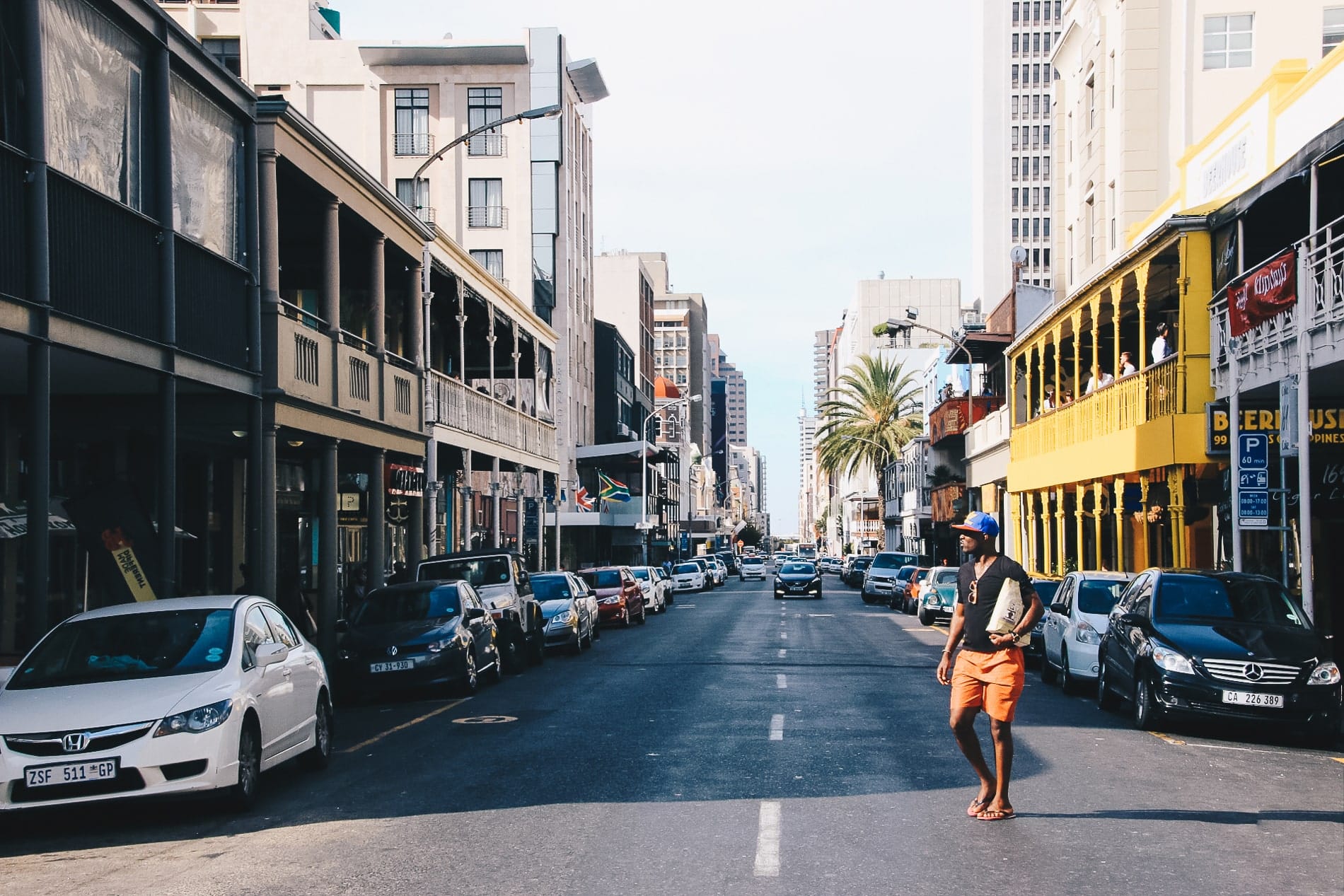
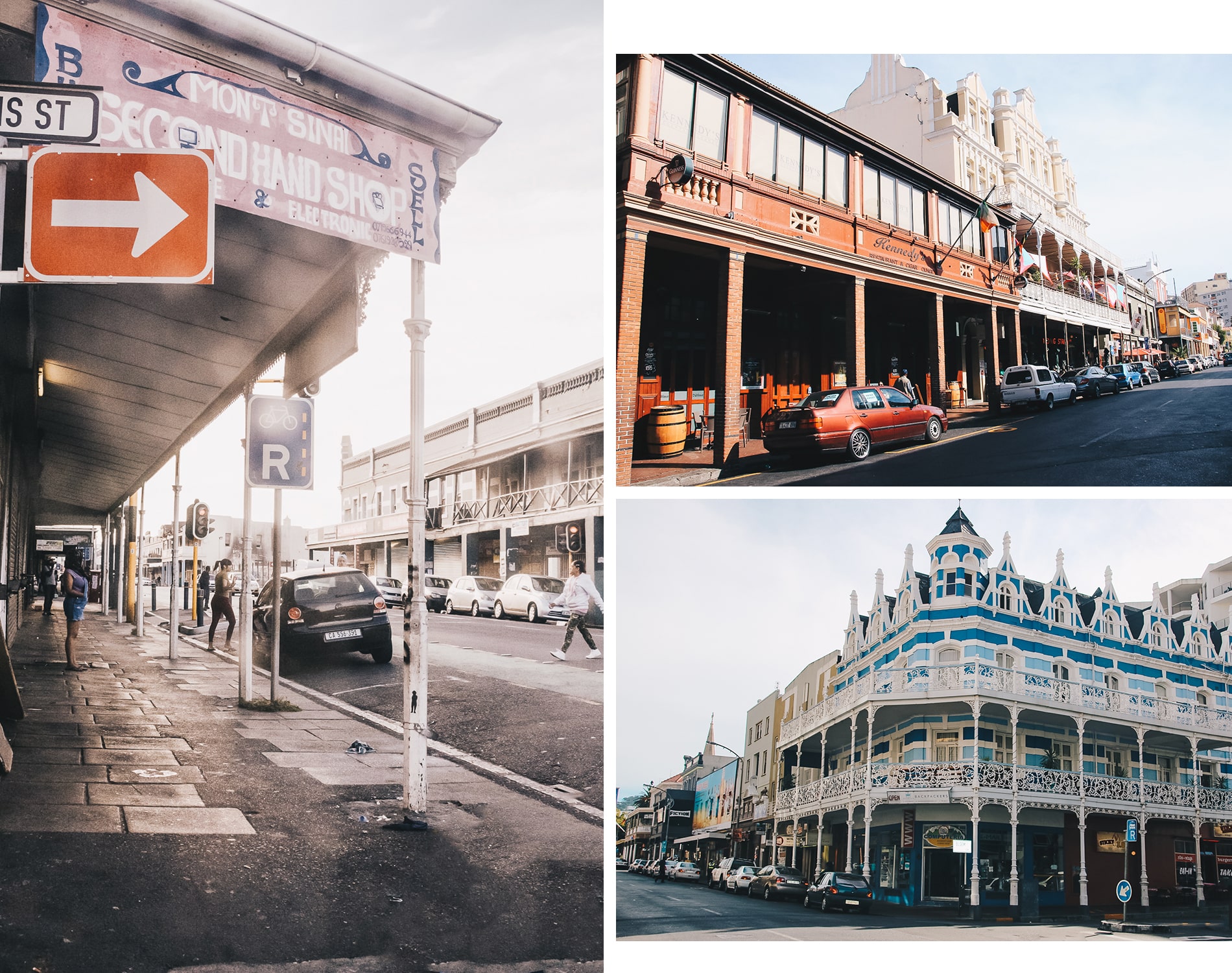
We were staying in this lively, colorful neighborhood at the foot of Table Mountain and Signal Hill, and more specifically on Long Street, one of the city’s most attractive thoroughfares. This is Cape Town’s liveliest area, with numerous bars, discos, boutiques and backpacker hotels. But it’s also home to antique shops, bookstores and superb Victorian buildings with colorful wrought-iron balconies reminiscent of New Orleans. A lively and dynamic street, day and night, where it’s a pleasure to stroll! After a certain hour, some of the streets perpendicular to Long Street and around Green Market Square start to get a bit noisy. We saw drug dealers and addicts shooting up in front of our eyes.
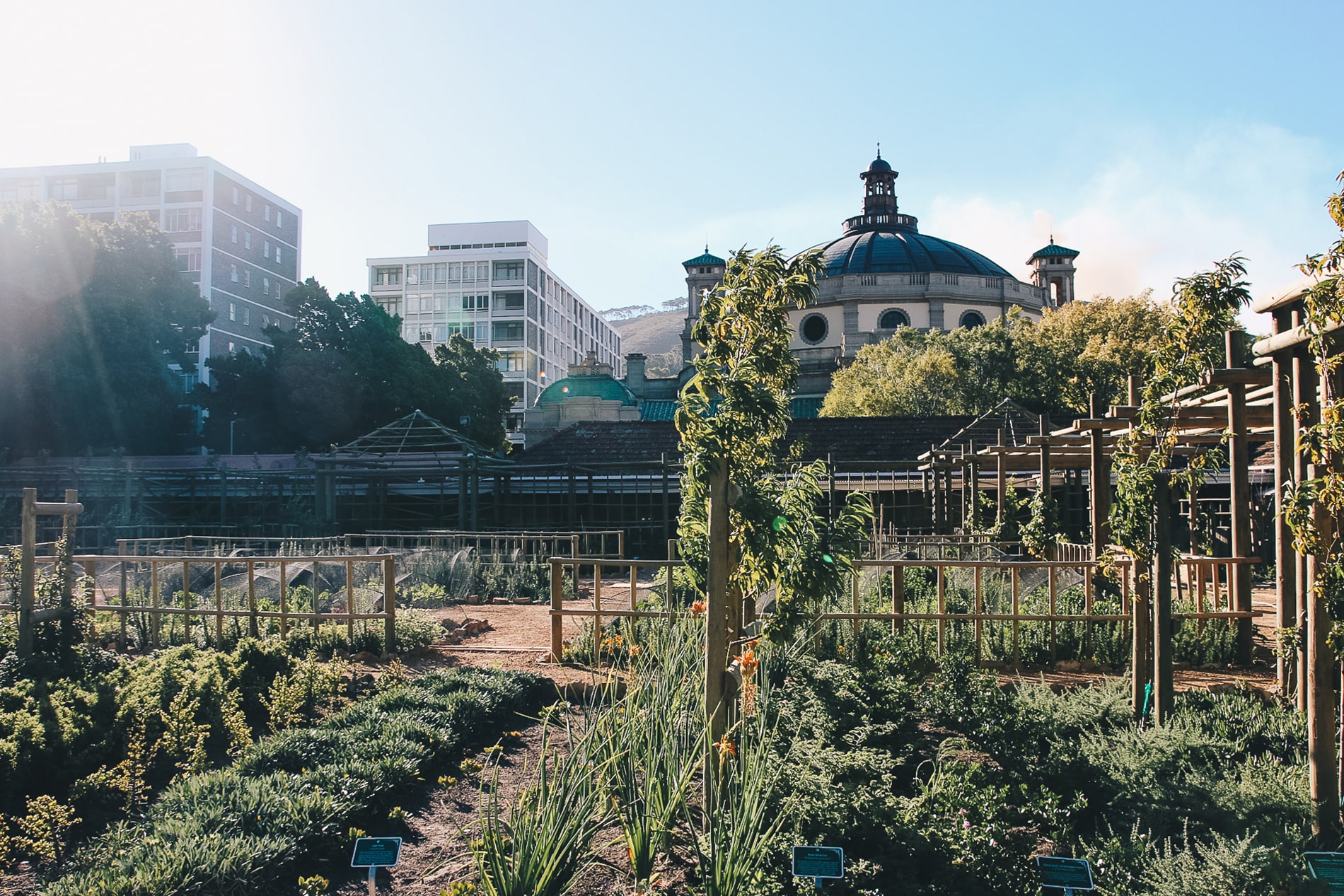
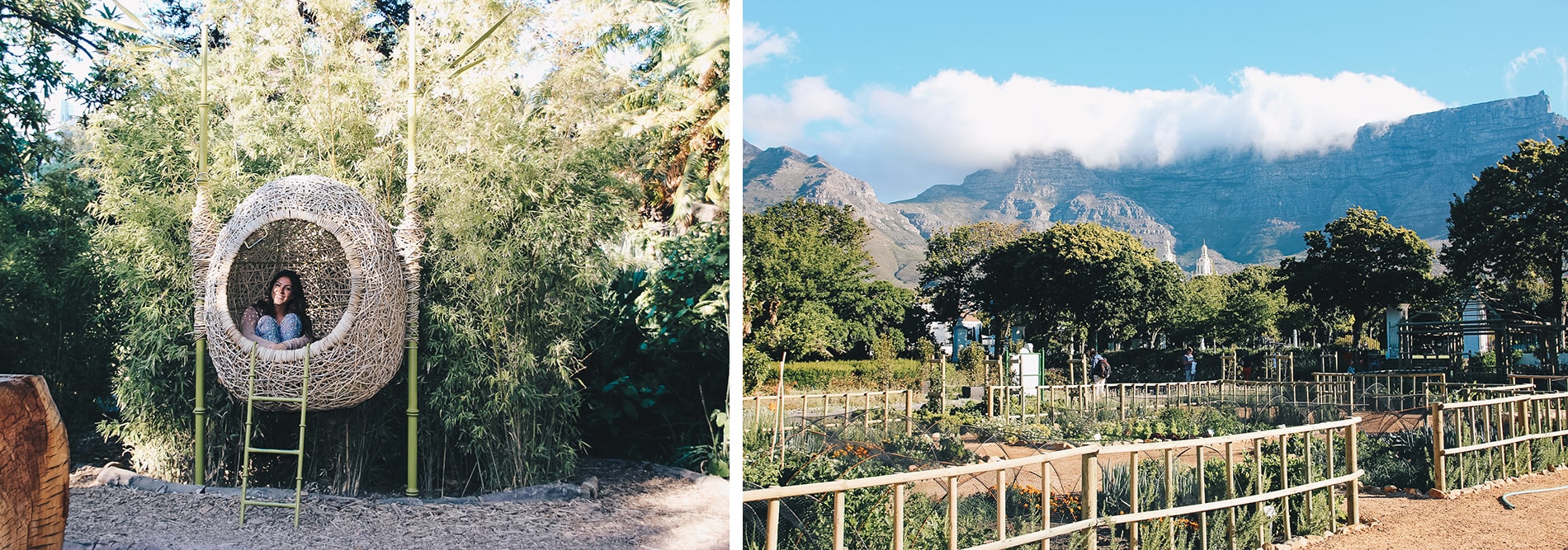
If you have a little time to spare, I invite you to discover the shady gardens “Compagny’s garden “in the same neighborhood between Queen Victoria Streetet and Governement Avenue. They were originally the vegetable gardens of the East India Company, built here to feed the sailors. We enjoyed strolling among the squirrels and relaxing in the hanging wicker armchairs for a coffee! For lush garden enthusiasts, you’ll also find 1h from Cape Town, the Babylonstoren organic farm, which produces its own fruit and vegetables, herbs and spices. It is possible to have lunch on site in the restaurant Greenhouse or the Babel gourmet restaurant.
A word of advice: if you come to Cape Town at the height of the tourist season, remember to book your accommodation, as we had trouble finding a decent place to sleep in February!
One of the most famous inns is theAshanti gardens Guesthousebecause it’s modern and quite central, but still « fully booked » (in full). I also recommend Ikhaya Safari Lodge for its location, just a 15-minute walk from Long Street.
➡️ Find other accommodation in Cape Town here and check availability
- One street back on Market Street is Green Market Square, a craft market open every day where you’ll find plenty of souvenirs to take home: jewellery, statues, musical instruments, etc. The golden rule is to bargain!
- For those on a budget, there’s a great place for lunch and dinner called the Easter food bazaar on Long Market Steet, a sort of cheap and authentic Indian and Chinese food court. For lunch, head for the food court on Market Street, where you’ll find a wide choice of food at low prices. (sushi, pasta, sandwiches…)
- If you’re looking for a taste of the specialities of the African bush (crocodile, ostrich, springbok, kudu, antelope, etc.), you can try the Mama Africa restaurant, which is recommended for its African music group that performs from time to time.
- Compagny’s garden: here we enjoyed wandering among the squirrels and relaxing in the hanging wicker chairs for a coffee.
| DISTRICT 6 AND ITS APARTHEID MUSEUM
Cape Town is a mixed-race city with White, Malay and Coloured people, but it’s still home to a predominantly white community. Unfortunately, the painful past is always present, and cohabitation is not always so simple and straightforward. Social inequalities are apparent, with upmarket neighborhoods contrasting with the townships.
If you want to better understand the history of apartheid and district 6, you absolutely must make a stop at this poignant museum (25 A Buitenkant steet) which pays tribute to the 60,000 people of all races evicted from their neighborhoods in the 1960s-1970s. The museum tour is led by one of the neighborhood’s former residents, who will tell you about the regulations that restricted free movement in the city.
To try and summarize what our guide Rushdi explained to us, the apartheid government at the time created townships according to skin color. You’ll understand how these people lived and how they were evicted without being able to say anything, from one day to the next! It took 15 years to get the people of District 6 moving, because there was a lot of resistance. These were their homes and they didn’t want to part with them. Between 1974-1980, these people were moved by obligation. The police would come in and destroy their homes to force them to leave. Every resident had to carry an identity card specifying his or her origins (a bit like the Jews with the Star of David on them during World War II in Europe). If they didn’t have it, they were oppressed and could be locked up for one to several months in prison!
So there were 3 cards : White : For white populations Malays : For Cape Muslims from present-day Indonesia Coloured : For the mixed-race population resulting from the unions of the first Europeans to arrive in South Africa with the Bushmen.If you want to discover Cape Town and as many activities as possible, if you love museums, if you’re accompanied by young children, then I recommend you take a look at the official passl which allows you to benefit from an entry to more than 90 of Cape Town’s best attractions with free multi-stop sightseeing bus transport for the duration of your pass and queue-cutting tickets. It’s valid from 2 to 5 days, so make the most of it!
➡️ Book your pass online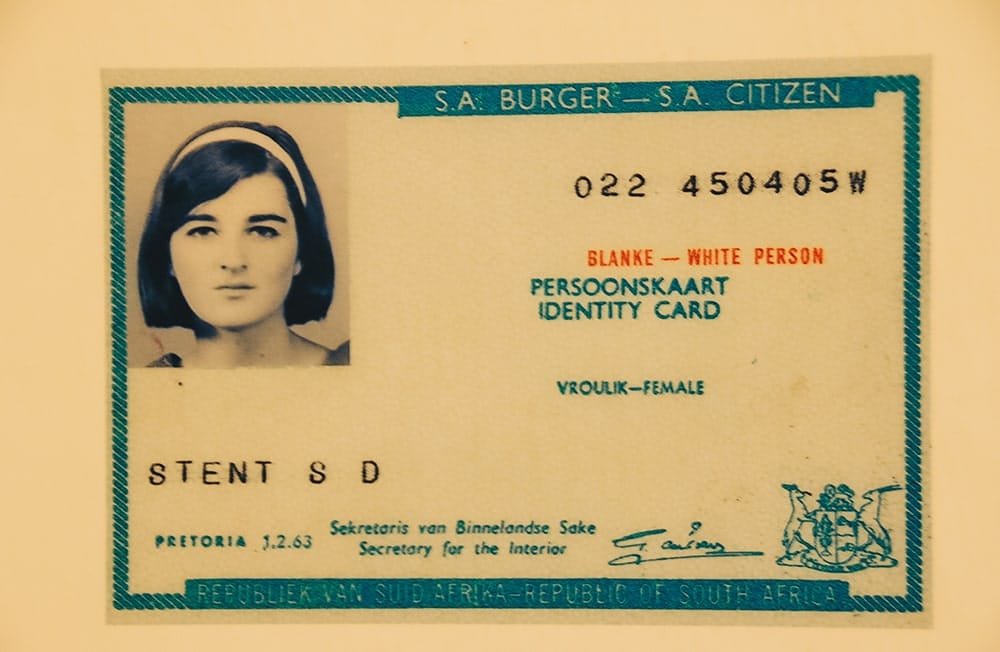
| LANGA, THE OLDEST TOWNSHIP IN CAPE TOWN
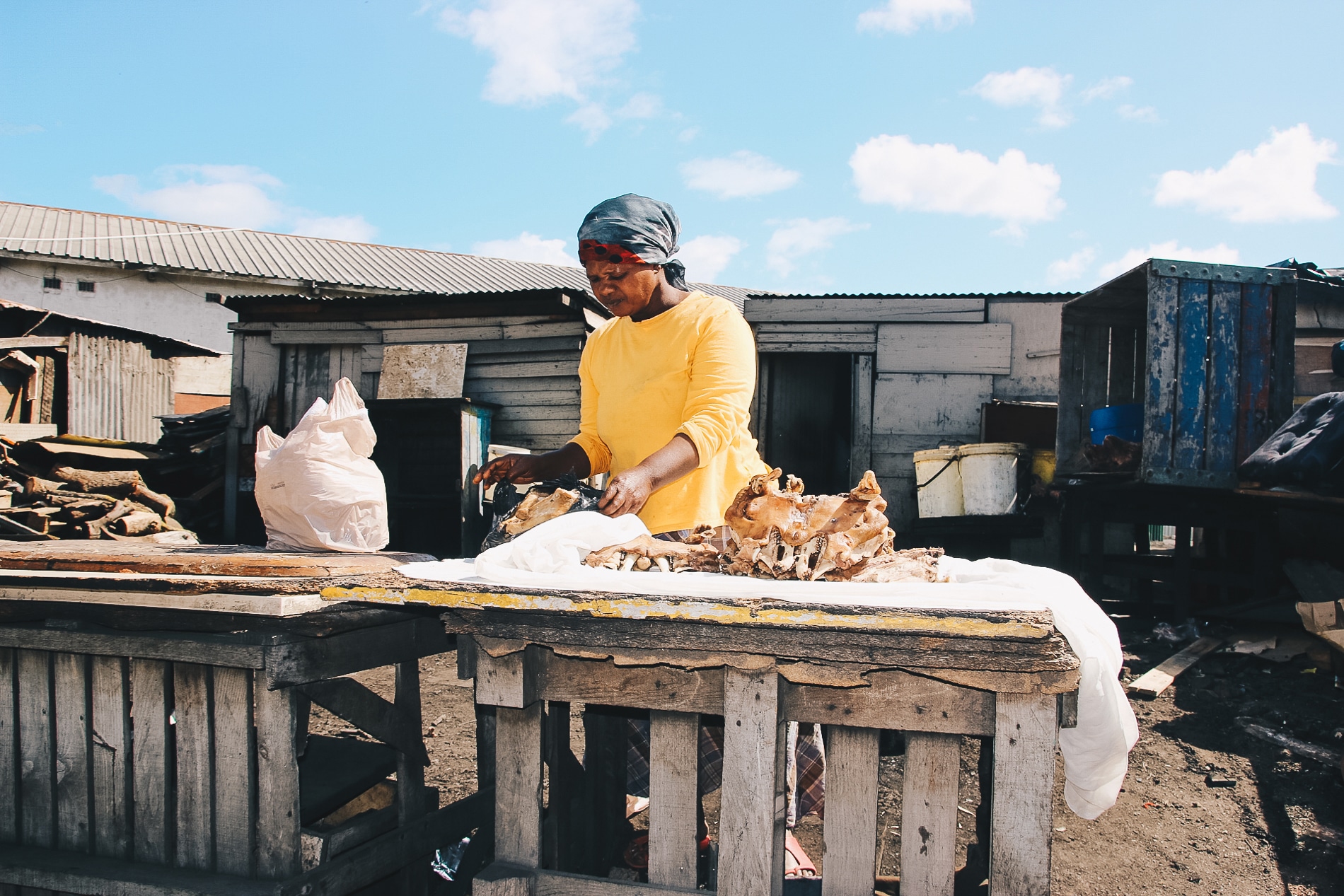
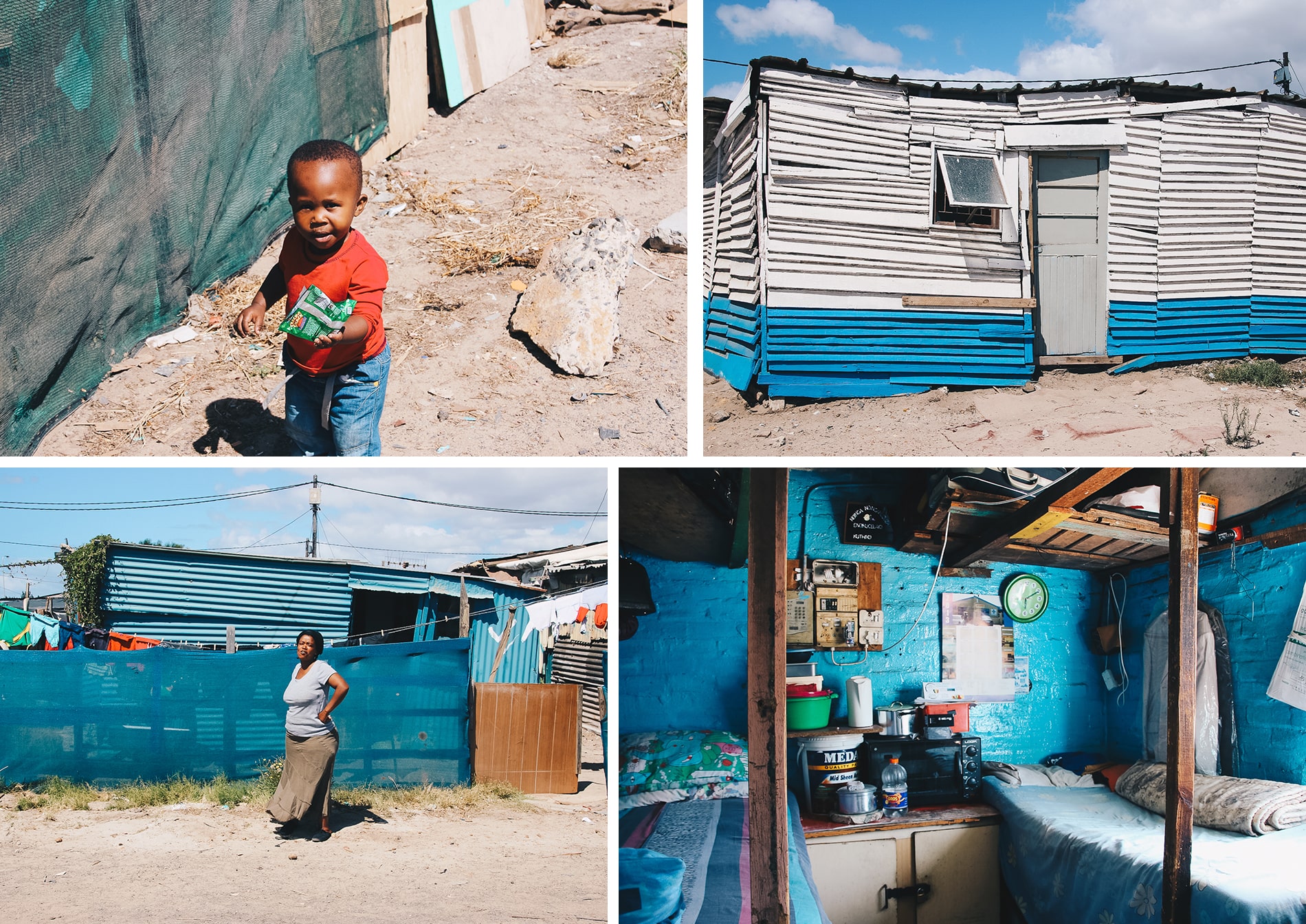
We spent half a day discovering the Township from Langa, the oldest in Cape Town, founded in 1927 and home to part of Cape Town’s black population.
It’s an opportunity to get up close and personal with the local population, and to observe scenes of life in the slums. This is also where you’ll find the Amy Biehl Memorial, dedicated to a young American anti-apartheid activist who was murdered in Guguletu in 1993 for the crime of being friends with black people. The girl’s parents then set up an association to improve things in the township where their daughter’s murderers now work, as a symbol of the evolution of South African society.
Don’t think you’ll be wandering through the narrow lanes of the township on your own, as the tour takes you through some of Langa’s touristy streets. Even so, the guides want to show you a positive image of the area, with more renovated houses instead of tin, guest houses and locals who welcome you for a night. Like us, you will come across many curious travellers who have come to see the “Black” culture.
It’s always very complicated, as a white Westerner, to visit a township because you don’t go there just to take photos or see the people! The problem is that you never really know what you’re going to run into! I like being able to have a real experience and sleep in people’s homes to get to know them and share our cultures, but it’s not always easy to find the right organisation. I like it when the visits are ethical and the money goes either to a charity or is given to the local population to help them in their daily lives or in various other ways. If you’re looking for a charity, Uthando is known for setting up educational and cultural projects and advocating responsible tourism.
| BO KAAP & WATERKRANT
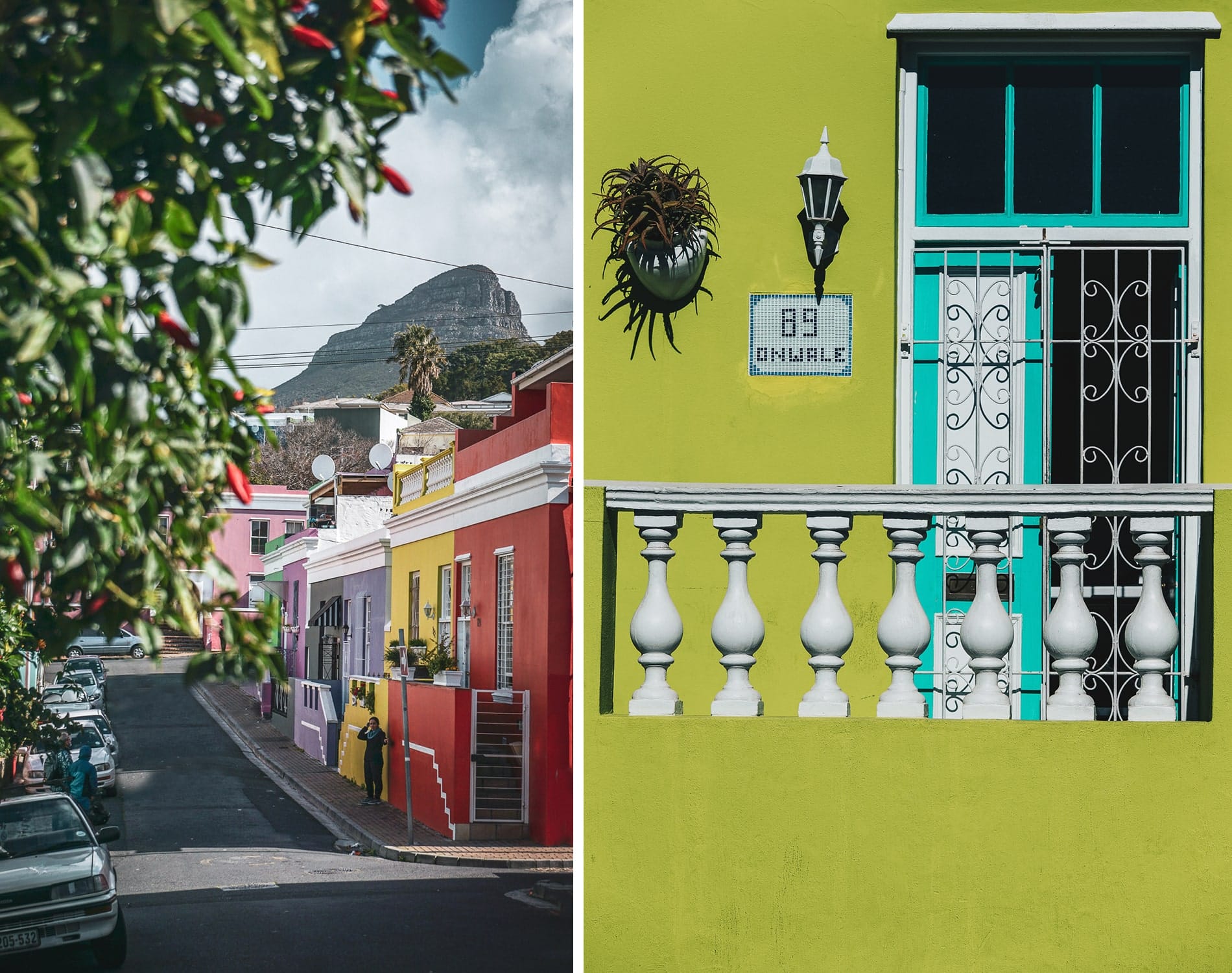
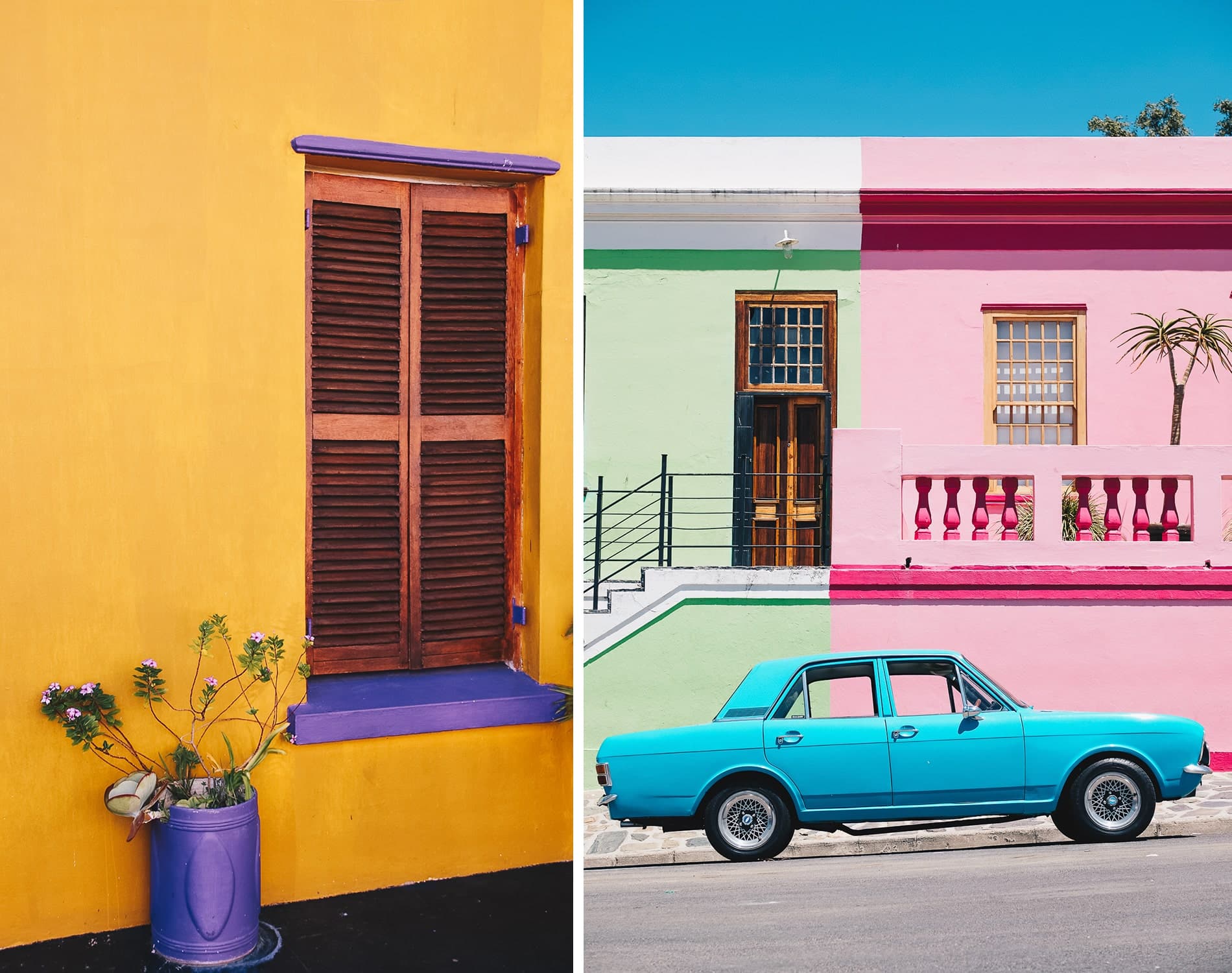
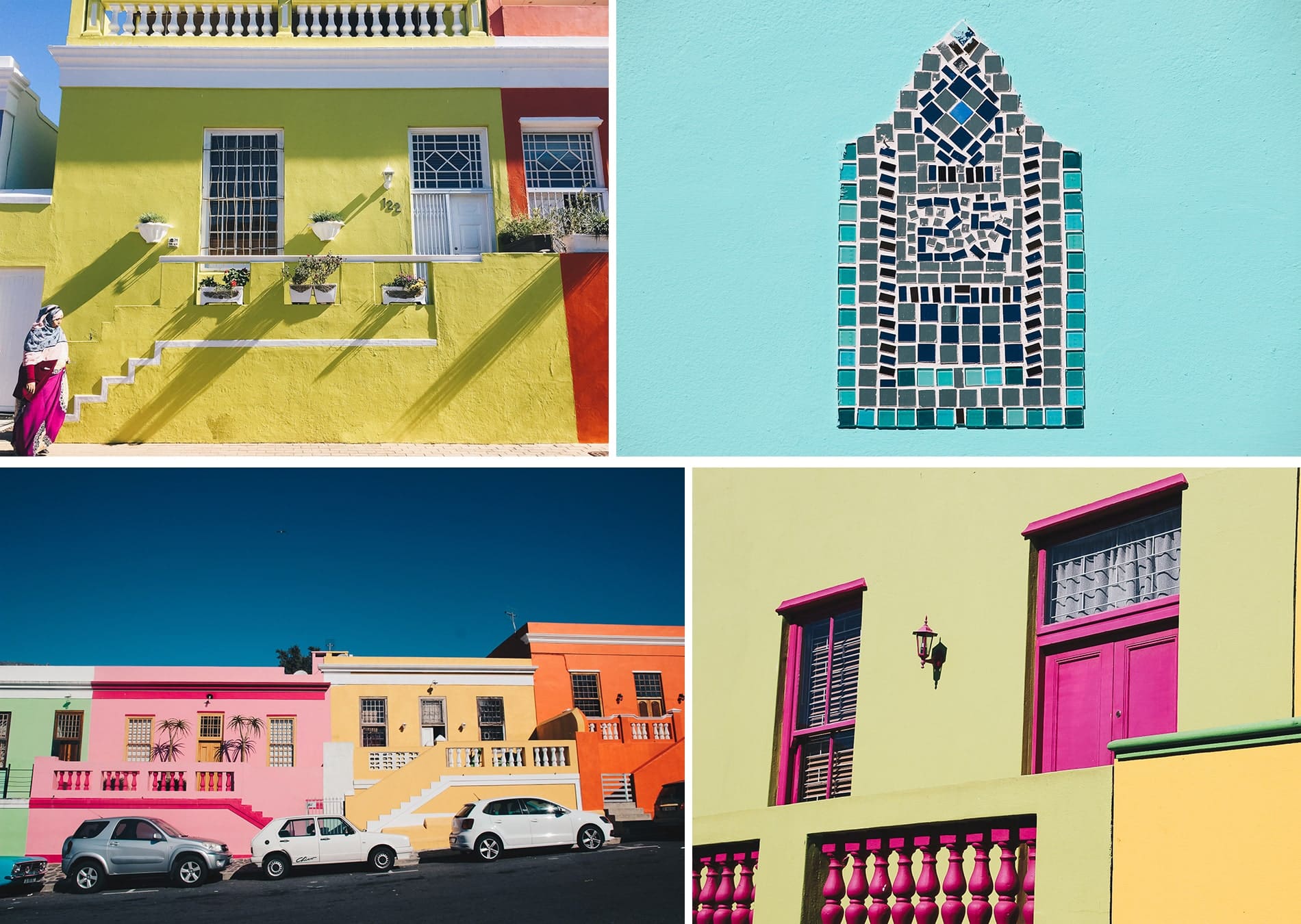
Cape Town’s multicolored district, which in Afrikaans means « Above the cape» is our Cape Town favorite! This is the city’s picturesque district, built on the slopes of the Signal Hills, and home to the Cape Muslims nicknamed Cape Malays because they are descended from Indian and Indonesian slaves brought by the Dutch in the 1780s. You’ll find some very nice designer and decorating boutiques in this charming neighborhood.
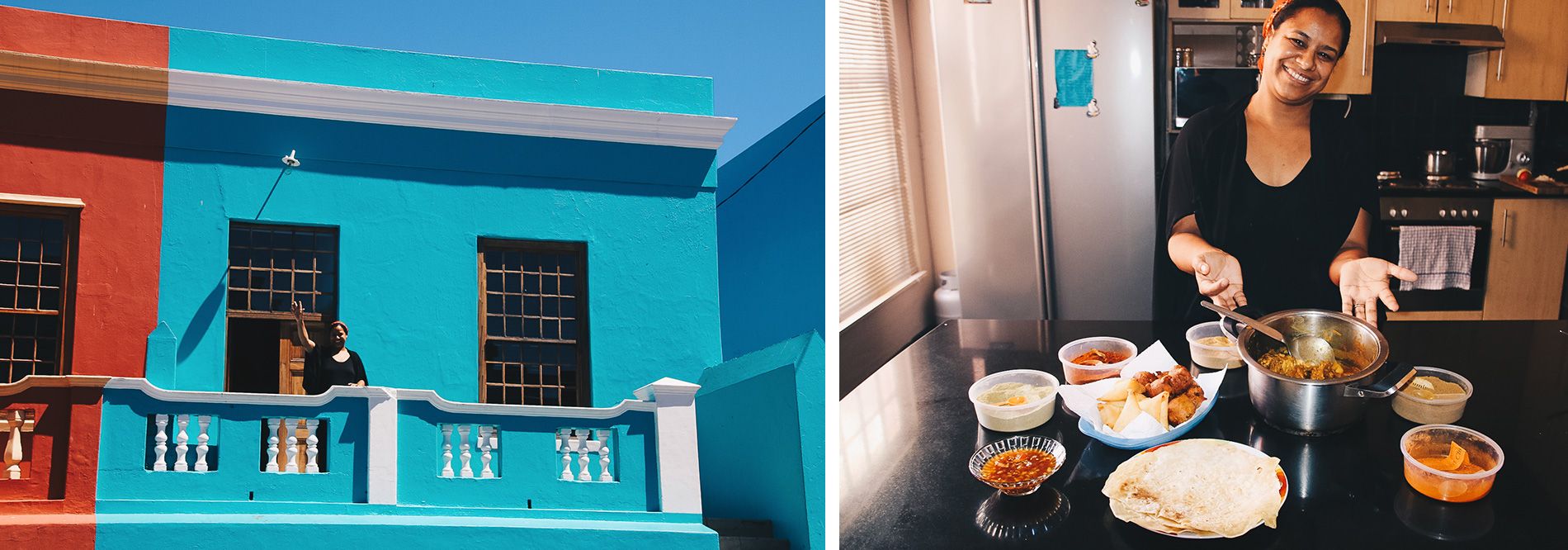
Thanks to our local guide Aiko, we had more time to wander the narrow, steep streets of Bo Kaap, lined with houses with brightly colored facades. This is where we met Gamidah, for a cooking class. A spicy and simple encounter, just the way we like it!
Not far from there, just one street away, you’ll find the gay district of Waterkrant. Many trendy little cafés and restaurants are hidden away here. We invite you to try them out, as Cape Town is reputed to have the second highest concentration of cafés in the world after NYC.
➡️ Book a cooking class and check availability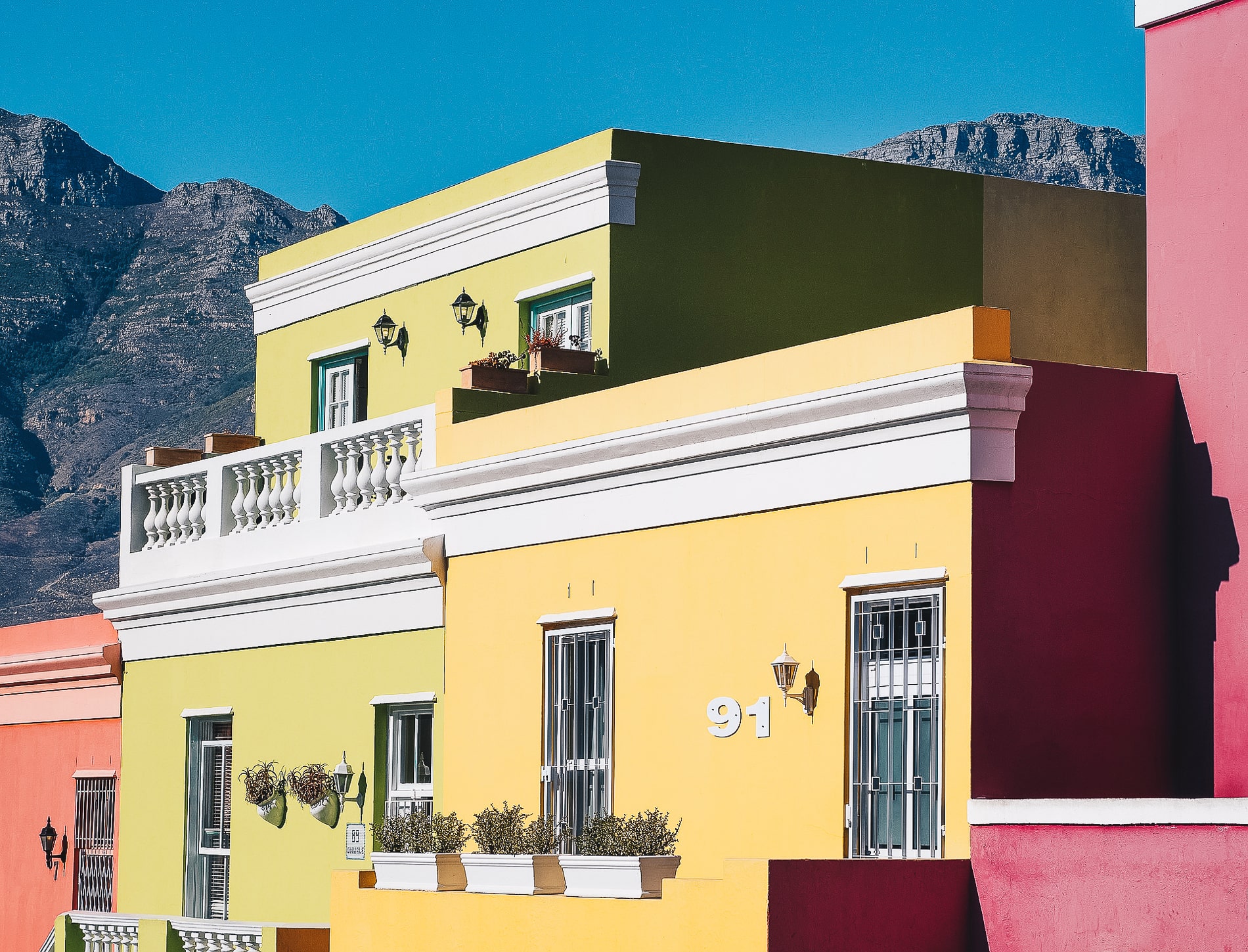
| THE WOODSTOCK NEIGHBOURHOOD
If you have a little time left, stop off at Woodstock, one of France’s most laid-back creative and hipster districts. Cape Town. It’s a district steeped in history that has changed its face over the years and is teeming with cool shops, unusual and unique concepts, art galleries, trendy and vintage stores for those who love to bargain. Today, it’s renowned for its street art, flea markets and industrial-style boutiques. We loved the atmosphere and I found a resemblance with New York’s Brooklyn district. This is the place to be to spot the latest trends in town.
| MARKETS & CAFÉSThe market for Old Biscuit Mill, the old cookie factory in Woodstock is well worth a visit at the weekend. The whole town meets there on Saturdays for brunch and organic shopping. It’s a vibrant place with designer boutiques, restaurants, food trucks and souvenirs. It’s a haven for young designers and antique dealers, as well as young hipsters who come to chill out in these unusual and fashionable places.
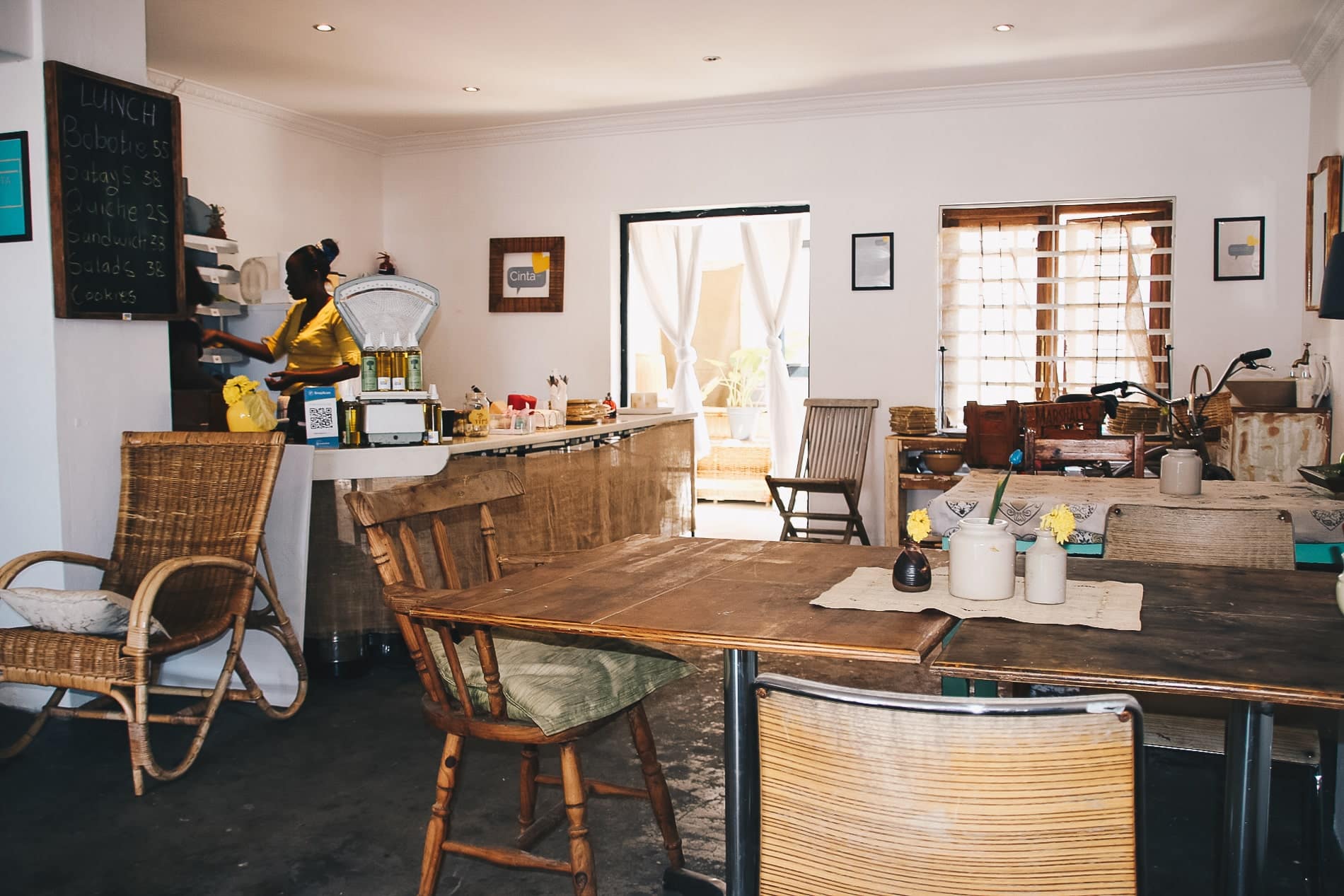
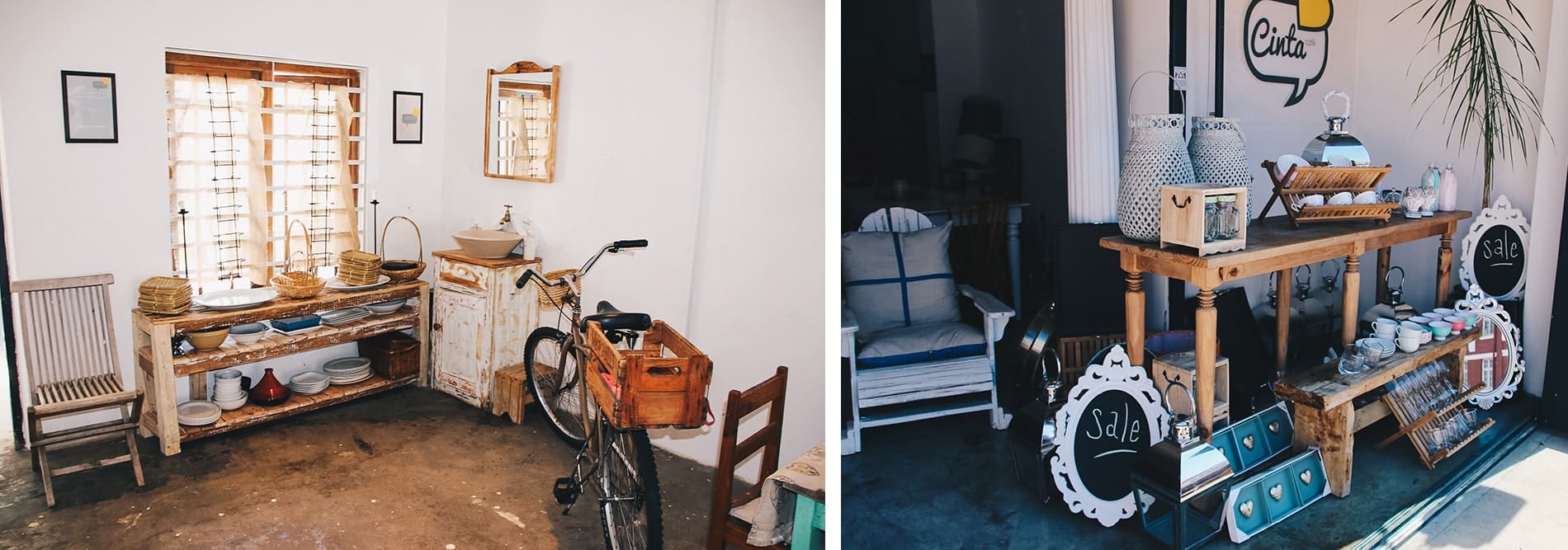
We stopped off for a few hours at Cinta café, just across the street from the Old Biscuit Mill, because we fell in love with the place: a boutique offering fresh fruit juices in an ultra-relaxed atmosphere with a decor mixing salvage, modern and wood. Everything we love!
If, like us, you also love covered or open markets, I invite you to visit these two addresses:- The Neighbourgoods Market: 373 Albert Rd, Woodstock, a trendy food market held every Saturday from 9am to 2pm and located in The Old Biscuit Mill. You’ll find original sweet and savoury artisan products as well as culinary specialities from around the world.
- Market at the Palms: 145 Sir Lowry Road, Foreshore -Cape Town, a small bohemian covered market, with local producers, decorative and art shops. It’s quite crowded and you’ll be hard pressed to find tables and chairs.
For those who want to take time to enjoy the street art, see you in the lower Woodstock (lower Woodstock) between de Cornwall Street, Frere Street, Sussex Street and Lower Church Street. The gallery Woodstock Industrial Center, located at 66 Albert Street, displays a number of works of art and graffiti. It’s best to take a guided tour of this area, which can still have a reputation for being a bit dull!
| BROCANTESWe liked this area because it suited us so well. We love flea markets and flea markets, so it was a bit like being at home! Head for the streets of Albert Road but also to Woodstock Cooperative, next to the Old Biscuit Mill. All you have to do is step out of the door and into the little stores hidden away at the back and upstairs to discover Ali Baba’s cavern. You’ll find vintage, recycled and hand-crafted objects.
| GREEN POINT, THE UP-AND-COMING NEIGHBOURHOOD
Greenpoint is now the city’s most upscale and westernized district. We spotted it on the famous red bus but didn’t stop. It’s famous for its large sports stadium and its immense lawn, but also because it’s home to the great jewelers of the haute joaillerie. If you want to stay there, I suggest you stay at Antrim Villa, a charming guesthouse with lovely rooms.
| SEA POINT
Adjacent to Greenpoint, Seapoint is one of the city’s densest neighborhoods, located between Signal Hill and facing the Atlantic Ocean. It’s an upmarket, lively suburb known for its sandy beaches, including Milton and Saunder’s Rock, which offer sunset views. The mix is weaker than elsewhere, but people come here for its many children’s playgrounds and also for the Sea Point Promenade, a 7-kilometer walking trail along the waterfront with Lion’s Head in the background. There are numerous sushi bars, fast-food outlets and pizzerias on site.
Locals come to enjoy the seawater pools on the Sea Point Pavilion Swimming Pool while travellers stroll through the colorful Mojo Market, famous for its African crafts, cafés and concerts.
PRACTICAL INFO - CAPETOWN
PRACTICAL INFO - CAPETOWN
| THE BEST ADDRESSES IN CAPE TOWN
A word of advice: if you’re coming to Cape Town at the height of the tourist season, remember to book your accommodation in advance, as we had trouble finding a decent place to sleep in February!
As in all major cities, you’ll find a wide choice of accommodation. In fact, I invite you to take advantage of our discount on Airbnb if you’re looking for a flat.
Take advantage of up to €40 off your Airbnb booking
To find your accommodation in Cape Town, you can check availability:
One street back on Market Street is Green Market Square, a craft market open every day where you’ll find plenty of souvenirs to take home: jewellery, statues, musical instruments… The golden rule is to bargain 🙂
For those on a budget, there’s a great place for lunch and dinner called the Easter food bazaar on Long Market Steet, a sort of cheap and authentic Indian and Chinese food court. For lunch, head for the food court on Market Street, where you’ll find a wide choice of food at low prices. (sushi, pasta, sandwiches…)
For restaurants that I recommend, you have:
- Clifton Bungalow: Glen Country Club, 3 Victoria Rd, Clifton
- Chinchilla: Victoria Rd Shop 120, Second Floor, The Promenade, Camps Bay
- Belthazar: on the Waterfront, this restaurant allows you to discover more than 250 South African wines served by the glass.
- 4Roomed eKasi Culture & Foods: this local place offers the essence of Cape Town and South Africa, with great local produce. A, 605 Makabeni Rd, Khayelitsha
- Mojo Market in Sea Point: open every day until 10pm, this is a trendy place to grab a bite to eat or a drink in a great atmosphere!
- The Gold Restaurant: 15 Bennett St, Green Point, a place to enjoy African dishes to the sound of percussion from 6.30pm.
- Woodstock Exchange: 66, 68 Albert Rd, Woodstock, a trendy place for shopping, coffee and lunch.
- The Neighbourgoods Market: 373 Albert Rd, Woodstock, a trendy food market, held every Saturday from 9am to 2pm and located in The Old Biscuit Mill.
- The Pot Luck Club: a tapas restaurant on the top floor of The Old Biscuit Mill.
- Restaurant Jerry’s Burger and Bar in Blouberg, a 30-minute drive from Cape Town: the best burgers in town, 1st Floor, Portico Building, 1 Athens Rd, Bloubergstrand.
- Restaurant le Haas: 19 Buitenkant St, Cape Town City Centre
- Compagny’s garden: we enjoyed strolling among the squirrels and relaxing in the hanging wicker chairs for a coffee.
- Café du Jean: 78 Ebenezer Rd, Green Point
- Knead Bakery Wembley Square: 80 McKenzie St, Gardens
- Mojo Market in Sea Point: open every day until 10pm, this is a trendy place to grab a bite to eat or a drink in a great atmosphere!
- Truth Coffee: 36 Buitenkant St, Cape Town City Centre, an industrial and very original place to have a coffee, voted the best in the world in 2015.
- Jason Bakery: 185 Bree St, Cape Town City Centre, where you can enjoy a variety of pastries with a good cup of coffee.
- Haas Coffee: 19 Buitenkant St, Cape Town City Centre
- One&Only Cape Town: Dock Rd, Victoria & Alfred, is the place to be for Rooibos Tea with delicious pastries. This luxury hotel is sure to delight!
A woodstock:
- Tribe Coffee and its colourful terrace: The Woodstock Foundry, 160 Albert Rd
- Rosetta : 66 Albert Rd, Woodstock
- Jiji Juice Bar: 30 Loop St, CBD
- Starling & Bicycle Café: 66 Albert Rd, Woodstock
- Salisbury Coffee: 19 Salisbury Street
- Woodstock Exchange: 66, 68 Albert Rd, Woodstock, a trendy place for designer shopping, coffee and lunch.
- Superette: 66 Albert Rd
- Three Feather Café: for a good burger, 78 Bromwell St, Woodstock
- The Woodstock Lounge: 70 Roodebloem Road
| TRANSPORT TIPS
- Transport in the city
If you want to discover Cape Town and as many activities as possible, if you like museums, if you have young children with you, I suggest you take a look at the official pass, which gives you entry to over 90 of Cape Town’s best attractions, with free multi-stop tourist bus transport for the duration of your pass and queue-cutting tickets. It’s valid from 2 to 5 days, so make the most of it!
➡️ Book the pass online- Airport transport
There is a shuttle bus that organises transfers from all backpacker hotels in Cape Town to the airport. Transfers take between 25 minutes and 45 minutes, depending on traffic.
Fares to be rechecked each year: 190R alone /320Rb for two. To give you an idea, a taxi costs 280R legally and 200R illegally.
” BACKPACKERS BUS
42 Applemist Steer, Ottery, Cape Town.
tel : + 2782 809 9185
Email : bpackbus@mweb.co.za
| CAR HIRE
To visit the whole of the south as far as Cape Town and the townships, we have booked day trips from Cape Town. This is useful if you’re short of time and don’t want to organise everything yourself.
You can also hire a car to criss-cross the roads. We recommend Rentacheapie, a really cheap agency located on Marine Drive. Their prices are unbeatable! The only drawback is that the agency isn’t in the city centre but rather very out of the way, so it’s not very practical with luggage and traffic. Find your cheapest car hire here
| INTERNAL FLIGHTS IN SOUTH AFRICA
If you need to fly within the country, here are some good low-cost airlines:- Flysafair
- Flyairlink
- FlyMango
- Kulula
| WHEN TO GO TO CAPE TOWN
- Late March/April : good time to visit Cape Town
- December/January : Very busy season. Long queues at tourist attractions. The Kaapse klopse or Cape Town Minstrel Carnival also takes place on 2 January, celebrating the New Year with music, extravagant parades, dancers, musicians and singers. A not-to-be-missed event if you happen to be there at the time.
- May/June to November/December: Whale season
- Sharks can be seen all year round, but visibility is best in June/July/August.
| IS SOUTH AFRICA DANGEROUS?
Please note that as an accredited tailor-made travel designer, I can help you create your own tailor-made holiday in South Africa and put together a personalised itinerary to suit your needs. Please email me at: contact@mademoiselle-voyage.fr