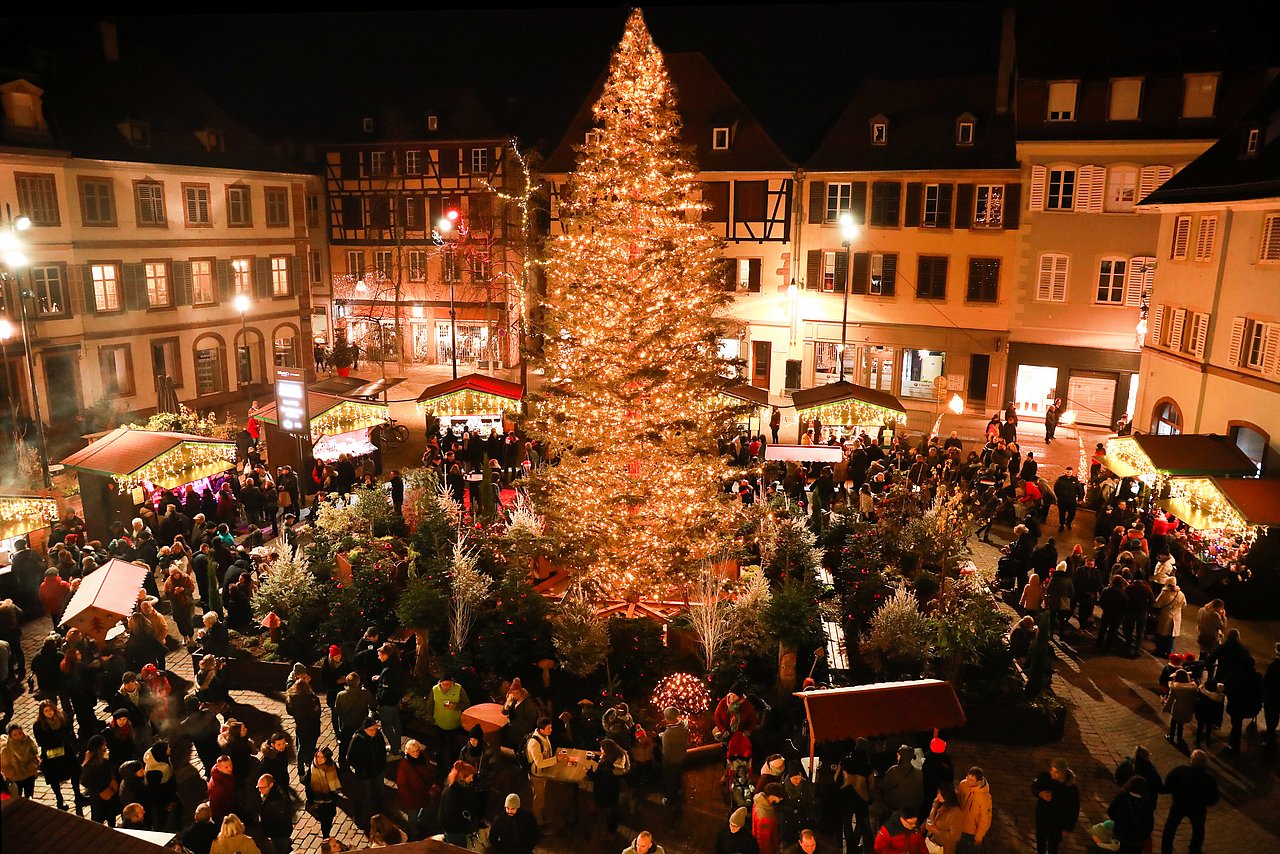
As every year, from the end of November, the magic of Christmas takes over the great French cities. The most famous remains Strasbourg in Alsace but we invite you to discover the most beautiful Christmas markets in the region.
Each year, during Advent, villages light up and you immediately understand why everyone talks about the Christmas markets in Alsace as a tradition unique in the world.
Strasbourg is the big star, of course. But around it, just a few minutes or an hour’s drive away, stretches a constellation of villages and small towns where Christmas markets take on an atmosphere sometimes magical, sometimes medieval, sometimes intimate, always deeply authentic.
So I take you to discover the Christmas markets of Alsace around Strasbourg and believe me, they belong to those places one remembers for a long time!
Each year, we love to set off to discover new Christmas markets to rediscover that magical atmosphere and that touch of childhood. I also invite you to check out our other articles dedicated to the most beautiful Christmas markets in Europe to extend the magic:
- Strasbourg Christmas Market
- Prague Christmas Market
- Cologne Christmas Market
- Krakow Christmas Market
TABLE OF CONTENTS :
| Which are the most beautiful Christmas markets in Alsace?

| Colmar: the authentic market, our favorite
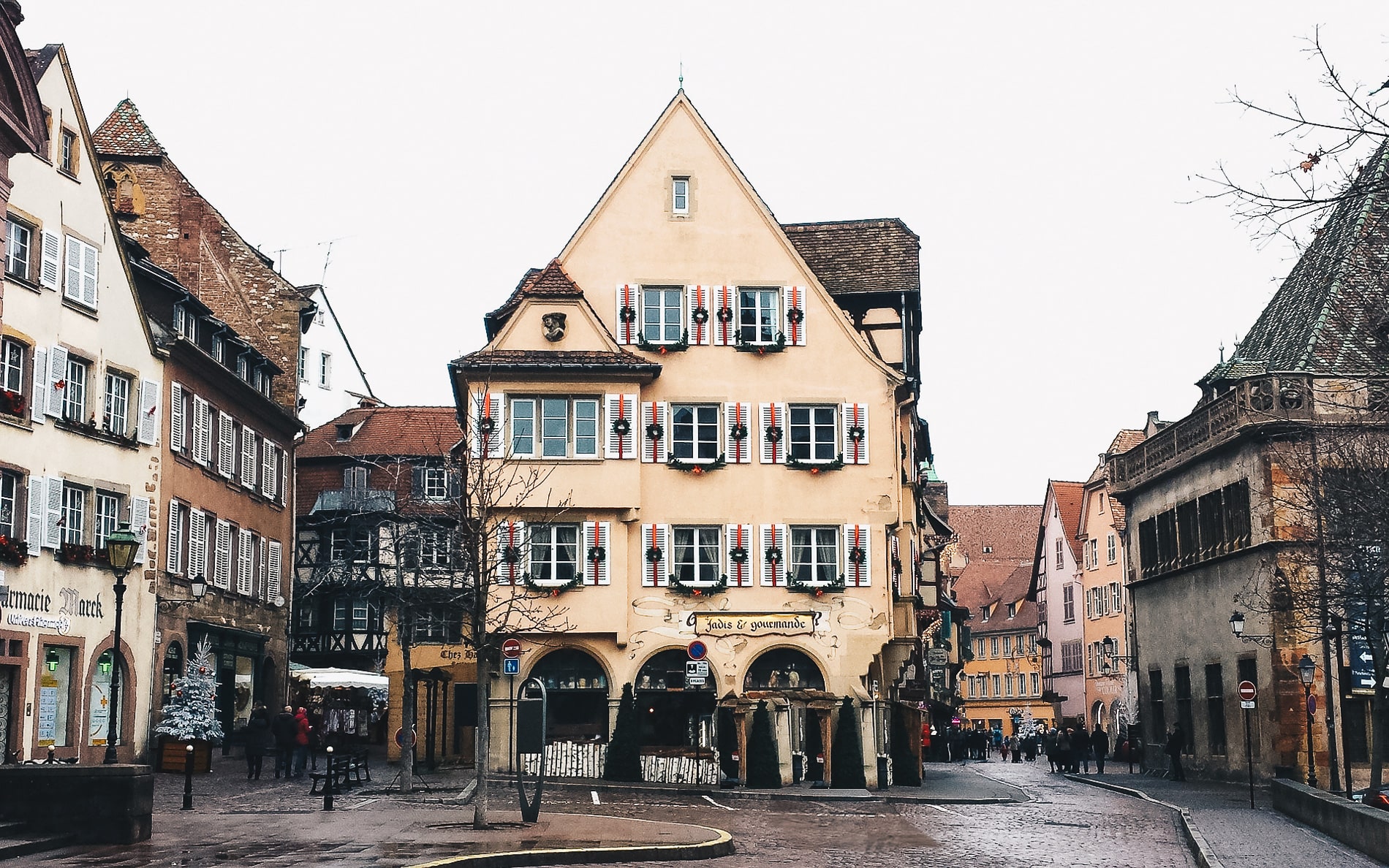
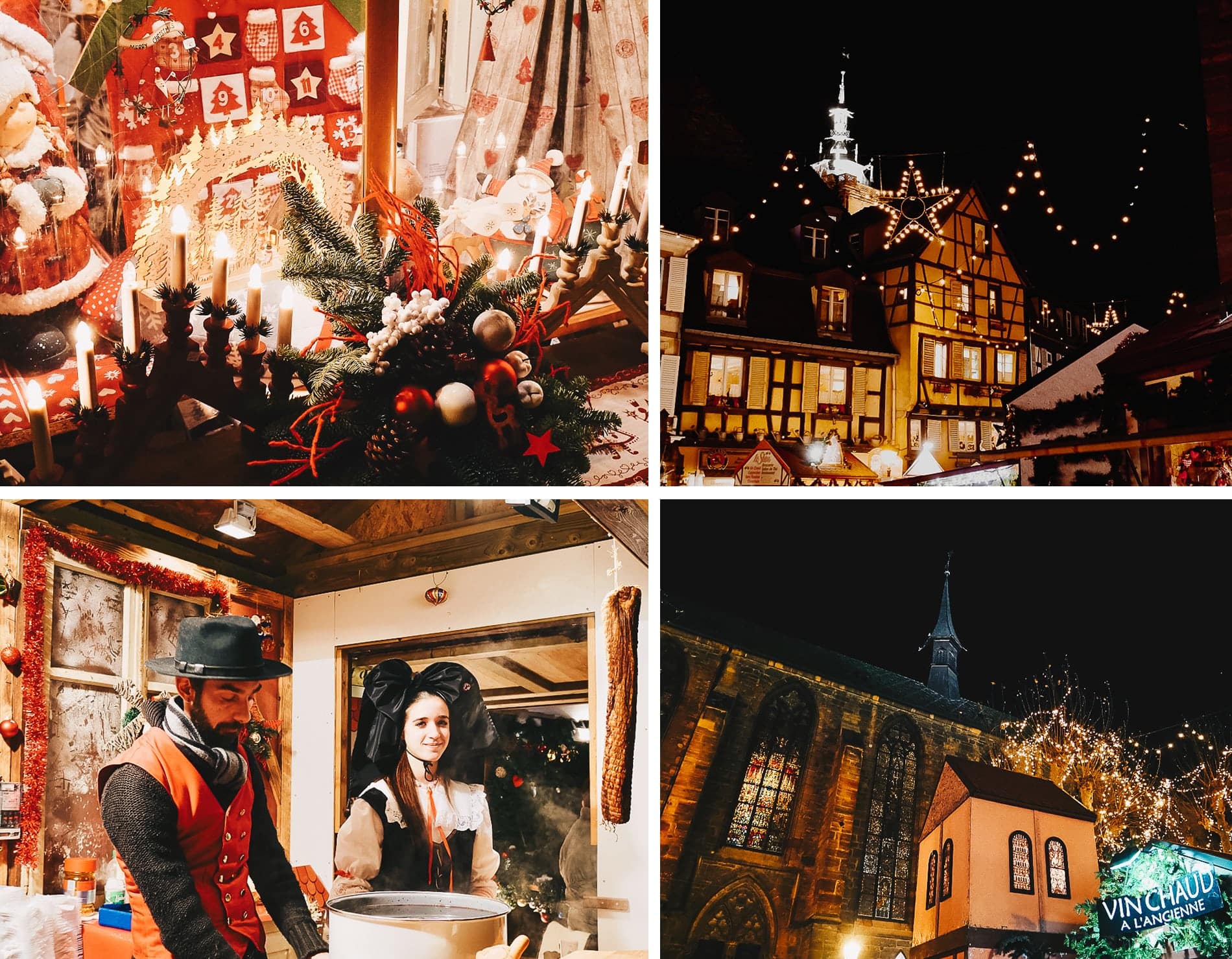
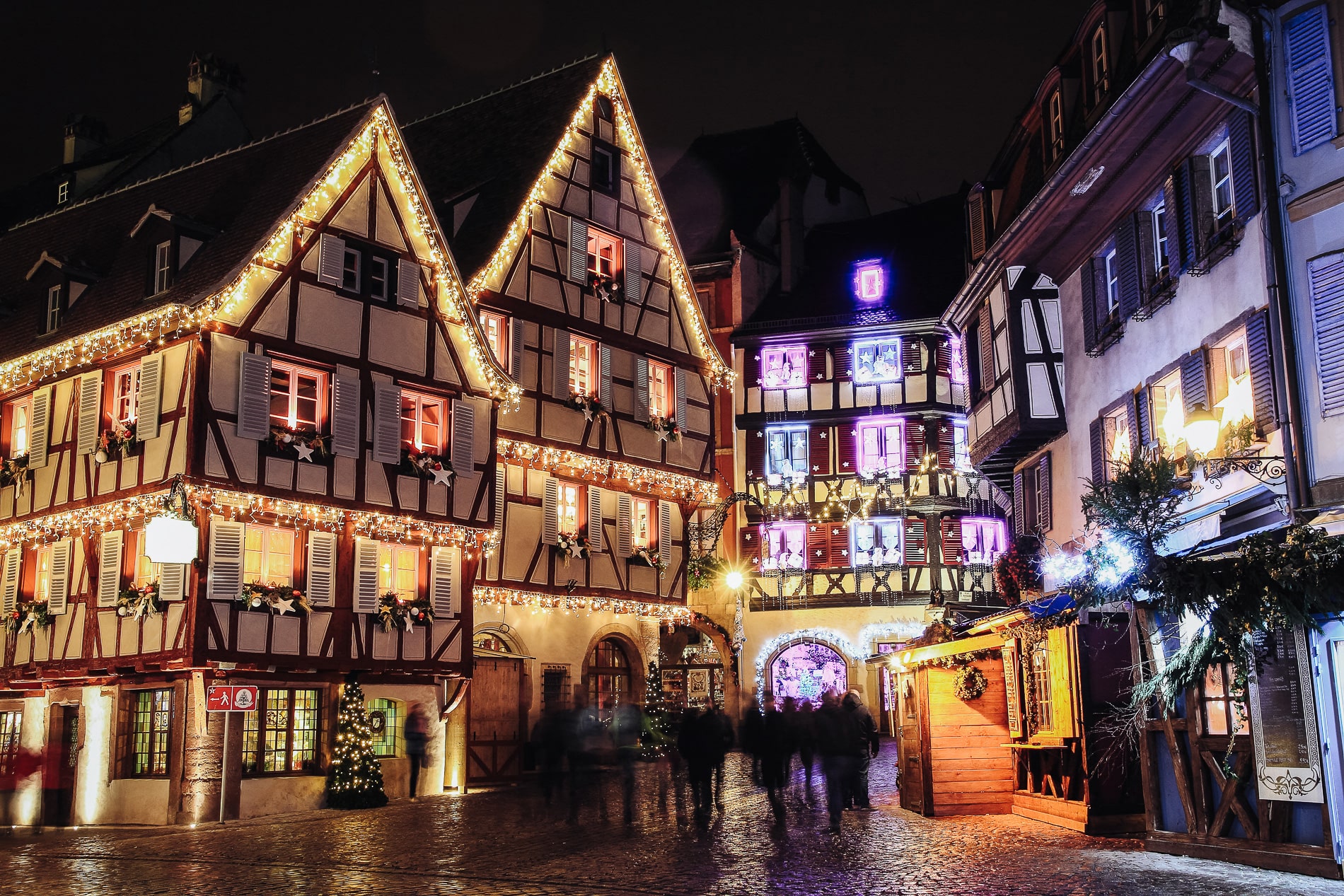
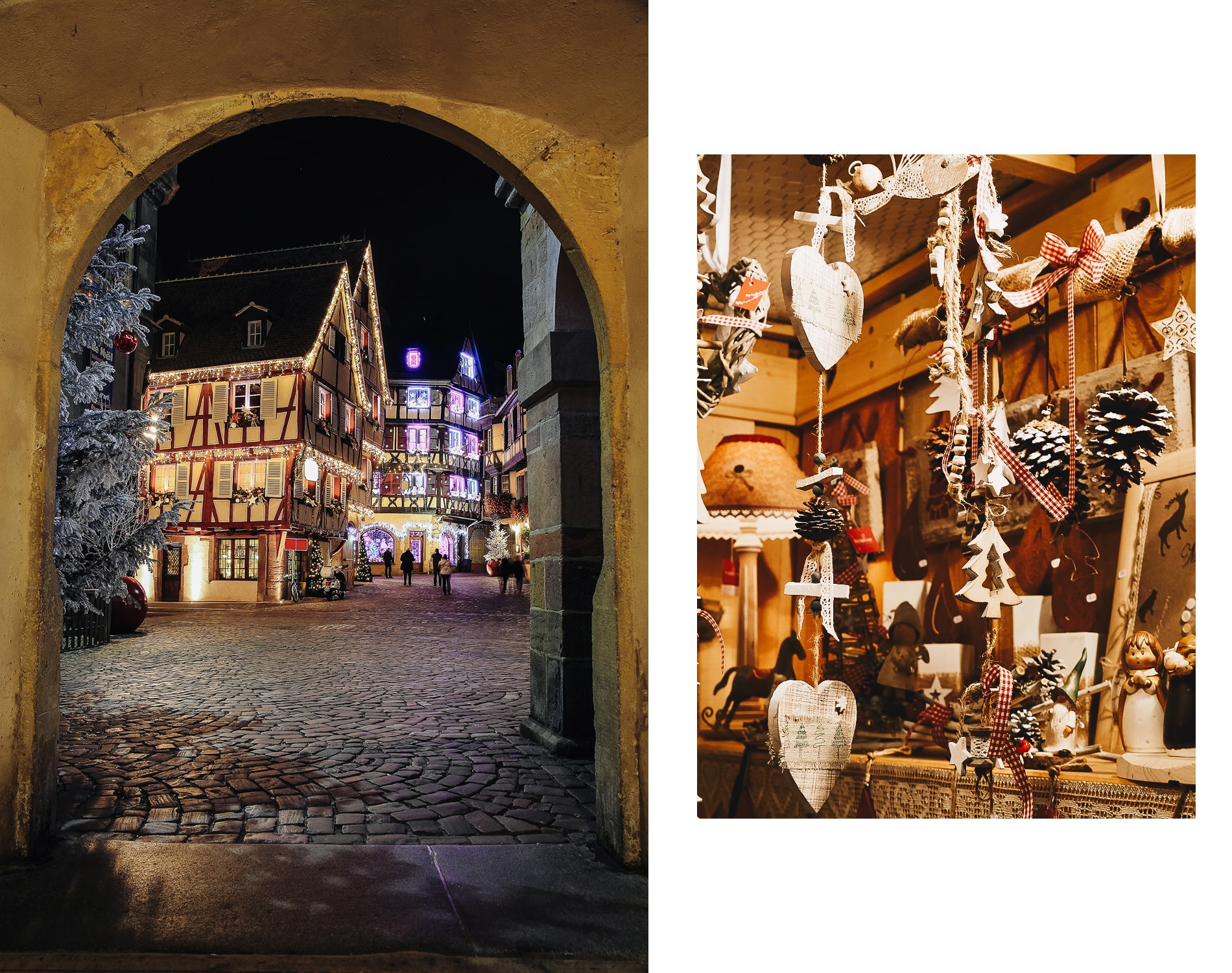
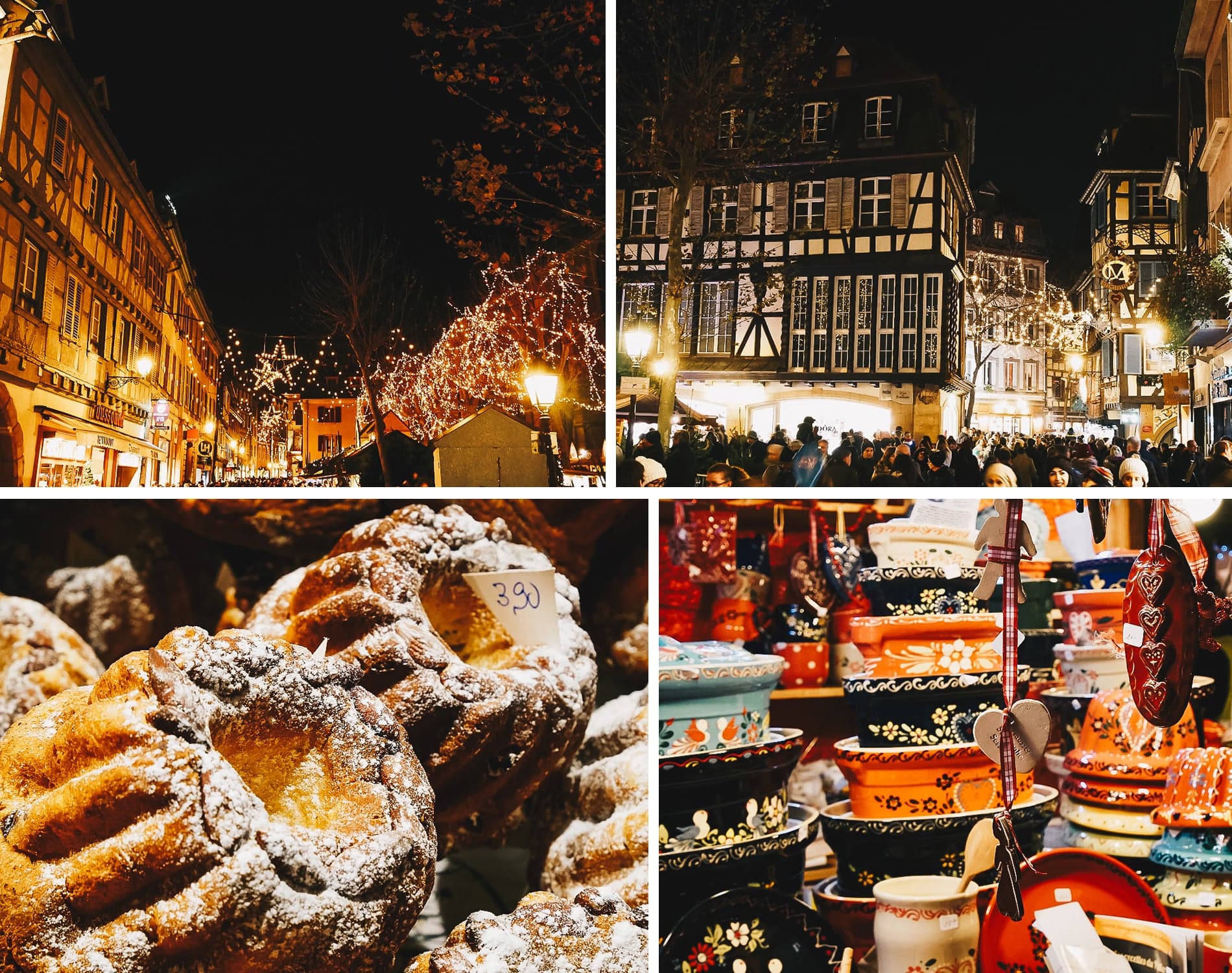
Many Alsatians recommended that we visit Colmar at Christmas, and we now understand why. Here, you plunge into a true Christmas market, with splendid wooden chalets, traditional decorations, local fabrics and Alsatian craftsmanship highlighted.
Colmar is not just one market: it’s five small markets that sneak through the alleys, each with its own atmosphere. The whole city becomes a Christmas setting and everything seems designed to make you fall into childhood again.
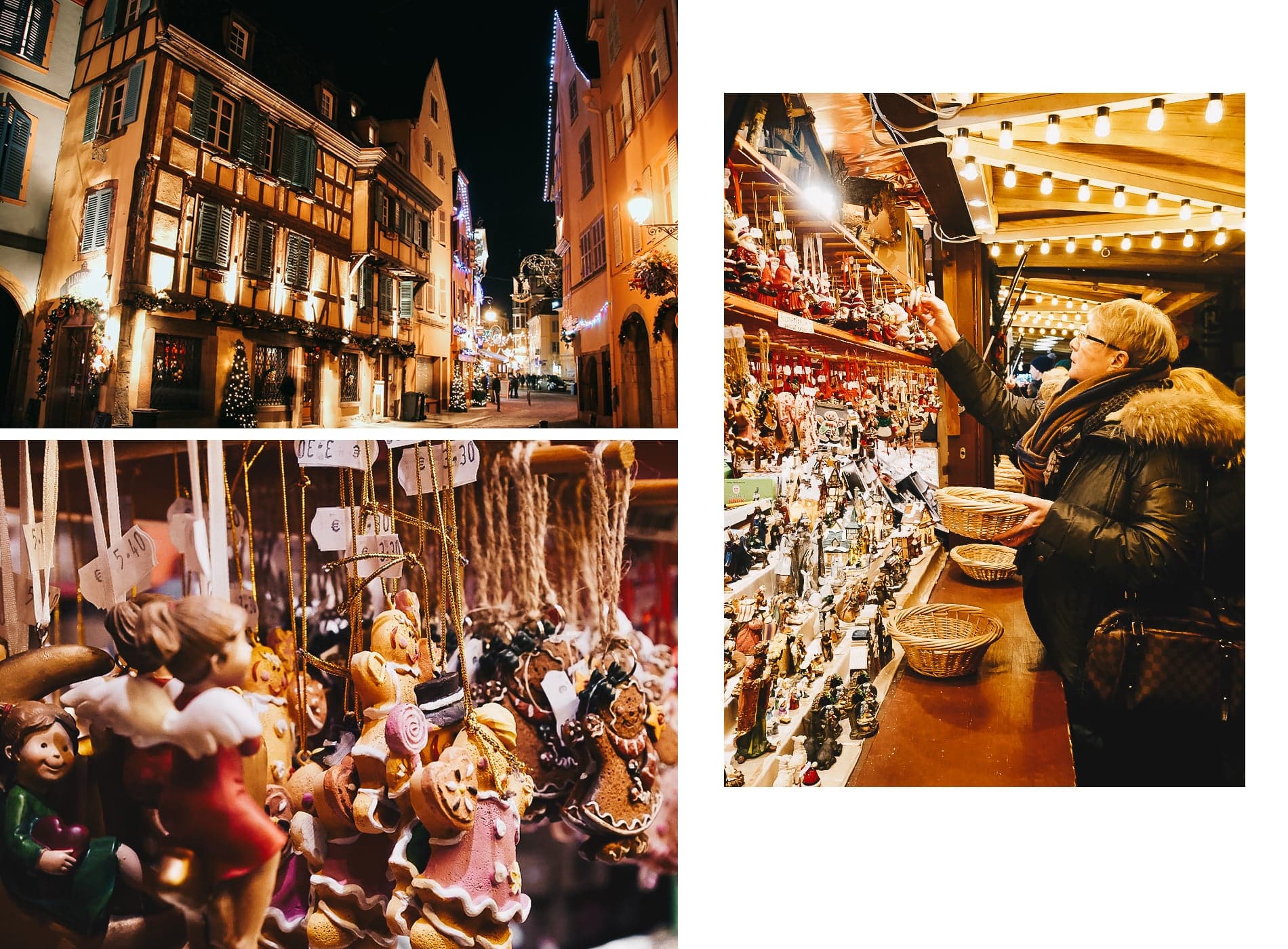
What I particularly love here is how Colmar lights up each façade like a work of art. The artisans’ market, near the Unterlinden Museum, is one of the most beautiful to discover real local creations. And if you like specialties, don’t miss the gourmet market: flammekueche, white mulled wine, bredeles, everything is delicious.
→ Tip: come at the end of the afternoon to see the town gradually illuminated. It’s a magical moment. Colmar today suffers from its huge success, and that is felt especially during the festive season. The streets, so charming with their half‑timbered façades and festive decorations, often get crowded from late morning. The atmosphere remains magical, but expect heavy crowds, especially on weekends. To fully enjoy the Christmas market, favor visits early in the morning or in the evening, when town calms down a little and lights reveal all its beauty.
For an authentic souvenir, don’t miss the hand‑made Christmas baubles crafted in the atelier located on Unterlinden square. We loved the deep authenticity of this market… even if, admittedly, the crowd can sometimes be overwhelming!
Some addresses to try in Colmar:
– Coffee break at Jadis et Gourmande (8 Place du Marché‑aux‑Fruits)
– La Terrasse du Marché, ideal for lunch
– La Soï, an excellent place for traditional flammekueche
– Tea room L’Artemis
– Le Croissant Doré for a sweet break
– Restaurant Stam for local cuisine.
| Kaysersberg: The most authentic market
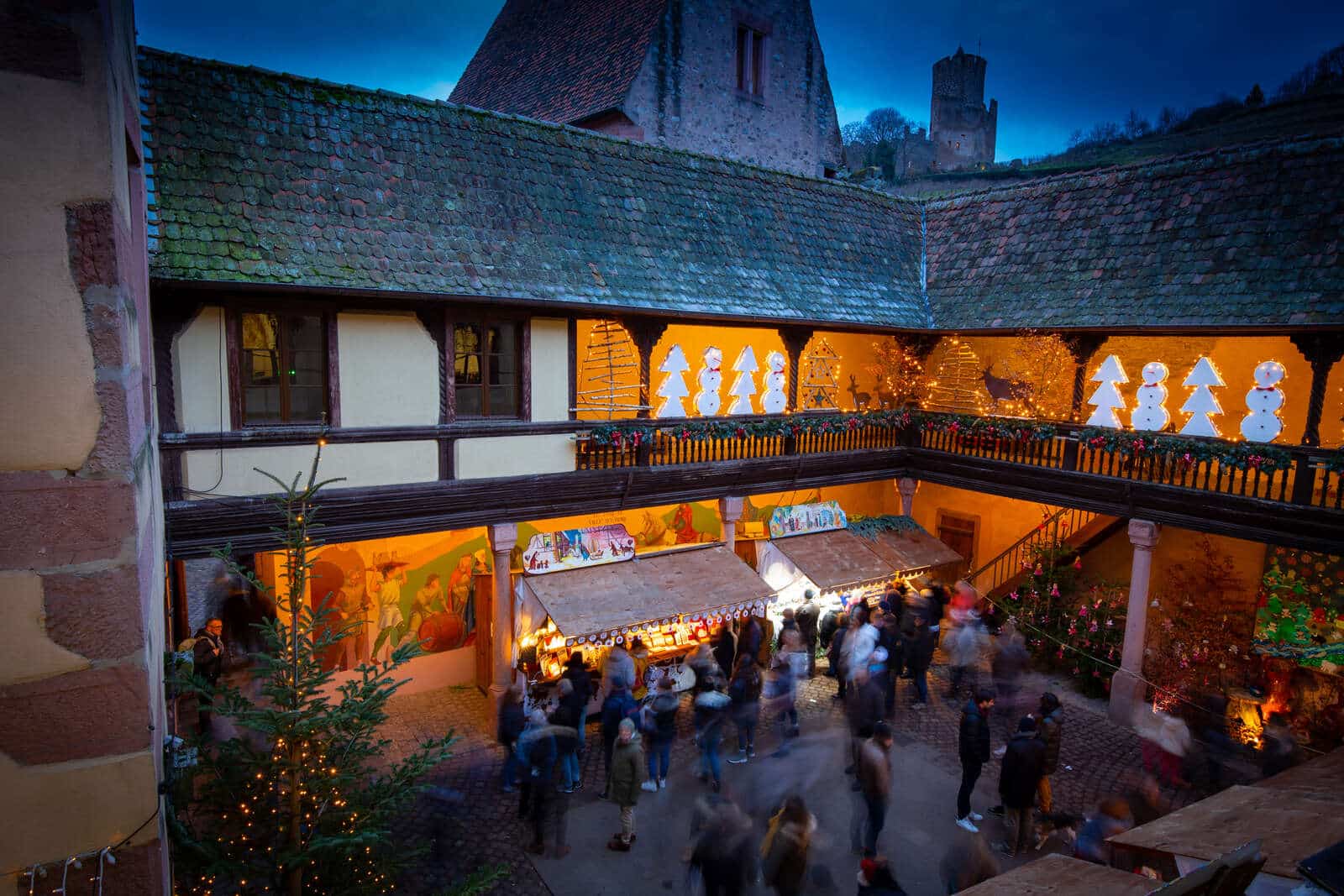
Kaysersberg is the market I imagine when I think “tradition.” Its medieval decor, its narrow alleys, its perfectly preserved Alsatian houses, everything is there for a total immersion. The market is concentrated in the courtyard of the Arsenal, with a real focus on local craftsmanship.
Here, no imported gadgets or industrial decorations:
- pottery,
- artisan candles,
- wooden objects,
- natural Advent wreaths…
You chat, you taste, you learn. And the atmosphere is so warm that you really feel welcomed “at someone’s home.” Kaysersberg is one of the locals’ favorite markets, which says a lot.
| Riquewihr: Alsace as on a postcard
Riquewihr is that village you see in photos and think is almost too beautiful to be real. And yet… in December, everything is even more charming.
The market, set along the main street, is small but perfectly integrated into the village. You stroll, enter a shop, step out to admire a decorated façade, walk a bit further… It’s the kind of place where every street corner deserves a photo.
Don’t miss: the shop “Féerie de Noël”, open year‑round, but which takes on a special charm in December.
| Eguisheim: The coziest circular village
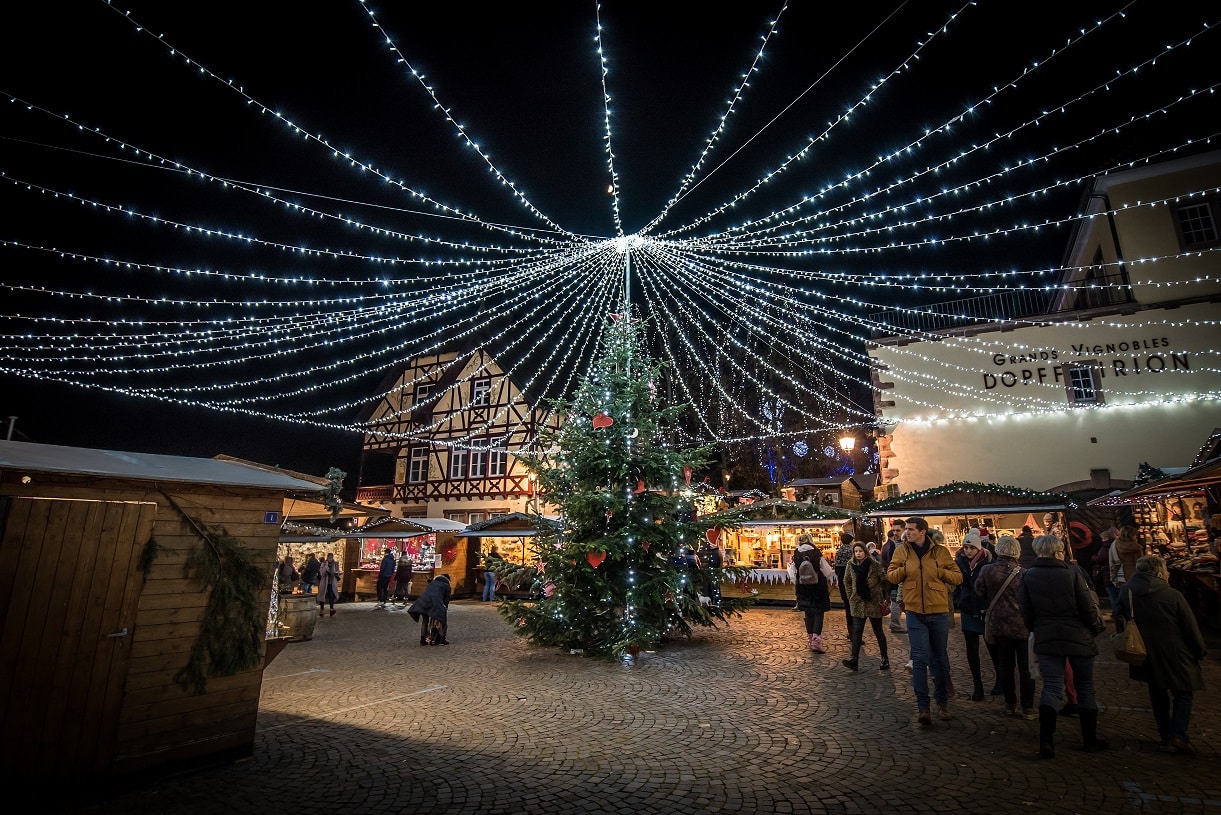
Eguisheim has that very particular charm of villages built in circles. In winter, the streets seem to form luminous rings, and you naturally drift from one chalet to another. The market is small, but that’s what makes all its charm: it is intimate, warm, very family‑oriented, and you find lots of small handmade creations.
Among the things I appreciate here:
- the soft glow of lights,
- the scent of cinnamon,
- local artisans,
- beautifully decorated alleys.
It’s the perfect village for a quiet stroll, away from the crowds of Colmar.
| Obernai: The gourmand market par excellence
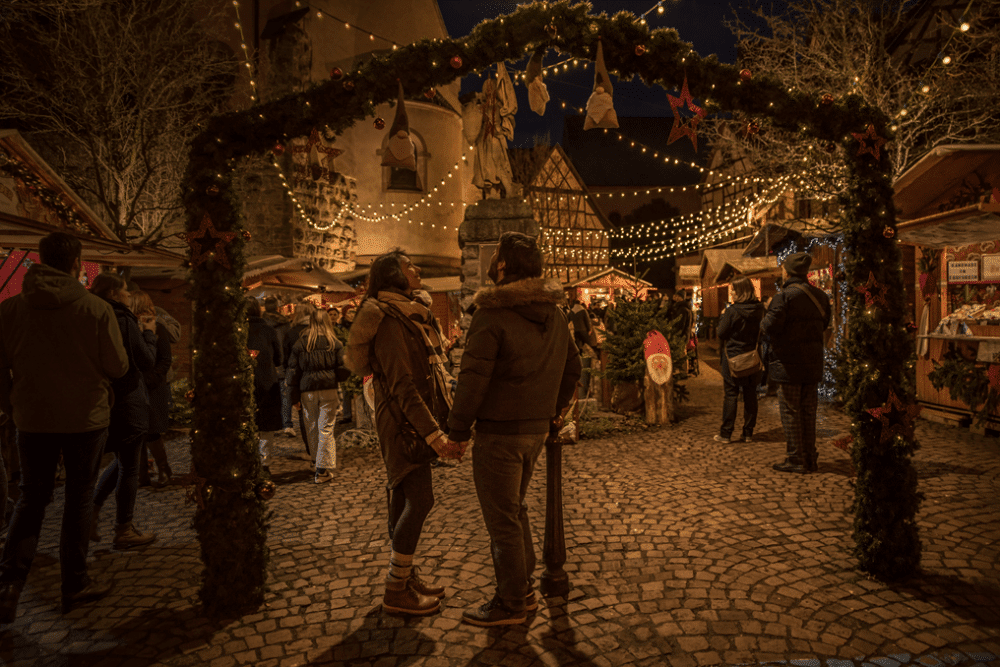
Obernai has that “living small town” atmosphere that works very well for a Christmas market. The wooden chalets are more spaced out, the central square very pleasant, and the emphasis is clearly on local specialties.
If you are a foodie, you will love:
- citrus‑spiced mulled wine,
- mannala (Alsatian ginger‑bread figurines),
- artisan gingerbread,
- Alsatian charcuterie,
- local cheeses.
The atmosphere is very friendly, and the old town, illuminated at night, is really worth the detour.
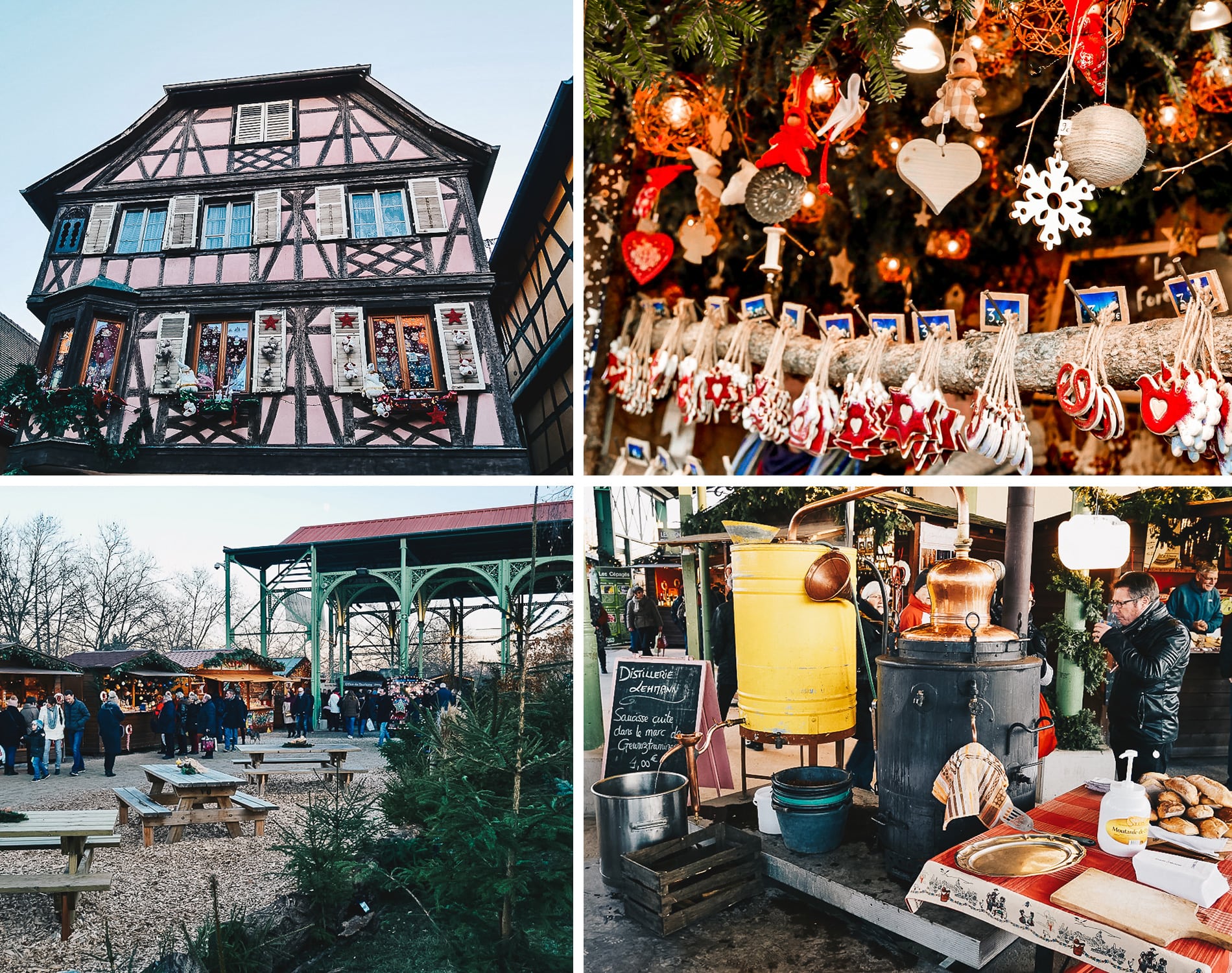
We liked Obernai because it focuses on conviviality and authenticity with a more family‑oriented Christmas market centered on local flavors and craftsmanship. In the little Christmas village set at the foot of the ramparts, pretty wooden chalets host passionate artisans with remarkable know‑how. Everything invites tasting: gingerbread, terroir products, whiffs of mulled wine… a true gourmet immersion.
The town also offers many activities such as horse‑drawn carriage rides, glass‑blowing demonstrations or a circuit dedicated to Alsatian nativity scenes. We especially appreciated the warm and very local vibe of the Obernai market, where families and friends come together just to share a moment over mulled wine or an Alsatian beer. We visited by day, but they say that at night it reveals all the magic of a true Alsatian Christmas.
| Sélestat: On the trail of the first Christmas tree
Sélestat is not the most famous market, but it is probably one of the most interesting culturally. It is here that a Christmas tree was first mentioned in a document in 1521. The whole town plays with this history: exhibitions, decorations, explanations… it’s a very educational and original market.
The market itself is pleasant, family‑oriented, less crowded than the others, and ideal for a more peaceful visit.
| Ribeauvillé: The most evocative medieval market
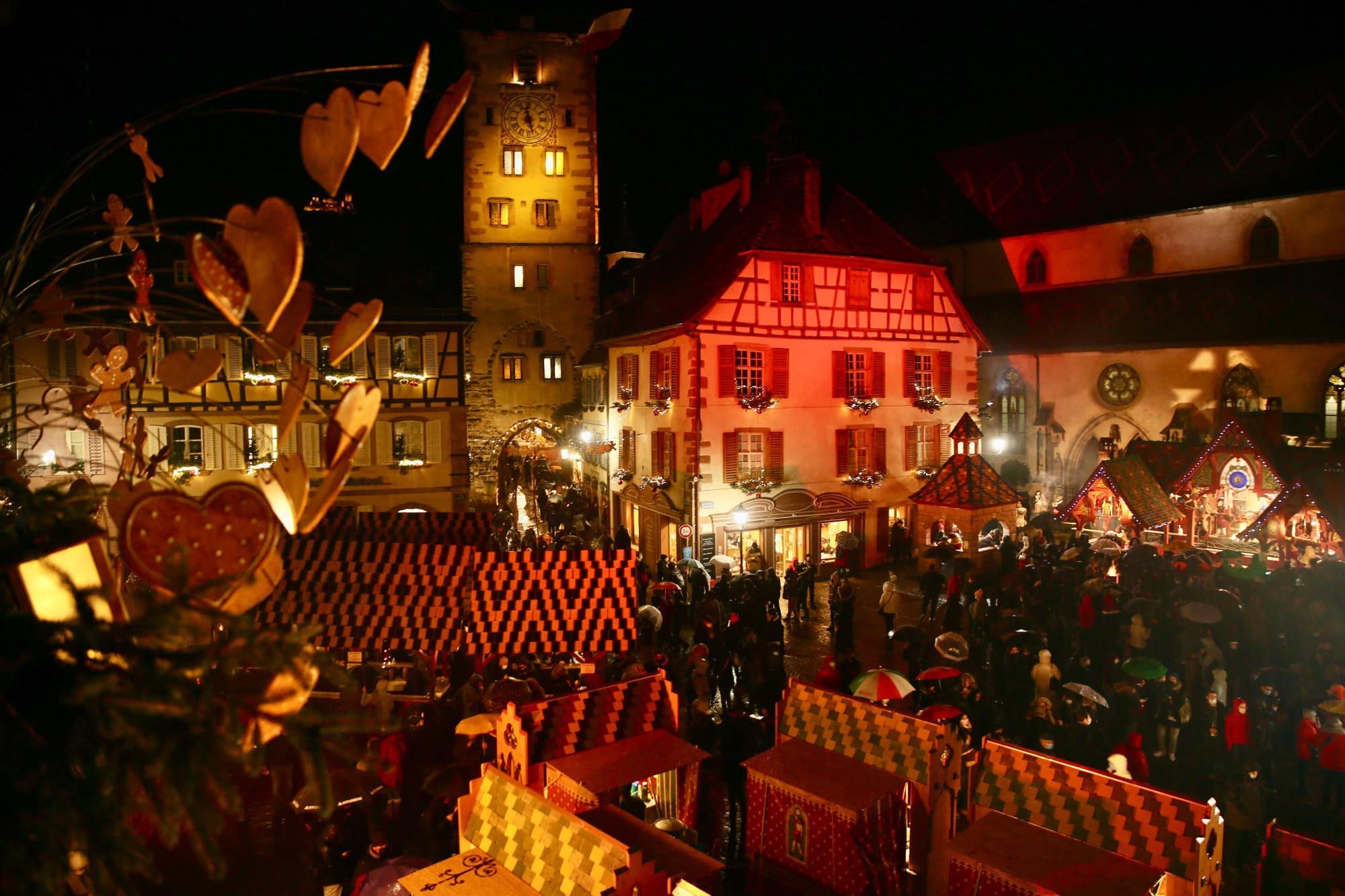
Ribeauvillé offers a market completely different from the others: a medieval market. Costumes from the era, troubadours, street performances, mead to taste… you completely leave the traditional festive mood to dive into another era.
It is one of the most immersive markets in the region, perfect for those who want a somewhat different experience.
| Strasbourg: capital of light
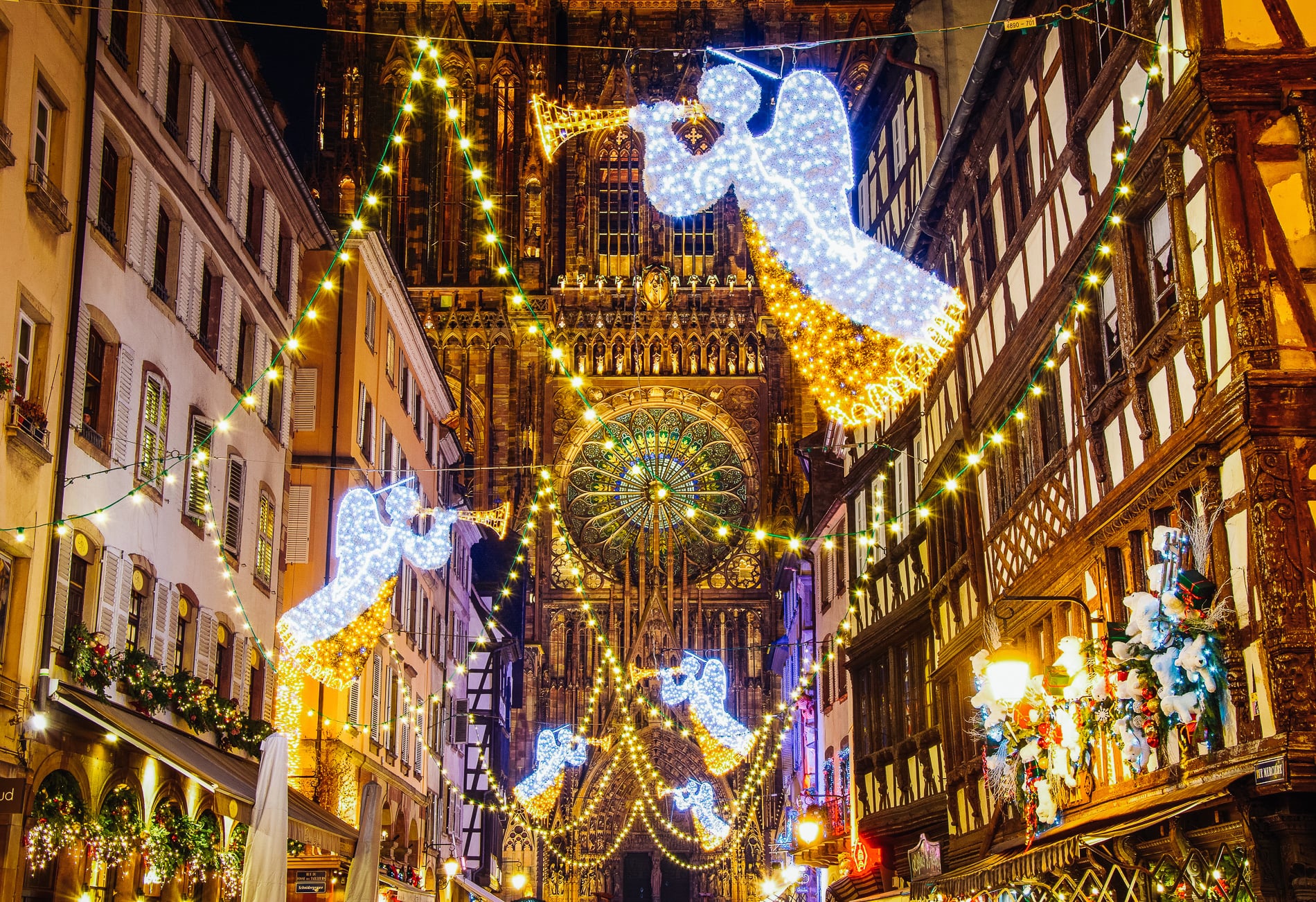
I had to include Strasbourg in this selection because the city becomes magical once night falls. In our opinion, it truly reveals all its beauty in the evening: streets, façades, churches, windows, even balconies light up with thousands of small lights, creating a sparkling scenery that delights both children and adults. Strasbourg is already breathtaking by day, but it’s really the nocturnal enchantment that sublimes its squares and buildings.
With more than 300 chalets spread throughout the city center, the Strasbourg Christmas market is one of the oldest and most emblematic in Europe. You find here the tradition of an authentic Alsatian Christmas, even if some stands also propose specialties from other regions (Brittany, Midi‑Pyrénées…). The atmosphere remains warm and friendly, but attendance is very high, which can make wandering a bit tricky.
Each year, Strasbourg also puts a country in the spotlight. During our last visit, it was Portugal celebrated on Gutenberg square, with its culinary specialties (pastéis de nata, charcuterie, wines…), typical crafts and many musical and cultural events.
We were won over by the illuminations of Strasbourg, which give a unique charm to the city and highlight the magnificent Alsatian Christmas decorations. The only downside: some lack of authenticity in certain chalets, the sometimes overwhelming crowds, and prices higher than in the surrounding villages.
→ Read the full article on the Strasbourg Christmas Market here
| My recommended itinerary for 1, 2 or 3 days around Strasbourg
You often ask me: “Where to start? Can we really see several markets in a weekend?” Yes, absolutely. And that’s even what I prefer in Alsace: distances are short, roads beautiful, and each village offers its little surprise.
So here are three simple, efficient and field‑tested itineraries you can easily follow from Strasbourg.
→ One day: the express but magical itinerary
If you lack time, I recommend heading directly to Colmar in the morning, the city is much calmer and you soak up this movie‑like ambiance.
Then, just ten minutes away by car, you’ll find Kaysersberg, one of the most authentic markets. Perfect for a lunch break or hot chocolate, the atmosphere is really warm there.
To end the day beautifully, I strongly recommend finishing with Riquewihr. The village is sublime at dusk! It’s a short, easy itinerary, absolutely perfect if you want to feel the true magic of Alsace Christmas markets in little time.
→ Two days: to take your time
Over two days, you can slow down, stop more often, taste more (I see you food lovers 😉) and enjoy different ambiances depending on the time of day.
On your first day, I suggest starting with Strasbourg if not done yet, then heading to Obernai, which offers a lovely gourmet immersion.
Then continue to Sélestat, a fascinating stop if you love Christmas‑tree traditions and less touristy markets.
The next day: Colmar → Eguisheim (even more charming in the morning when alleys are still calm) → finish with Riquewihr or Ribeauvillé, depending on whether you prefer a romantic atmosphere or a lively medieval market.
This pace allows you to fully enjoy everything, leaving room for spontaneous discoveries, crushes… and tasty breaks.
→ Three days: the dreamy grand tour
If you have a long weekend, you’re in the best conditions. You can explore the famous markets and also the more discreet gems, perched villages offering even more authentic atmosphere.
Day 1:
- Strasbourg
- Obernai
- Sélestat
Day 2:
- Colmar
- Eguisheim
- Niedermorschwihr (tiny but magical in December)
Day 3:
- Kaysersberg
- Riquewihr
- Ribeauvillé (if the medieval market is open the day of your visit)
Why this itinerary is great: it combines all styles of markets, lets you see both the must‑see places and hidden gems; the evening lights totally change the ambiance from one village to another. For photography lovers: morning in Eguisheim and evening in Riquewihr are two perfect moments.
Where to eat along the Alsace Christmas market route?
If there’s one thing I love in Alsace in December, it’s the way the region mixes tradition, generosity and gastronomy. Between markets, you stop for a warm pretzel, a crispy flammekueche or a hot chocolate in a small tearoom… and it’s often in these moments that you truly feel the festive spirit.
In Colmar
Colmar offers many good addresses, but during Christmas, I find winstubs (traditional pubs/restaurants) the coziest. You get that warm, almost family‑like side.
- La Soï: perfect for a traditional flammekueche, simple but really delicious.
- Wistub Brenner: a very cozy spot near Petite Venise, ideal to taste a “bouchée à la reine” or a baeckeoffe.
If you love sweets: try a mannala or an artisan gingerbread at the market, they’re excellent.
In Kaysersberg
Kaysersberg is a paradise for gourmands. Between chalets, the smell of warm mulled wine catches you automatically, I highly recommend the white Alsatian mulled wine: gently scented and very pleasant.
For a longer break: the winstubs of Kaysersberg are perfect for warming up. Le Chambard: Winstub du Chambard is a bit more refined, but what a pleasure after a stroll in the illuminated village.
In Riquewihr
Riquewihr’s main street is filled with small places, but to avoid tourist traps, it’s worth strolling a few steps in side alleys.
- La Dime: a very typical setting, perfect to taste Alsatian dishes in a quieter atmosphere.
And like many, I often give in to a pretzel bought on the go and enjoyed while continuing the walk.
In Eguisheim
Eguisheim is a village where you love to take your time. Tea rooms are great for a gourmet break.
- The tea‑room of Château Saint‑Léon (if open) is ideal to warm up at the end of the day. Otherwise, market stalls often offer homemade bredeles…
In Obernai
Obernai is definitively a favorite if you love local specialties. The main square is a true festival of flavors in December. You’ll find :
- good melted cheese,
- local charcuterie,
- artisan gingerbread,
- and even some stalls with farm products.
I also encourage you to visit small shops: some sell regional products perfect to bring back as gourmet souvenirs.
In Sélestat & Ribeauvillé
In Sélestat, the ambiance is calmer, ideal if you seek simple but good food. Ribeauvillé, on the other hand, is perfect to taste something more original: mead, honey‑based pies, artisan gingerbread… The medieval market influences the stalls, you may even come across “period‑style” recipes adapted for the occasion.
At Gertwiller: the gingerbread tradition since 1768
Here, it’s above all a gourmet journey to sweetness land: a stop not to be missed for both young and old. At first glance, this small village may not seem particularly attractive, but it offers a delightful and budget‑friendly stop. For example, a large Christstollen (Alsatian Christmas fruit bread) that costs about 10 € in big‑city markets, here you might find it around 4 €.
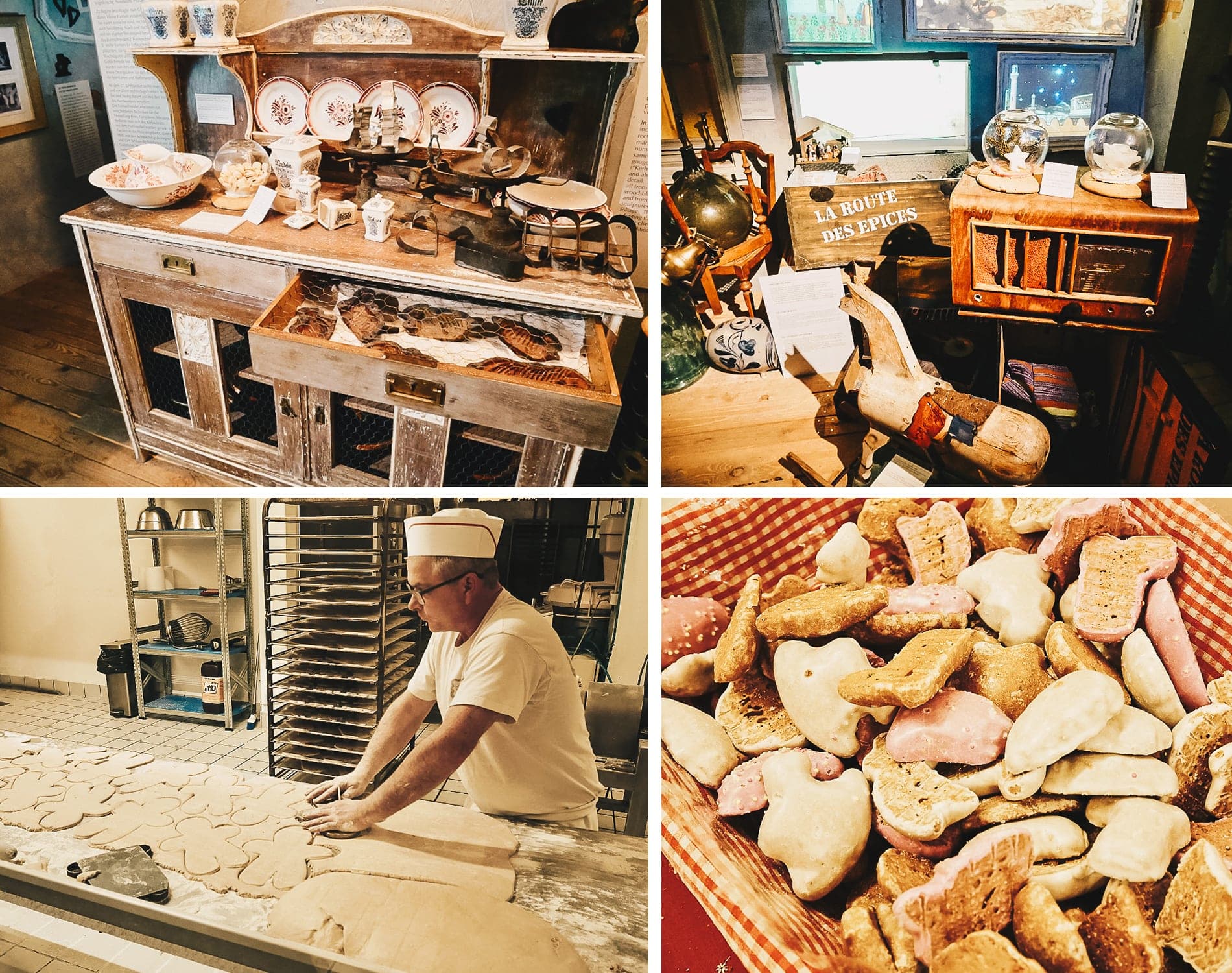
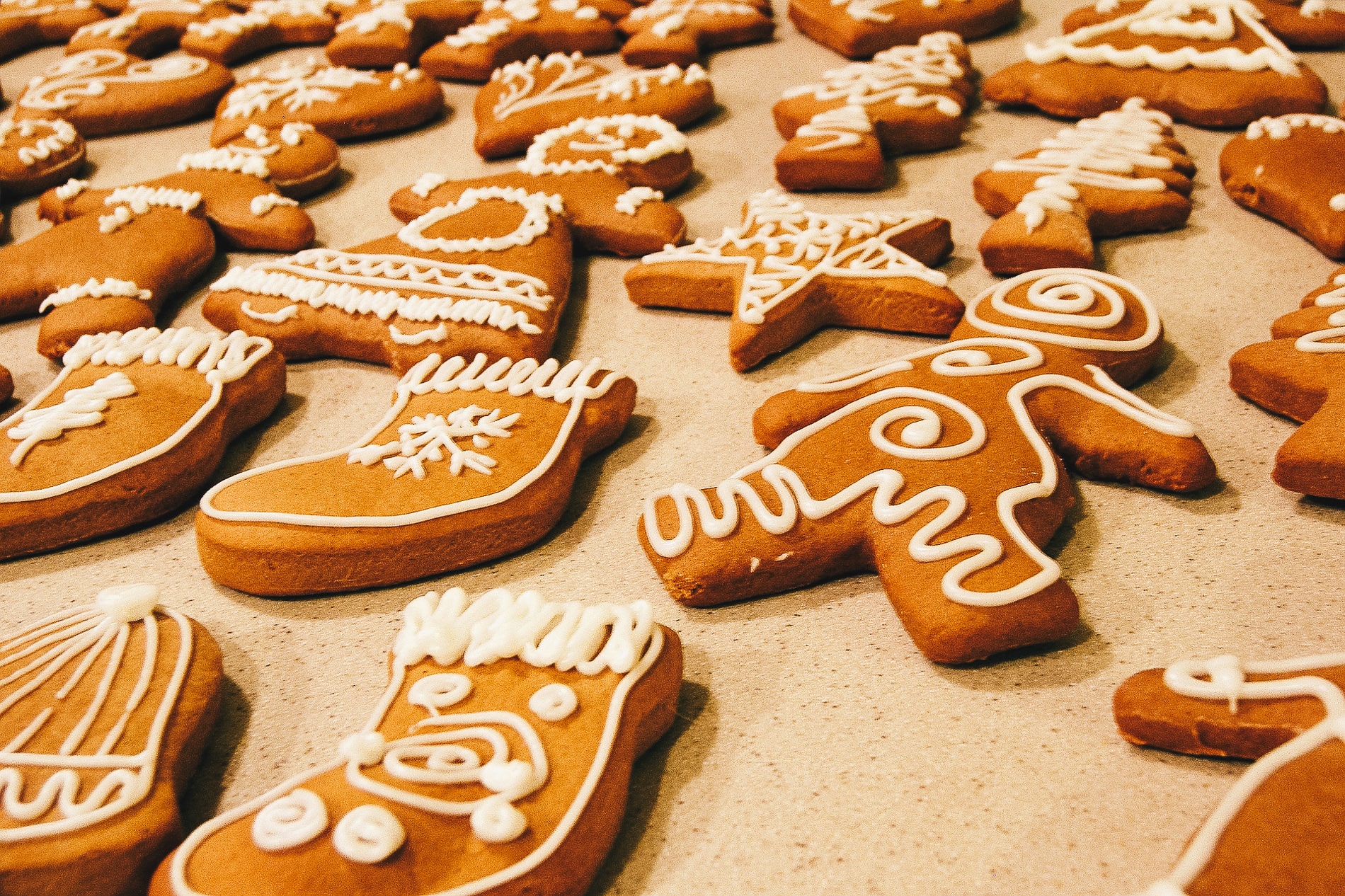
The Maison Fortwenger plunges you into the magical world of the Mannele, the famous little gingerbread man. The place surprises with visual, sound and scent animations, in a magical décor that delights the whole family. It’s probably the best address to buy authentic gingerbread.
Since 1768, Fortwenger perpetuates a traditional know‑how with quality ingredients… but be aware, it is also a true factory with a lot of visitors! You’ll see people rushing for boxes of bredeles, mugs and all the brand’s Christmas decor. Despite this, the visit is really worth it: the little museum is well done and you can watch artisans preparing dough, decorating subjects by hand… all steps requiring precision and passion.
We particularly appreciated the family‑friendly atmosphere, the very attractive prices and the fact that gingerbreads are made in this authentic historic workshop.
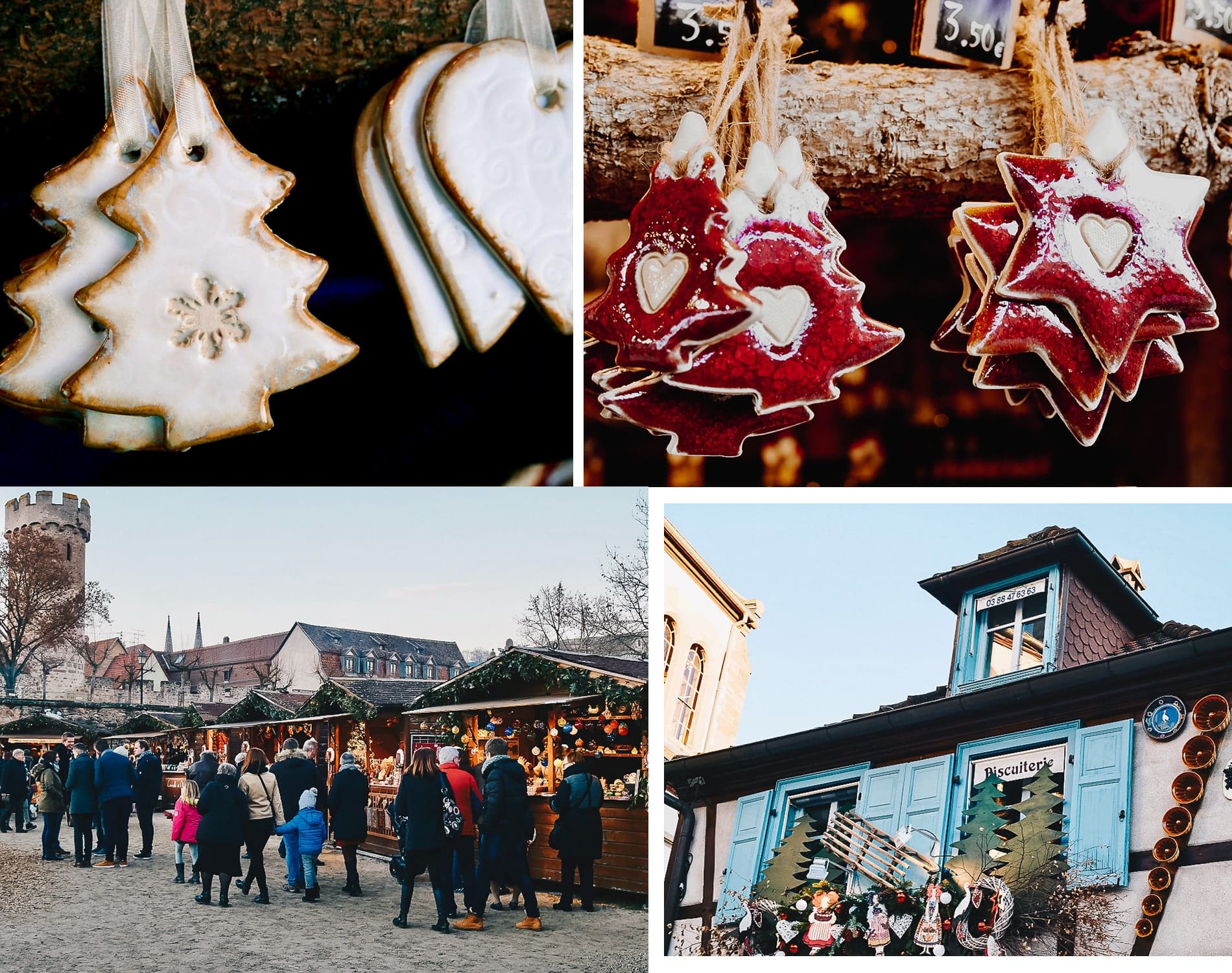
Nearby Gertwiller, don’t miss also the chalet “La Forêt des Elfes” in Eichhoffen (parking des Remparts), it offers lovely handmade Christmas decorations in ceramic. Open Monday to Saturday 8am–12pm and 2pm–6pm (closed Thursday morning). → Discover their shop here
| Practical Tips to Best Enjoy Christmas Markets in Alsace
Even if Alsace is a wonderful region to visit in winter, some advice can truly change your experience, especially if you come during busy December weekends.
Here’s what I always recommend to those planning a little road trip around Christmas markets.
How to get around?
The easiest option remains the car, because it offers real freedom to move from one village to another. But be aware that some markets, like Kaysersberg or Riquewihr, can be hard to access in the middle of the afternoon on December weekends.
I recommend arriving early in the morning or at the end of the day to avoid the rush and find parking more easily.
If you don’t have a car, the train and bus network works well to link major cities (Strasbourg, Colmar, Sélestat…), but less so for small villages. In that case, consider the shuttle services offered on weekends around Christmas.
When to visit?
Morning: atmosphere is much calmer, perfect if you like to stroll peacefully, take photos or enjoy a mulled wine without queuing. Evening: lights offer a completely different atmosphere, magical, but often busier.
The ideal? Arrive early in the morning, visit two villages, enjoy a gourmet break, then head out at nightfall to admire a final illuminated market.
Best periods?
Most markets open late November and close a few days before the New Year. The first weekends of December remain the busiest, especially around Colmar. If you can, favor Mondays and Tuesdays, or the last week before Christmas. The ambiance is just as festive, but the streets are much easier to breathe in.
How to dress?
Even if it’s not Lapland, it’s really cold in Alsace in December, especially at night. Pack:
- a warm coat,
- a scarf,
- gloves,
- a beanie,
- good shoes (great for cobblestones and possibly snowy alleys).
A little tip: leave some room for your hot‑wine cup so you don’t burn yourself.
Budget to plan
Christmas markets remain generally very affordable:
- Mulled wine: €3–4
- Pretzels: €2–4 depending on toppings
- Bredeles: €6–10 per bag
- Meal in a winstub: €18–25 per person
For more touristy markets (Colmar, Riquewihr), prices can vary a bit, but nothing dramatic.
Where to stay to explore Christmas markets in Alsace?
If you plan several days in Alsace to discover markets around Strasbourg, the choice of accommodation can really transform your stay.
Stay in Strasbourg: ideal for a first stay
Strasbourg remains an excellent starting point if you like the idea of having everything at your fingertips:
- the iconic central markets,
- the illuminated cathedral,
- restaurants,
- easy access to trains if you don’t rent a car.
It’s also perfect if you want to experience the “Christmas capital” vibe at night, then explore the villages during the day. The night‑time ambiance on the Grande Île is magical, especially around the cathedral and Petite France.
Stay along the wine route: guaranteed immersion
If you want to live the “village Christmas” experience from morning to night, then I recommend staying directly in one of the villages. Simple: you go to bed with lights, wake up calm, and have the alleys to yourself before visitors arrive.
Some perfect villages for that:
- Eguisheim, for its cozy circular vibe,
- Kaysersberg, for its authentic charm,
- Riquewihr, if you enjoy narrow cobbled streets,
- Ribeauvillé, ideal when the medieval market is open.
Guesthouses are often lovely, run by Alsatian families who decorate their homes beautifully for Christmas. A real bonus for the stay.
Stay in Colmar: perfect if you like to walk everywhere
Colmar is a great alternative if you want to avoid traffic around Strasbourg. The city is big enough to offer varied accommodations, but small enough to stay pleasant in December.
Tip: accommodations fill up fast in December, book early, especially if you come during weekends.
Stay in Ottrott: a charming wine‑road village
We stayed one night in the charming village of Ottrott, on the Alsace wine route, known for its light red wine, the famous Rouge d’Ottrott. It was our ideal starting point for the Alsace journey.
In a small, authentic boutique, we met a passionate winemaker offering local wine tastings and terroir products. We brought back some excellent bottles: Auxerrois, Pinot Gris, Gewurztraminer harvest wine, or the “Soleil d’Automne”, all very good prices.
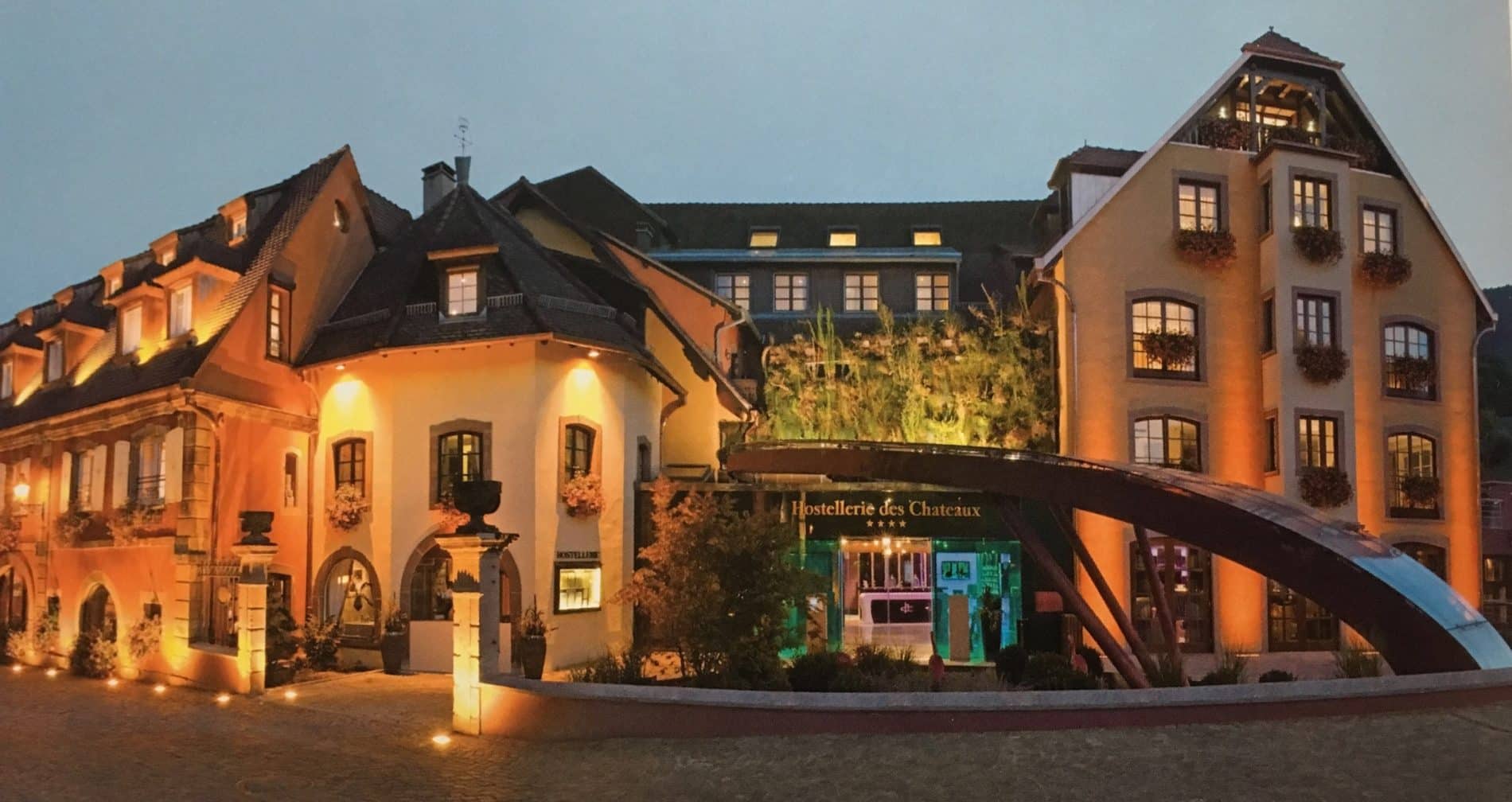
The guesthouse we stayed in, Hostellerie des Châteaux, is a 4‑star property standing in an old 17th‑century mansion, combining rustic charm and comfort, with many rooms and even suites with private spa facilities. During winter, it becomes a wonderful base, between markets, wine‑route visits and restful spa time.
We also tested the hotel’s gourmet restaurant, where the chef transforms local products into refined dishes, paired with regional wines like the famous Rouge d’Ottrott. The hotel spa, one of the most complete in Alsace, offers warm pools, hammams, jacuzzis and relaxation areas: a real sensory break after busy festival days.
In short, the Hostellerie des Châteaux is a high‑end hotel, constant in its pursuit of excellence and authenticity, ideal for a weekend mixing Christmas markets, wine route and wellness, a true little paradise to recharge.
Practical info | Ottrott available on their booking page
- By car: the hotel is 20 km from Strasbourg airport, 27 km from Strasbourg, 5 km from Obernai, 48 km from Colmar, about 4h30 to 5h drive from Paris.
- By plane: direct flights Paris → Strasbourg or Lyon → Strasbourg (≈ 1h). Then shuttle or car rental.
- By train: Paris → Strasbourg in 2h20, Lille → Strasbourg in 3h30.
In conclusion, exploring the Christmas markets in Alsace is like leafing through a storybook that comes alive page after page. From Strasbourg, just a few kilometers separate you from villages with totally different atmospheres. And that’s probably why you come back so easily: in December, Alsace has this power to rekindle magic, even in the biggest hearts!
Before you leave, I also invite you to read our other articles to discover many beautiful Christmas markets in Europe that will surely charm you.
- Strasbourg Christmas Market
- Prague Christmas Market
- Cologne Christmas Market
- Krakow Christmas Market